NASA Astronauts to Get Lunar Companion Droids for Moon Missions
▼ Summary
– NASA has selected Lunar Outpost’s Mobile Autonomous Prospecting Platform (MAPP) to be the first robotic rover to operate alongside astronauts on the moon.
– The MAPP rover will use its science instruments to study lunar surface plasma and dust behavior to learn more about the crew’s environment.
– NASA officials state these instruments will help create a guide for human health and safety during interplanetary exploration, building on Apollo-era lessons.
– Lunar Outpost’s CEO notes that addressing lunar dust challenges is critical for establishing a sustainable human presence in space.
– The Artemis III mission, targeted for 2028, aims to return humans to the lunar surface for the first time since Apollo 17 over 50 years ago.
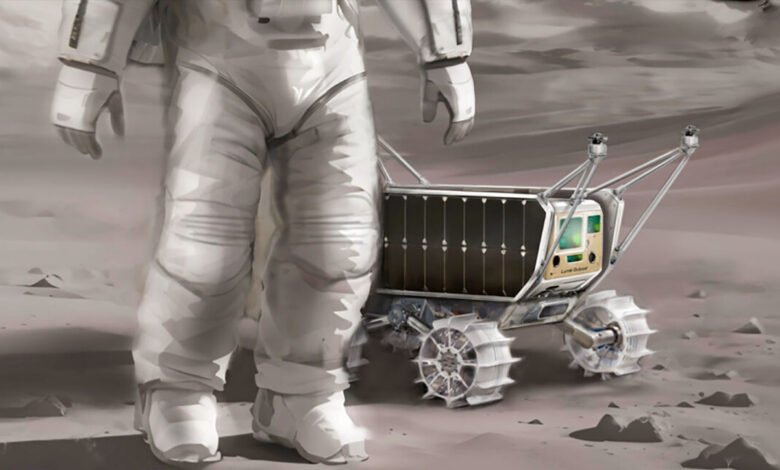
The upcoming Artemis missions will see NASA astronauts exploring the lunar surface with a new robotic partner, marking a significant step in sustainable space exploration. The space agency has chosen Lunar Outpost’s Mobile Autonomous Prospecting Platform, or MAPP, to serve as the first robotic rover designed to operate alongside a human crew on the Moon. This four-wheeled autonomous vehicle will function as a mobile science station, gathering crucial environmental data to support future long-term habitation. While its duties are more practical than the fictional droids of classic sci-fi, its role is no less revolutionary for human spaceflight.
Instruments aboard the MAPP rover will analyze the lunar surface plasma and study the behavior of moon dust, two factors critical for astronaut safety and equipment longevity. The abrasive, electrostatically charged lunar dust posed significant challenges during the Apollo missions, clogging machinery and irritating astronauts. Understanding and mitigating these effects is a top priority for establishing a permanent human presence. NASA views the Artemis program as a proving ground for the technologies and survival strategies needed for eventual journeys to Mars and beyond.
“The Apollo era taught us that the further humanity is from Earth, the more dependent we are on science to protect and sustain human life on other planets,” explained Nicky Fox, NASA’s associate administrator for science. She described the deployment of these instruments as part of creating “humanity’s interplanetary survival guide,” a foundational effort to ensure the health of both explorers and their spacecraft.
For Lunar Outpost, the MAPP contract represents a major milestone. “This will be Lunar Outpost’s seventh contracted mission, demonstrating our ability to serve as a platform for multiple mission profiles,” said company founder and CEO Justin Cyrus. He emphasized that the rover provides essential mobility and robotics to help astronauts conduct vital research directly on the lunar surface, turning the challenges identified during Apollo into actionable solutions.
The path to this robotic partnership runs through the scheduled Artemis missions. Artemis II, planned for 2026, will carry a crew of four astronauts on a lunar flyby, testing systems in the Orion spacecraft. The following mission, Artemis III, is targeted for 2028 and aims to land the first humans on the Moon since the final Apollo mission in 1972. When those astronauts step onto the surface, they will do so over half a century after Commander Gene Cernan of Apollo 17 left the last human footprint there. This time, they will have a robotic companion to help them scout, analyze, and unlock the secrets of the lunar environment, paving the way for humanity’s future as a multi-planet species.
(Source: Ars Technica)