Claude Code Is Coming to Slack: Why It’s a Big Deal
▼ Summary
– Anthropic is launching Claude Code in Slack, a beta feature that allows developers to delegate full coding tasks directly from chat threads, moving beyond simple snippets.
– This tool analyzes Slack context like bug reports to determine the correct repository, posts progress updates, and shares links for code review and pull requests.
– The launch reflects an industry shift where AI coding assistants are moving from isolated IDEs into collaboration tools like Slack, where teams already communicate.
– Integrating AI deeply into Slack positions it as a strategic “agentic hub,” and whichever AI tool dominates this space could shape future software team workflows.
– While offering workflow benefits, the integration raises new concerns about code security, IP protection, and potential disruptions from dependencies on external platforms.
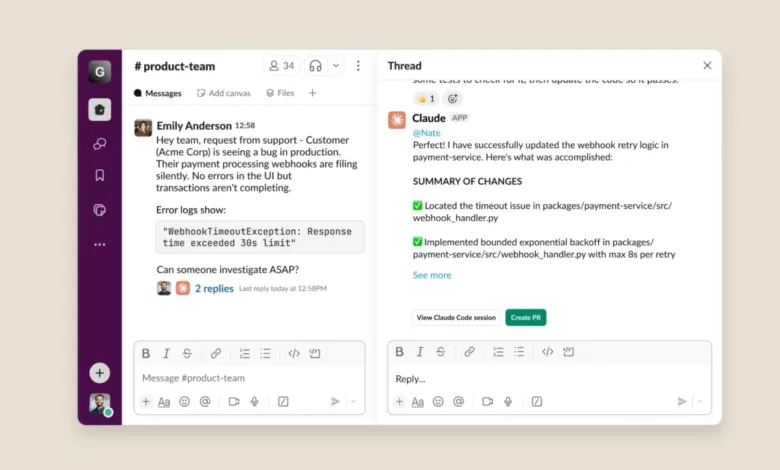
A significant evolution in how developers work is underway, moving artificial intelligence directly into the platforms where teams already communicate. Anthropic is introducing Claude Code to Slack, a beta feature that lets developers delegate entire coding tasks from within chat threads. This move transforms Slack from a simple messaging app into a potential command center for software development, signaling that the next competitive frontier for AI coding assistants is workflow integration, not just raw model capability.
Previously, using Claude in Slack was limited to getting help with snippets or explanations. The new Claude Code feature changes that dynamic entirely. Developers can now tag @Claude to initiate a full coding session, using the context from recent Slack messages about a bug report or feature request. The AI then determines the appropriate code repository, posts live progress updates directly in the thread, and finally shares links for the team to review the work and open new pull requests. This creates a seamless bridge from conversation to committed code without ever leaving the collaboration tool.
This development is part of a clear industry trend where AI coding support is migrating out of isolated integrated development environments (IDEs) and into the collaborative hubs where planning and discussion actually happen. Other players are making similar moves. Cursor already offers Slack integration for drafting and debugging code within threads. GitHub Copilot recently added features to generate pull requests directly from chat conversations. Even OpenAI’s Codex can be accessed through custom-built Slack bots. The race is on to embed AI into the daily workflow.
For Slack, this strategic push to become an “agentic hub” where AI meets real workplace context offers a substantial advantage. The platform that becomes the central nexus for engineering communication could profoundly influence how software teams operate. Whichever AI tool integrates most deeply and usefully within Slack may gain an outsized role in shaping development practices.
By enabling a fluid transition from team discussion to automated code execution, tools like Claude Code represent a shift toward AI-embedded collaboration. This could fundamentally reshape developer workflows, reducing context-switching and potentially accelerating project timelines. However, Anthropic has not yet announced a timeline for a broader public rollout beyond this research preview. The timing is strategic, as the AI coding market grows increasingly crowded, making deep integration and smart distribution key differentiators.
This integration does not come without its concerns. Introducing a powerful coding assistant into a chat platform raises important questions about code security and intellectual property protection. It creates another channel through which sensitive repository access must be carefully managed, monitored, and audited. Furthermore, it introduces new dependencies; an outage or API rate limit affecting either Slack or Claude’s services could unexpectedly disrupt development workflows that teams previously controlled within their local environments.
(Source: TechCrunch)