AI Godfather: CS Degrees Still Hold Their Value
▼ Summary
– Geoffrey Hinton argues a computer science degree remains valuable because it teaches far more than just coding, such as systems thinking.
– He and other tech leaders believe CS degrees are not obsolete, even as AI automates mid-level programming tasks.
– Experts suggest CS education should adapt by reframing itself around problem-solving and interdisciplinary applications.
– Hinton maintains that learning to code is a valuable intellectual exercise for students, similar to learning Latin in the humanities.
– He advises future AI professionals to focus on foundational skills like math and critical thinking, which AI is unlikely to replace.
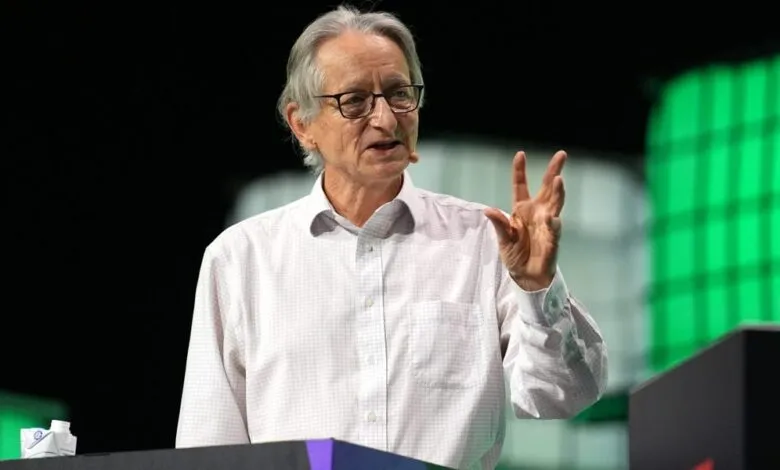
The enduring value of a computer science education remains a topic of intense discussion as artificial intelligence reshapes the technological landscape. Geoffrey Hinton, often called the “Godfather of AI,” argues that a CS degree offers far more than just programming skills, making it a worthwhile investment for the foreseeable future. He suggests that while AI may soon handle routine coding tasks, the broader intellectual framework provided by a computer science education is irreplaceable.
Hinton notes a common misconception that computer science is solely about writing code. He believes that simply being a competent mid-level programmer will not sustain a long-term career, as AI systems are becoming proficient at such work. The true worth of the degree, he emphasizes, lies in cultivating a deeper understanding of systems, logic, and complex problem-solving, skills that transcend any single technical task. This perspective aligns with other prominent figures in technology who caution against writing off the CS degree too quickly.
OpenAI’s chairman, Bret Taylor, who holds advanced degrees in computer science, has publicly stated that the discipline is “extremely valuable.” He points out that coding involves much more than merely producing lines of code; it is fundamentally about learning systems thinking. This holistic approach to understanding how components interact within larger structures is a critical skill that AI does not obviate.
This is not to say that computer science programs should remain static. Industry leaders advocate for evolution within the curriculum. Google’s head of Android, Sameer Samat, has suggested reframing computer science around “the science of solving problems.” Meanwhile, Professor Hany Farid from UC Berkeley observes that the most compelling opportunities for CS graduates now exist at the intersection of computing and other fields. He lists areas like computational drug discovery, medical imaging, computational finance, and digital humanities as frontiers where computer science expertise is powerfully applied, often beyond the traditional tech giants.
Hinton also champions the benefits of learning to code for younger students, even as AI becomes more capable. He compares it to learning Latin within a humanities education, a student may never speak the language, but the process of learning it develops mental discipline and logical reasoning. He views coding as a robust intellectual exercise that trains the mind, separate from its immediate vocational utility.
For students aspiring to become leading AI researchers or engineers, Hinton advises focusing on strengthening foundational and analytical capabilities. Skills in mathematics, statistics, probability theory, and linear algebra represent durable knowledge that will not become obsolete. Ultimately, he encourages cultivating advanced critical thinking, the ability to evaluate, synthesize, and innovate, which remains a distinctly human advantage even as AI capabilities grow.
(Source: Business Insider)