Meta Hires Apple’s Top Designers to Revamp Its Software UI

▼ Summary
– Meta has hired two prominent Apple designers, Alan Dye and Billy Sorrentino, to lead a new studio within its Reality Labs division.
– The hires signal Meta’s intent to improve its user interfaces, which an analyst describes as inconsistent and a “software nightmare” across its platforms.
– Alan Dye, known for leading designs like watchOS and Apple Vision Pro, brings expertise that Meta hopes will help define its next-generation products and experiences.
– This move aligns with Meta’s heavy investment in AI and hardware, particularly its smart glasses, where elegant design is crucial for consumer adoption.
– Despite big AI investments, Meta is simultaneously considering budget cuts to its Reality Labs efforts, highlighting a strategic focus on specific priorities.
Meta has made a significant strategic hire by recruiting two of Apple’s most influential designers, signaling a major push to overhaul its software user interfaces and hardware design philosophy. This move directly targets one of the company’s most persistent criticisms: a fragmented and often clunky user experience across its family of apps and devices. By bringing in top talent from a rival renowned for its design coherence, Meta aims to inject a new level of polish and intuitive interaction into its products, particularly as it doubles down on artificial intelligence and wearable technology.
Alan Dye, who served as Apple’s vice president of Human Interface Design, will lead a new design studio within Meta’s Reality Labs. He is joined by Billy Sorrentino, a senior director from Apple’s design team. The appointments were confirmed by Meta CEO Mark Zuckerberg on Threads, where he stated the duo would “bring together design, fashion, and technology to define the next generation of our products and experiences.” Dye’s portfolio at Apple included leadership on watchOS, the Apple Vision Pro, and the visually striking but divisive Liquid Glass redesign of iOS. His departure to Meta underscores the social media giant’s ambition to achieve a level of design mastery that has long eluded it, even prompting some industry observers to wonder what his signature aesthetic might mean for Meta’s interfaces.
Industry analysts view this recruitment as a clear attempt to address fundamental software weaknesses. “Meta has always been a software nightmare,” notes Anshel Sag, a tech analyst at Moor Insights & Strategy. He points to significant inconsistency across platforms like Facebook, Instagram, WhatsApp, and the Quest VR systems, arguing that subpar user interface quality could drive users away. Fixing the UI is now seen as critical for user retention and platform cohesion.
This design-focused initiative coincides with Meta’s aggressive investment in artificial intelligence, despite some internal turbulence. The company recently established a high-profile “Superintelligence” lab, though it faced quick turnover among its star hires. Simultaneously, Meta is reportedly considering budget reductions within Reality Labs, making the strategic allocation of its new design leadership even more crucial.
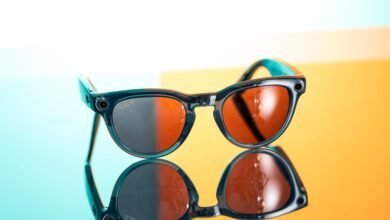
The company’s current success with AI-powered smart glasses, developed in partnership with EssilorLuxottica, highlights why this design pivot is so timely. The Ray-Ban Meta smart glasses have found a market largely because of their fashionable, recognizable frames. This proves that for wearable technology, aesthetics are as important as computational power; consumers simply will not adopt devices they consider unattractive, regardless of capability. The challenge for Dye and Sorrentino will be to ensure that elegant hardware design is matched by seamless, intuitive software that ties all of Meta’s ambitious devices together into a cohesive ecosystem.
(Source: Wired)