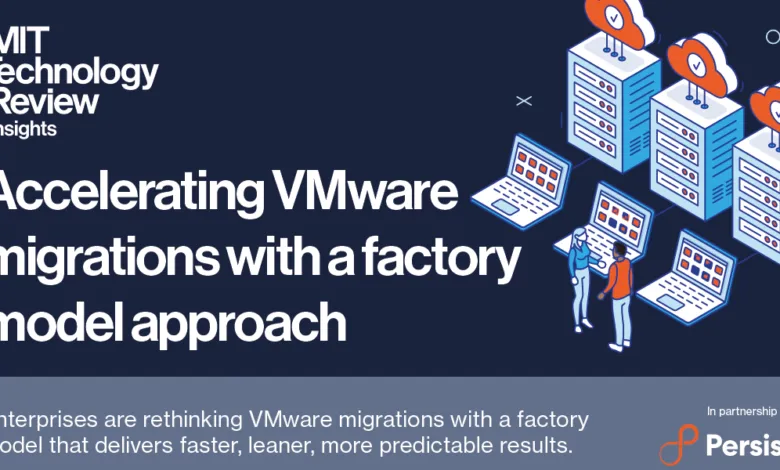
Factory Model: Fast-Track Your VMware Migration
▼ Summary
– Historically, VMware migration projects were slow, bespoke efforts often taking many months or years to complete.
– Fluctuating licensing costs added significant complexity to these migration processes.
– Business leaders are now urgently pushing for faster IT modernization to prepare their organizations for AI.
– A recent IDC report found 60% of organizations say their IT infrastructure needs major transformation.
– The same report indicates 82% of organizations report their cloud environments require modernization.
When it comes to moving workloads from VMware, many organizations have historically faced a slow and complex process. These projects often unfolded like custom-built endeavors, taking many months or even years to finalize. The situation grew more pressing as business leaders demanded faster modernization to prepare for artificial intelligence, all while navigating unpredictable licensing expenses. This pressure is now widespread; recent industry analysis indicates that a majority of firms assessing cloud services believe their existing IT infrastructure needs significant overhaul, with an even larger percentage stating their cloud setups require updates.
The traditional, one-off approach to these migrations is increasingly seen as unsustainable. A more systematic “factory model” is gaining traction as a way to accelerate these critical transitions. This methodology applies industrialized, repeatable processes to what was once a manual and artisanal task. By standardizing procedures and leveraging automation, companies can achieve greater speed, predictability, and cost control.
Implementing this model involves several key phases. First, a detailed assessment and planning stage maps out the entire application portfolio. Teams categorize workloads based on their complexity, dependencies, and suitability for different target environments, whether public cloud, private cloud, or a modernized on-premises platform. This foundational step is crucial for creating a clear roadmap.
Next, the actual migration execution leverages automated tools and predefined “playbooks.” These playbooks contain the standardized steps for moving specific types of applications, dramatically reducing manual effort and human error. Instead of engineers manually configuring each server, the process becomes a streamlined, assembly-line operation. This consistency is vital for maintaining security and compliance standards throughout the move.
Finally, a robust optimization and operations phase ensures the newly migrated environment runs efficiently. This includes rightsizing resources, implementing cost management tools, and establishing ongoing governance. The goal is not just to “lift and shift” but to arrive in a modernized state that is easier to manage and scale.
The primary benefit of this factory approach is a dramatic reduction in migration timeline and risk. Projects that once languished for years can be compressed into months. The standardized processes also make it easier to train staff and scale efforts across multiple business units or geographic regions. Furthermore, the increased use of automation frees up valuable IT talent to focus on strategic innovation rather than repetitive manual tasks.
Adopting this model does require upfront investment in planning, tooling, and sometimes new skills. However, the long-term payoff in accelerated digital transformation, reduced operational overhead, and improved business agility makes it a compelling strategy for any organization looking to fast-track its journey to a modern, AI-ready infrastructure.
(Source: Technology Review)