AI Panic Echoes the Internet Boom of the 1990s
▼ Summary
– The author draws a direct parallel between the current anxiety surrounding AI and the initial public fear and excitement that accompanied the mainstream adoption of the internet in the 1990s.
– Both technological waves sparked similar public concerns, including privacy issues, the spread of misinformation, job displacement, and a loss of human control.
– The internet’s history shows that transparency, ethical practices, and proactive self-regulation by industries like marketing are crucial for building public trust in new technologies.
– The author argues that marketers are again at the forefront of adopting AI and must use it responsibly as a productivity tool, not a shortcut, to gain a competitive advantage.
– The core takeaway is that AI will follow a familiar cycle of disruption and adaptation, and its ultimate impact on trust depends on how humans choose to develop and use it.
My career in the digital world began in 1989, long before the internet was a household concept. At CompuServe, my role involved guiding businesses as they shifted their communications from traditional methods to this new online frontier. It was pioneering work. We often described ourselves not as being on the cutting edge, but on the bleeding edge. That era felt chaotic, a bit intimidating, and full of unknowns. Today, I sense that exact same atmosphere, only now the source of both excitement and apprehension is artificial intelligence.
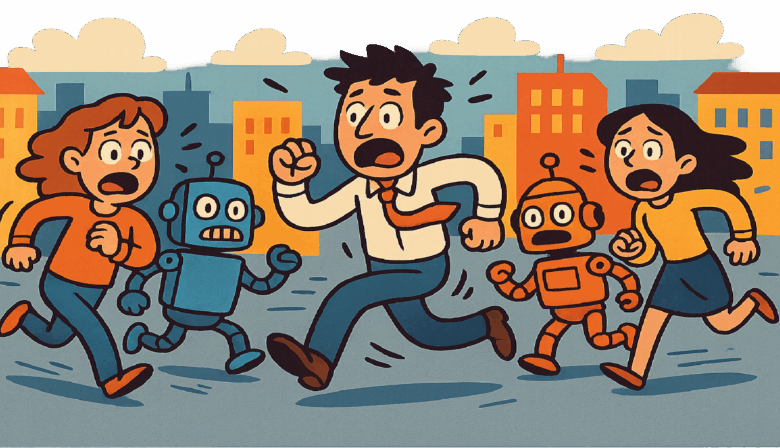
The similarities are striking. Just as the internet fundamentally altered communication, commerce, and information access, AI is poised for a similar transformative impact. The emotional arc is identical: initial wonder, followed by deep-seated fear and resistance, leading ultimately to widespread integration. We have navigated this path before. The lessons from that journey provide a crucial roadmap for the present.
Public anxiety in the 1990s centered on privacy, misinformation, and a loss of control. The rise of cookies and user tracking sparked intense debate, with early discussions about limiting cross-site data collection. Fears about “cyberporn” and online falsehoods were rampant. People worried about job losses due to automation and questioned who was truly steering this vast, invisible network. Marketers, as early adopters, experimented with websites and email, often learning difficult lessons about privacy through trial and error. The proliferation of spam showed how bad actors could temporarily degrade the experience. Yet, through a combination of emerging regulations, industry standards, and public adaptation, the internet evolved into a trusted, essential utility. The road was uneven, but the destination justified the journey.
Today, that familiar cultural anxiety has returned, amplified by a dramatically accelerated pace. Current AI concerns mirror those of the early internet: privacy, truth, bias, and control. We question the data used to train models and the consent behind it. We grapple with the reliability of generated content and the potential for embedded biases that misrepresent or exclude. There is a profound unease about whether we are guiding this technology or being guided by it. For marketers, the position is also familiar. We are again at the forefront, utilizing AI for copywriting, audience segmentation, image creation, and behavioral prediction. The temptation to move recklessly is powerful, but so is the potential for meaningful advancement if approached with care.
The internet era offers several critical lessons for navigating the AI revolution.
First, transparency is the foundation of trust. Early websites collected user data with little explanation, leading to a backlash that necessitated privacy policies, consent mechanisms, and clear opt-out options. AI requires its own transparency standard. Marketers must openly communicate when and how AI is employed, and crucially, articulate the tangible benefit to the customer. Clarity in purpose fosters confidence.
Second, ethical practices create a competitive edge. When inboxes became flooded with spam, legitimate senders distinguished themselves by embracing permission-based marketing. They voluntarily adopted standards higher than the law required. The same dynamic will unfold with AI. Professionals who use it as a responsible productivity enhancer, rather than a deceptive shortcut, will cultivate greater engagement, loyalty, and lasting credibility.
Third, regulation inevitably follows innovation. Major digital shifts, from the Communications Decency Act to GDPR, have all faced a regulatory reckoning. AI will be no different. A key change from the 1990s is the industry’s stance; today, leading AI organizations themselves are advocating for federal legislation. The most forward-thinking marketers won’t wait for mandates. They will proactively document data sources, understand model limitations, and build accountability into their AI workflows now.
Finally, addressing bias is the new imperative for inclusion. The early digital divide focused on physical access to the internet. Today’s divide concerns whose data and perspectives shape AI algorithms. Marketers who actively test for bias and ensure inclusive representation in AI-generated content will not only operate ethically but will also develop more effective and resonant campaigns.
The core narrative remains unchanged, only the technology has advanced. AI represents the next profound wave of disruption. We will undoubtedly make errors and overcorrect at times. However, by applying the hard-won wisdom from the internet’s ascent, we can steer toward an ecosystem that is more intelligent, efficient, and, importantly, more human. Technology itself does not destroy trust; our application of it determines the outcome. Marketers, having led one evolution, are uniquely prepared to guide this one as well.
(Source: MarTech)