Google Nest Doorbell (2025) Review: The Subscription Problem
▼ Summary
– Google’s AI features for Nest cameras promise human-like notifications and video summaries but currently deliver inaccurate descriptions and false alerts.
– The Nest Doorbell offers strong hardware with a 2K camera, wide field of view, and seamless integration with Google Home devices for users already in that ecosystem.
– A subscription is required for key features like AI summaries and package detection, with plans costing $10-$20 monthly, which many competitors include for free.
– The doorbell lacks local storage and provides only brief free event recording, making it less competitive against alternatives with permanent local storage.
– While AI performs slightly better on the doorbell than outdoor cameras, it remains unreliable and doesn’t justify the high subscription cost for most users.
The latest Google Nest Doorbell (2025) presents a compelling vision for smart home security, leveraging artificial intelligence to deliver human-like notifications and daily video summaries. However, the reality of these advanced features hinges entirely on a costly monthly subscription, creating a significant barrier for many potential buyers. While the doorbell itself boasts an attractive design and solid technical performance, its value proposition diminishes rapidly without committing to Google’s premium service plans.
If you’ve read previous reviews of Google’s Nest Cam Outdoor, you’ll recognize a familiar pattern. Notifications powered by the Gemini AI chatbot frequently misidentify pets and provide bizarre, inaccurate descriptions of recorded events. Daily summaries often portray ordinary household activity as a constant flurry of visitors and animals. These AI-driven capabilities, intended to justify the subscription cost, frequently fall short in practice. Without an active Google Home Premium (formerly Nest Aware) plan, the doorbell’s functionality becomes severely limited, making it difficult to recommend over competitors that operate more independently from the cloud.
So how does this third-generation wired doorbell compare? The underlying AI issues persist, but the device might still warrant consideration for homeowners deeply embedded in Google’s ecosystem. For everyone else, better alternatives exist elsewhere.
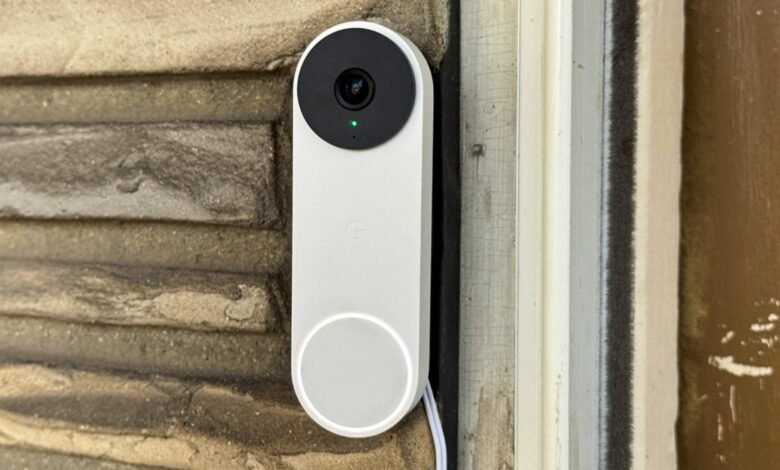
Visually, the Nest Doorbell stands out as one of the most attractive video doorbells available. Its slender, bar-shaped housing features rounded ends that curve elegantly around the camera lens and illuminated doorbell button. The overall aesthetic maintains the pleasing symmetry found across Google’s Nest product line, presenting a more refined appearance than the chunkier designs from competitors like Ring or Eufy.
Beyond its appealing design, the hardware specifications deliver solid performance. The camera captures 2K resolution video with an expansive 166-degree diagonal field of view presented in a square aspect ratio. It records HDR video at 30 frames per second, producing vibrant daytime footage and clear infrared black-and-white recording after dark. Two-way audio functionality enables conversations with visitors, while dual-band Wi-Fi support ensures reliable connectivity. The always-on nature of the device means live feeds load almost instantly within the Google Home application.
Installation proves straightforward for homes with existing doorbell wiring. The package includes a mounting plate and an angled adapter for better visitor positioning, along with wire extenders if needed. The Google Home app provides clear setup guidance, though users should note that the process requires a QR code from the packaging. Lose this code and you’ll need to remove the installed unit to access the identical code printed on the device itself.
Once operational, the doorbell functions similarly to most competitors. It sends notifications for doorbell presses and detects configured objects like people, pets, and vehicles. However, key features like zoomed-in preview images and package detection remain locked behind the paywall of a subscription service. This approach feels particularly restrictive when similar capabilities come standard with many competing products.
Google does offer some complimentary features that surpass what’s available with their outdoor camera. The doorbell integrates with existing mechanical and digital chimes, and for homes without functioning chimes, it can route announcements through Google smart speakers and displays. These devices can announce visitors and automatically display the live camera feed, while also providing options for two-way conversation or pre-recorded responses for delivery personnel.
During testing, a second-generation Nest Hub promptly announced doorbell presses and facilitated clear conversations. The integration works effectively, though the Nest Hub interface itself feels noticeably sluggish by 2025 standards. Still, the seamless connectivity between devices represents one of the system’s stronger selling points.
Without a subscription, the doorbell’s capabilities remain limited. The absence of local recording continues to be a significant drawback, though Google has extended the free cloud storage duration from three to six hours. This improvement still pales compared to the generous local storage options offered by competitors including Eufy, Reolink, Blink, and Aqara.
The AI performance demonstrates slight improvement in the doorbell context compared to outdoor cameras, possibly due to the camera’s lower positioning and more predictable activity patterns. While the system still occasionally misidentified a cat as a dog, it generally accurately noted package deliveries and even identified Amazon packages specifically. When functioning correctly, these AI features represent genuine technological advancement, but their inconsistency makes the premium subscription feel like paying for beta testing privileges.
The subscription structure presents the biggest hurdle for potential buyers. The $8/month Standard plan provides 30-day event video history plus facial recognition, package detection, and sound alerts. Stepping up to the $20/month Premium Advanced plan adds 60-day storage with 10 days of 24/7 recording, alongside the headline AI features including daily summaries and AI-generated notifications. The “Help me create” automation feature works reasonably well for simple tasks, though it sometimes generates non-functional automations without explanation.
For homeowners fully committed to the Google ecosystem, the Nest Doorbell delivers satisfactory performance with elegant integration across compatible devices. If you already maintain a Google Home Premium subscription and either lack a video doorbell or use an older model, upgrading makes practical sense.
However, for consumers outside this specific scenario, the combination of expensive hardware and mandatory subscriptions creates poor value in an era of tightening budgets. Paying $20 monthly for inconsistent AI features becomes difficult to justify when numerous alternatives offer local storage and capable performance without ongoing fees. Many buyers might prefer investing in a more affordable doorbell that eliminates monthly payments entirely, potentially freeing up funds for other entertainment or utility expenses.
(Source: Gizmodo)