Linus Torvalds’ Surprising Take on AI in Software Development
▼ Summary
– Linus Torvalds supports Rust’s integration into the Linux kernel despite some developer resistance, believing it encourages maintainers to be open to new ideas.
– Torvalds views AI positively for making Nvidia a significant contributor to Linux, contrasting with its past reputation as difficult to work with.
– He sees AI-generated code and tools as beneficial for helping new developers get excited about programming, similar to how he started with simpler computers.
– AI has negatively impacted kernel infrastructure through disruptive crawlers and fabricated bug reports that drain maintainer resources.
– Torvalds advises developers to find stress-relieving hobbies where failure is acceptable, sharing his own experience with building guitar pedals.
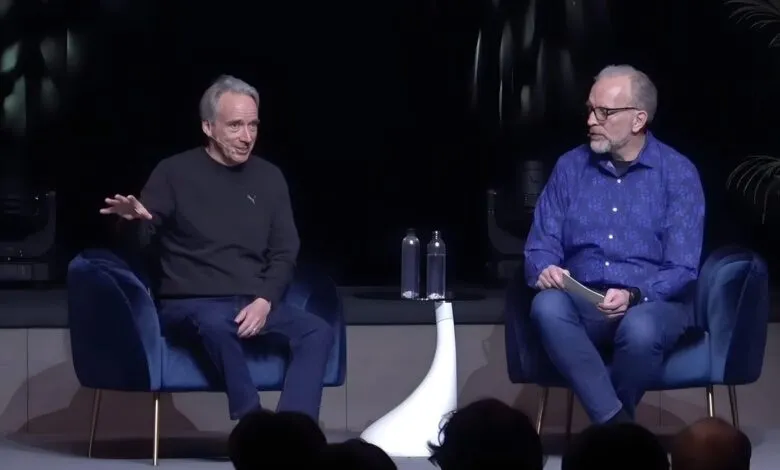
During a recent keynote at the Open Source Summit Korea, Linus Torvalds shared his nuanced perspective on artificial intelligence, Rust’s role in the Linux kernel, and how open-source development continues to thrive. Speaking with Dirk Hohndel of Verizon, Torvalds reflected on his long-term position as a technical lead rather than a hands-on programmer, emphasizing that Linux’s vitality stems from its vast community. Each new kernel release, he noted, draws contributions from over a thousand developers, ensuring the project evolves alongside hardware innovations and remains highly maintainable.
The conversation turned to Rust, which has stirred both enthusiasm and debate among kernel maintainers. Torvalds acknowledged the friction but firmly supported its adoption, stating that sometimes you need to encourage maintainers to be more open to new ideas. He believes the temporary disruption is worthwhile for the long-term health of the kernel, balancing stability with necessary evolution.
When discussing AI, Torvalds pointed to a notable silver lining: Nvidia has transformed into a significant contributor to the Linux kernel, a far cry from its contentious relationship with the open-source community two decades ago. He credited AI with motivating Nvidia’s deeper engagement, which now includes several kernel maintainers from the company.
Still, Torvalds described AI’s influence as a mixed bag. On one hand, experimental tools are emerging to help maintainers manage patches and stable releases. On the other, AI crawlers have become a major infrastructure headache, consuming resources and generating low-quality, sometimes fabricated, bug reports. Hohndel echoed this, citing cURL developer Daniel Stenberg’s experience with AI-generated security submissions that resemble denial-of-service attacks.
Torvalds admitted he hasn’t personally experimented with AI coding tools, speculating that the Linux kernel’s unique architecture makes it less susceptible to “vibe coding.” However, he expressed optimism about AI’s potential to lower barriers for newcomers. He recalled how typing programs from computer magazines sparked his own interest in computing, and suggested that AI could help a new generation get excited about programming in an era where starting from scratch feels daunting.
While he cautioned that AI-generated code poses maintenance risks for serious projects, Torvalds views it as a valuable gateway for hobbyists and learners. He looks forward to the day when AI becomes an unremarkable part of the developer toolkit, rather than a constant topic of hype.
Hohndel also raised the issue of industry layoffs attributed to AI-driven efficiency gains. Torvalds pushed back, comparing AI to compilers, tools that change workflows but don’t eliminate the need for skilled developers and maintainers.
Wrapping up on a lighter note, Torvalds shared his passion for building guitar pedals, a hobby where he happily embraces failure. He encouraged others in high-stress tech roles to find pastimes where mistakes are part of the fun, offering a refreshing counterbalance to the intense demands of kernel development.
(Source: ZDNET)