Did Google’s AI Get Smarter in Your Android Auto?

▼ Summary
– Android Auto launched before Apple’s CarPlay but hasn’t always maintained its lead despite the head start.
– A new upgrade now allows Android Auto to interact with users while driving if they have Gemini on their phone.
– Android Automotive OS, a stable vehicle-specific version of Android, has been widely adopted by major automakers like GM and Volkswagen.
– Android Auto received significant updates including a 2019 redesign and 2023 support for varied screen sizes and shapes.
– The hands-free “OK Google” assistant was later added to Android Auto, enabling safer control of navigation, media, and climate while driving.
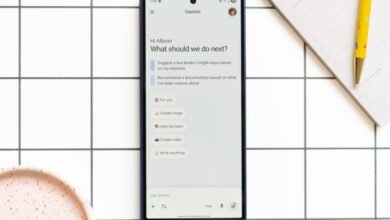
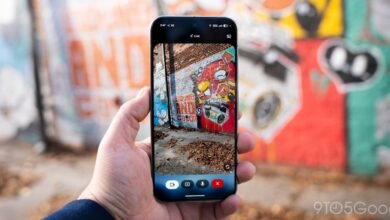
Google’s Android Auto platform is receiving a significant intelligence boost, directly integrating with the Gemini AI on your phone to enable more natural, conversational interactions while you drive. This enhancement arrives as the competitive landscape for in-car infotainment systems continues to intensify. While Android Auto launched well before Apple’s CarPlay, that early advantage hasn’t always translated into a definitive lead. The latest upgrade, however, focuses on a core driving need: smarter, safer hands-free control.
The perception of Google taking a somewhat hands-off approach with Android Auto doesn’t accurately reflect its broader automotive ambitions. Apple may showcase a futuristic, deeply integrated CarPlay experience that can command a vehicle’s entire digital interface, but its real-world availability outside of a few luxury brands remains extremely limited.
In contrast, Google has made substantial progress with Android Automotive OS (AAOS), a distinct and more robust operating system built from the ground up for vehicles. This platform has seen widespread adoption from major automakers including General Motors, Volkswagen, Stellantis, and Geely. It’s important to note that a car running AAOS doesn’t automatically include the full suite of Google apps and services that users expect, but the foundational operating system is now in place across a wide range of models.
The idea of getting a coherent playlist from an AI like Grok in a Tesla seems far-fetched, highlighting the unique path Google is taking. Credit: Google
The narrative that Google has neglected Android Auto is also not entirely accurate. The platform underwent a major visual overhaul in 2019, and a 2023 update significantly expanded its compatibility with various infotainment screen sizes and aspect ratios. Still, one of the most critical features—seamless, hands-free voice control via “Ok Google” projecting to the car’s display—took a couple of years to arrive after the assistant’s debut on phones. This feature is arguably among the most valuable for driver safety, as it allows for adjusting climate controls, setting destinations, and managing media without the driver ever needing to look away from the road or remove their hands from the steering wheel.
(Source: Ars Technica)