This Viral AI Pen Failed to Help Me Cheat
▼ Summary
– Physical AI scanner pens are being marketed as cheating tools for hardcopy tests, appearing in YouTube ads with names like “AI Smart Pen” and gaining hundreds of thousands of views.
– The author tested a $68.99 “Scan Sense Pen” that promised instant AI answers but found it frequently failed to scan text correctly and provided nonsensical or inaccurate responses to questions.
– Despite its intended use for answering questions, the device’s menu was in Chinese and difficult to navigate, and it was too bulky to use discreetly in a classroom setting.
– The pen did function for translating text between languages, supporting six languages including English and Chinese, though this was not its primary marketed feature.
– College students reported that a simpler, more effective cheating method involves taking a photo of a test question with a phone and using ChatGPT, which is easier to conceal during exams.
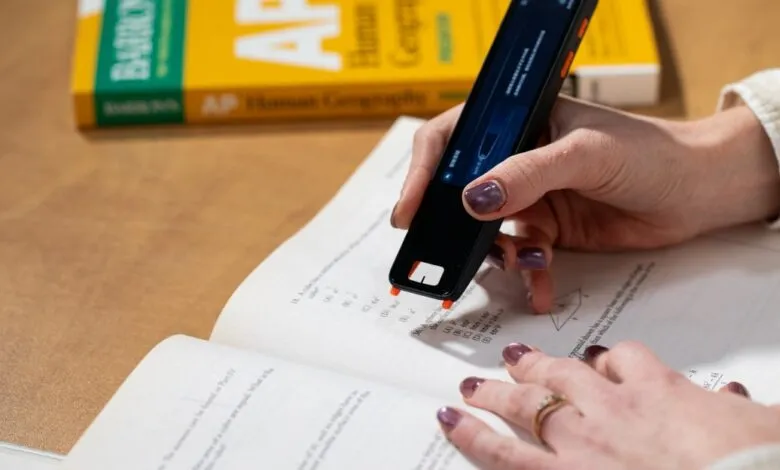
In the ongoing battle between academic integrity and technological ingenuity, a new gadget has emerged promising students an unfair advantage. Marketed through viral YouTube ads, devices with names like AI Smart Pen and ChatGPT pen claim to scan printed test questions and deliver instant answers. These wand-like tools, resembling small TV remotes with built-in screens, are promoted as the ultimate solution for bypassing paper-based exams, a format seeing renewed popularity as educators combat digital cheating. But does this hardware actually deliver on its bold promises?
A recent hands-on test with one popular model, the Scan Sense Pen purchased for $68.99, revealed significant shortcomings. The device theoretically operates by using a miniature camera to capture printed text, then processes it through onboard artificial intelligence to generate responses. Promotional materials show effortless question scanning with immediate correct answers displayed, suggesting a seamless cheating aid for subjects ranging from mathematics to history.
Reality proved far less impressive. During testing, the pen frequently failed to accurately read text from various study guides, despite properly illuminating pages. When it did manage to scan questions correctly, the provided answers were consistently nonsensical. One geology query about the layer beneath Earth’s crust received a response about volcano statistics rather than identifying the mantle. The device’s Chinese-language interface created additional navigation challenges, requiring translation apps just to access basic functions like the Q&A mode specifically designed for answering questions.
Physical design presents another obstacle for would-be cheaters. Measuring approximately six inches long and over an inch wide, the glowing wand would be difficult to conceal in exam settings where instructors monitor students closely. The conspicuous size and light emission make discreet usage nearly impossible in traditional classroom environments where desks are spaced apart and proctors circulate regularly.
Interestingly, the device demonstrated some competency in language translation between English and several Asian languages, suggesting this might be its only legitimate function. However, as an academic cheating tool, it falls completely short of its marketed purpose.
Students report far more effective, and affordable, methods for circumventing test security. The most common approach involves using smartphones to photograph exam questions, then submitting these images to ChatGPT during bathroom breaks or by discreetly checking phones under desks. This method proves particularly feasible in large lecture halls where proctors cannot monitor every student simultaneously.
The fundamental takeaway remains clear: while technology continues creating new cheating possibilities, this particular gadget fails to deliver practical academic dishonesty assistance. Its combination of inaccurate responses, difficult interface, and conspicuous design makes it an ineffective tool compared to simpler alternatives already in widespread use. As educational institutions grapple with AI-assisted cheating, this viral device serves as a reminder that not every technological solution performs as advertised.
(Source: The Verge)