Robotaxi’s Crucial Expansion: Why It Matters
▼ Summary
– Waymo is expanding its robotaxi service to freeways in the San Francisco Bay Area, Phoenix, and Los Angeles, a critical move for connecting sprawling metro regions.
– The company’s freeway access is expected to reduce ride times by up to 50% and is essential for offering rides to and from San Francisco Airport.
– Lucid Motors is close to appointing a new CEO from outside the organization, with Marc Winterhoff likely returning to his COO role after serving as interim CEO.
– Einride, a Swedish electric and autonomous truck startup, plans to go public via a SPAC merger valued at $1.8 billion, primarily generating revenue from its SaaS product and electric truck fleet.
– Rad Power Bikes may shut down in January if it fails to secure new funding or an acquisition, as revealed in an internal staff email.
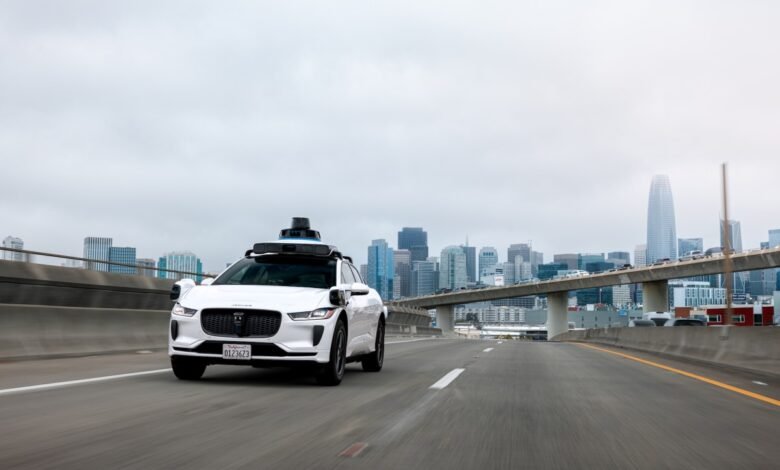
The strategic expansion of robotaxi services onto freeway systems represents a pivotal moment for autonomous vehicle deployment, fundamentally altering the efficiency and reach of these services. Waymo’s recent activation of commercial robotaxi operations on major freeways across the San Francisco Bay Area, Phoenix, and Los Angeles marks a significant technological and logistical milestone. This development serves as the essential infrastructure backbone for sprawling metropolitan regions, enabling more direct and faster travel routes that were previously inaccessible to driverless vehicles.
This freeway access dramatically enhances Waymo’s operational footprint, which now covers an impressive 260 square miles including Silicon Valley and San Francisco. The company reports that utilizing freeways could slash ride durations by as much as half, creating substantially more efficient transportation options. Perhaps most importantly, freeway capability is the critical enabler for providing robotaxi service to San Francisco International Airport, a connection currently undergoing testing that would offer travelers unprecedented convenience.
The airport service expansion could become a game-changing revenue stream for Waymo, though whether it will translate to profitability remains uncertain without access to the company’s financial details. While undoubtedly popular with passengers, the economic viability of these operations continues to be closely watched by industry observers.
Beyond robotaxi developments, several other mobility sector updates deserve attention. Lucid Motors appears close to naming a new chief executive after nine months without permanent leadership, with indications pointing toward an external candidate. Should this occur, interim CEO Marc Winterhoff would likely return to his previous role as chief operating officer.
In corporate financing news, Swedish electric and autonomous truck company Einride plans to go public through a SPAC merger valued at $1.8 billion. Unlike many pre-revenue transportation startups that have pursued SPAC mergers, Einride already generates income through its software services and fleet of 200 heavy-duty electric trucks serving clients like Heineken and PepsiCo. The transaction is projected to finalize in early 2026, listing the company on the New York Stock Exchange.
Several other significant funding rounds occurred across the transportation sector. Forterra secured $238 million for autonomous defense technology, while rapid-delivery service Gopuff raised $250 million, though at a reduced valuation compared to previous rounds. Electric truck manufacturer Harbinger obtained $160 million in Series C funding with participation from FedEx, which also placed an order for 53 electric truck chassis. Additional notable investments included Teradar’s $150 million for solid-state sensor development, Upway’s $60 million for e-bike refurbishment, and Vay’s $60 million from Grab for remote-controlled rental vehicles.
Industry developments continue to accelerate across multiple fronts. Ford will expand its BlueCruise hands-free driving technology to European markets starting in 2026. Joby Aviation completed the inaugural flight of its turbine-electric VTOL aircraft designed for defense applications. Lyft established a partnership with taxi platform Curb to integrate licensed taxi drivers into its service network. Meanwhile, Rad Power Bikes faces potential closure by January without new funding or acquisition.
Tesla continues to generate discussion with potential integration of Apple CarPlay, while addressing an expanded recall of its Powerwall 2 energy storage units. The Boring Company faces renewed scrutiny following chemical exposure incidents during Las Vegas safety drills. Toyota commenced operations at its new $13.9 billion North Carolina battery plant, with plans for additional U.S. investments. Uber has discreetly initiated in-app video recording for Indian drivers while launching premium services like Uber Ski for winter sports destinations.
Via’s first earnings report as a public company revealed a $36.9 million quarterly loss despite 11% revenue growth to $713 million. Finally, reader polling indicated divided opinions about Tesla’s long-term goals, with 34.7% believing the company can achieve 20 million vehicle deliveries by 2035, while 32% doubt any of Elon Musk’s stated objectives will be realized. Only minor percentages expressed confidence in Tesla reaching its targets for Full Self-Driving subscriptions, robot deliveries, or commercial robotaxi deployment.
(Source: TechCrunch)