Brain Scans Reveal Tech Stock Pain
▼ Summary
– Current pain measurement relies on subjective 1-10 scales that vary between individuals.
– A new platform by NTT Docomo and PaMeLa uses EEG brain activity to objectively measure and compare pain perception between people.
– The system visualizes pain as a 0-100 score using AI and calibrates thermal stimulation devices to recreate equivalent sensations.
– Experts question the technology’s use cases and note pain differs significantly between healthy volunteers and chronic pain patients.
– Future research aims to expand beyond thermal pain to include various physical and psychological pain types, with planned hospital collaborations for validation.
Measuring pain objectively has long been a challenge in medicine, but a new collaborative project between Japanese telecom giant NTT Docomo and Osaka-based startup PaMeLa (Pain Measurement Laboratory) aims to change that. Their experimental platform, part of Docomo’s “Feel Tech” initiative, seeks to objectively quantify personal pain perception and even allow one person to experience another’s discomfort. The goal is to foster deeper mutual understanding between individuals by sharing sensations that are typically hard to describe.
The system was recently showcased at CEATEC, Japan’s premier electronics exhibition. A company representative explained that the project focuses on human augmentation, building on earlier work that involved sharing movement, touch, and taste. Pain represents the latest frontier, a sensation notoriously difficult to put into words.
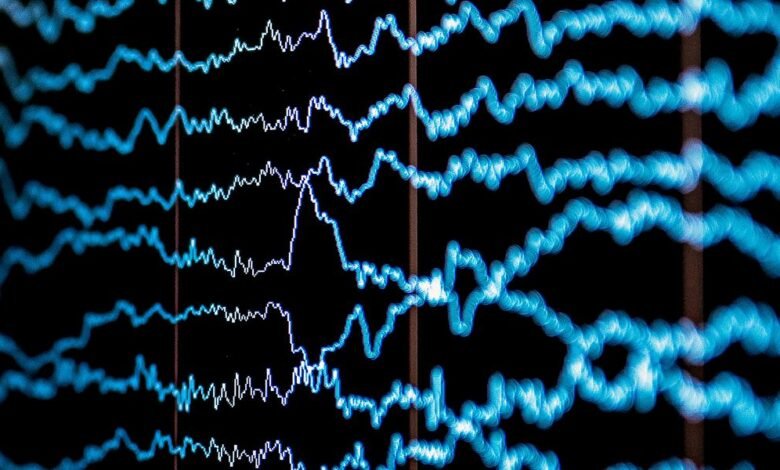
The technology operates through three main components: a device that senses pain, a platform that estimates differences in individual sensitivity, and an actuator that delivers calibrated pain stimuli. Using electroencephalography (EEG), the system records brain activity and employs artificial intelligence to translate it into a numerical score from zero to one hundred for both a “sender” and a “receiver.” An actuation device, often applying heat, is then adjusted according to each person’s sensitivity so the transmitted sensation feels equivalent for both.
In its current form, the platform relies on thermal stimuli to induce pain, a method chosen for its precision and safety during research. PaMeLa’s foundational studies used thermal stimulation alongside machine learning algorithms, analyzing pain data from 461 participants to determine intensity levels. While thermal pain serves as the starting point, developers indicate the system could eventually convey various types of physical and even psychological pain, opening numerous possibilities for future study.
However, experts like Carl Saab, founder and director of the Cleveland Clinic Consortium for Pain, caution that the technology remains highly preliminary. Saab, who also holds a position at Brown University and researches pain biomarkers using EEG and AI, questions the specific use case for such a platform. He emphasizes that pain manifests differently in healthy individuals compared to those with chronic conditions. Healthy volunteers experience temporary discomfort, while chronic pain patients often deal with anxiety, depression, and medication side effects, complicating the brain’s pain signals.
In one of his earlier studies, Saab observed that immersing volunteers’ arms in ice water produced clearer brain activity in healthy subjects than in pain patients, whose neural responses appeared far more complex. This distinction highlights the multidimensional nature of pain, underscoring the importance of defining exactly which aspect of pain is being measured.
Looking ahead, Docomo intends to partner with hospitals to validate the technology in clinical environments. Separately, PaMeLa completed a clinical trial analyzing EEG changes in surgical patients before and after receiving painkillers. The startup is also examining pain related to exercise, injections, and chronic conditions. As research progresses, capturing and sharing the full spectrum of pain remains a compelling, though challenging, ambition.
(Source: Spectrum IEEE)

