Hero’s New SDK Automates Your AI Prompts
▼ Summary
– Startups are creating prompt engineering roles and adding features like autocomplete to help users interact with AI chatbots more effectively.
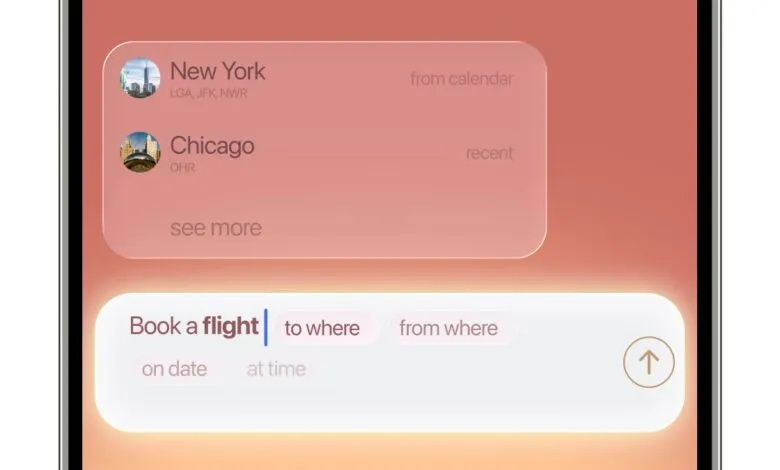
– Hero launched an invite-only autocompletion SDK that predicts and fills in prompt fields based on context, such as travel details or media parameters.
– This technology reduces the need for multiple interactions with AI apps, allowing users to achieve desired results faster and with fewer prompts.
– Hero’s co-founder stated that the autocomplete feature can speed up actions by 10 times and save companies server costs by reducing message volume.
– The startup has secured additional funding and is testing the technology in its app while exploring partnerships for AI-powered advertising.
Getting artificial intelligence to understand exactly what you want can be surprisingly difficult. Many people struggle to write effective prompts, which has even led to the creation of specialized jobs like prompt engineers. To make things easier for users, consumer AI applications are increasingly incorporating helpful features such as suggestion buttons and auto-generated recommendations. These tools guide people toward more productive interactions and demonstrate the full capabilities of the software.
A productivity startup called Hero, founded by former Meta employees, has just announced a new autocompletion software development kit (SDK). This new autocompletion SDK is designed to automatically fill in prompts based on the surrounding context. Currently available on an invite-only basis, the technology allows developers to integrate this smart prompting assistance directly into their own applications.
Imagine you are trying to book a flight. You might start by typing “Book a flight” into a chatbot. Hero’s SDK would then begin automatically populating the necessary fields, suggesting options like your destination, departure city, travel dates, preferred times, airline choice, and return information. You have full control, able to stop the autocomplete at any moment and send the partially or fully completed query to the AI.
This technology proves equally valuable for creative tasks. When using an AI-powered image or video generator, the autocomplete function can assist with various artistic parameters. It might suggest elements like the main subject, visual style, setting, type of landscape, or even a specific camera angle. This approach mirrors efforts by other industry leaders; for instance, Adobe’s new feature in its Firefly app lets users input keywords for mood, style, and purpose to effortlessly generate custom soundtracks.
Saharsh Vedi, an engineer at Hero who worked on developing this feature, noted that achieving desired results with an AI typically involves a lengthy and tedious back-and-forth exchange. He explained that this autocomplete capability allows users to reach their goal with significantly fewer prompts, potentially accomplishing a task in a single attempt.
Brad Kowalk, Hero’s co-founder, shared with TechCrunch that the company employs a series of sophisticated models to predict what a user is likely to type next. He emphasized that AI autocomplete pulls forward all the necessary inputs to complete an action, finishing it up to ten times faster by minimizing conversational loops. Kowalk stated this advancement unlocks a wide array of new use cases spanning travel, e-commerce, digital advertising, and customer support.
He also pointed out a significant operational benefit: because the process involves far fewer messages, companies operating at a large scale can realize substantial savings on their server costs.
The inspiration for this technology came from Kowalk and his co-founder Seung W. Lee’s previous experience developing augmented reality features at Meta. They recognized that on devices with limited screen space, like AR glasses, the user interface for prompts must be exceptionally simple and efficient, much like adding parameters to a query automatically.
Having secured $4 million in seed funding last year, Hero has recently obtained an additional $3 million in a round led by Forerunner Ventures. Kowalk mentioned that depending on the growth of their app and SDK adoption, the company plans to pursue a larger funding round in the coming months.
Hero is already testing a version of this technology within its own application, which helps users schedule meetings or arrange catch-ups with friends through autocomplete prompts. This feature is scheduled for a public release within the next couple of months.
Looking toward future applications, the company is also in discussions with Koah Labs, an advertising technology startup. They are exploring the potential for building AI-powered advertisements where brands could appear directly within autocomplete suggestions.
(Source: TechCrunch)