Waymo Takes on Highways: Is It Ready for the Challenge?

▼ Summary
– Waymo is expanding its robotaxi service to include highway routes in Phoenix, San Francisco, and Los Angeles, and extending its Bay Area service to San Jose with 24/7 airport access.
– The company has avoided highways until now due to safety concerns, but after extensive testing, it will gradually roll out highway trips to early-access users and expand based on performance data.
– Highway driving presents significant challenges for autonomous vehicles, including higher speeds and decision-making demands, which Waymo addresses with redundant systems and 360-degree sensor visibility.
– Waymo is coordinating with local safety authorities and has protocols for handling emergencies, such as system failures, to ensure passenger safety during highway trips.
– The expansion to highways and airports is crucial for Waymo to compete with traditional ride-hailing services, as these routes are key revenue sources and essential for efficient travel.
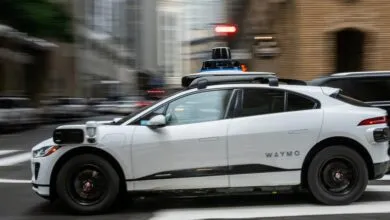
The autonomous vehicle company Waymo is expanding its service by introducing highway routes for its robotaxis in Phoenix, San Francisco, and Los Angeles, marking a significant step in its operational capabilities. This long-anticipated move addresses a common customer complaint about longer travel times due to previous restrictions that kept vehicles off freeways. Alongside this expansion, Waymo is extending its Bay Area coverage south to include San Jose, offering round-the-clock curbside access at both terminals of San Jose International Airport. This makes Mineta Airport the company’s second airport service location after Phoenix.
Until now, Waymo’s autonomous vehicles have generally avoided highways, choosing instead to navigate local roads even when that meant longer passenger trips. After extensive testing on public highways with employees, as well as through simulations and closed-course evaluations, the company believes its technology is prepared for broader deployment. Co-CEO Dmitri Dolgov emphasized that while freeway driving might seem straightforward, achieving full autonomy at scale without human backup requires rigorous attention to safety and reliability.
Initially, only early-access users who have agreed to test new features will be able to book rides that include highway segments. Waymo plans to gradually extend this option to more riders as it gathers performance data and user feedback. From the passenger’s point of view, the process remains unchanged: they request a ride via the app, view the estimated arrival time and route preview, and the system will automatically choose a freeway route if it offers a significantly faster trip.
The company anticipates that riders will respond positively to the change, since highway routing can cut travel time by up to half on certain routes, such as from San Francisco to Mountain View. This efficiency not only speeds up journeys but also improves connections to public transit and supports better first-mile and last-mile mobility solutions.
Highway driving presents distinct challenges for autonomous systems. At higher speeds, vehicles have less time to make critical decisions, and any errors could have more serious consequences. Waymo’s engineers point to their multi-sensor hardware, including lidar, cameras, and radar, which provides a 360-degree field of view and can detect objects as far as three football fields away.
To manage the increased complexity of freeway environments, Waymo has incorporated additional redundancies into its systems. These are designed to handle a wider array of unusual situations, such as simulating a complete power failure in one of the vehicle’s dual onboard computers. In such an event, the backup system would activate immediately, allowing the vehicle to remain under control and safely exit the freeway. Principal software engineer Pierre Kreitmann compared this capability to a person suddenly losing half their vision and cognitive function yet still being able to drive safely.
Should a Waymo vehicle need to pull over, the company states it has established protocols to keep passengers safe and arrange for the continuation of their trip. Waymo is coordinating with safety authorities including the Arizona Department of Public Safety and the California Highway Patrol to ensure its operations comply with local regulations.
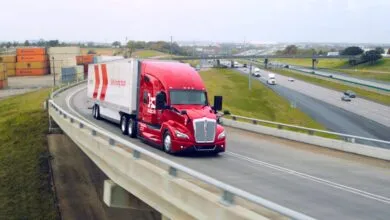
Highway driving has been a key objective for Waymo for years. Critics have pointed to the previous avoidance of freeways as evidence that autonomous vehicles are not yet ready for long-distance travel. While self-driving truck companies often test on highways with safety drivers present, Waymo stands out as one of the few robotaxi services operating fully driverless vehicles. Tesla also runs a robotaxi service in California, but it includes safety drivers and is available only to a limited group of users, with highway travel reportedly included.
The expansion into San Jose, including airport service, has been planned for months. Waymo does not yet offer commercial service at San Francisco International Airport (SFO), making San Jose’s airport its first official California airport location. Designated pickup and drop-off zones are available at both Terminal A and Terminal B. Operations at SFO are still in an early pilot phase; although Waymo received a permit to begin commercial service there in September, it continues to work with airport officials to phase in operations gradually. These negotiations have stretched over several years as Waymo works to demonstrate that its vehicles can safely navigate the complex, high-traffic environment typical of major airports.
Airports and highways are closely connected, since most airport access involves freeway travel. They also represent a major source of revenue for ride-hailing services, accounting for roughly 20 percent of trips for companies like Uber and Lyft. For Waymo to compete effectively with traditional ride-hailing, and to achieve profitability, mastering both airport logistics and highway driving will be essential.
(Source: The Verge)