Unlock Math Proofs by Turning Them Into a Puzzle
▼ Summary
– Marijn Heule has solved long-standing mathematical problems like the empty hexagon and Keller’s conjecture using SAT (satisfiability), a computational method.
– Heule believes combining SAT with large language models (LLMs) could create tools to tackle even harder pure math problems that humans cannot solve.
– LLMs have succeeded in solving problems from competitions like the International Mathematical Olympiad, but Heule aims for AI to solve problems beyond human capability.
– SAT is a form of symbolic AI (GOFAI) that uses logical rules with true/false statements to produce verifiable results, unlike neural network-based AI.
– SAT solvers can generate airtight proofs by breaking problems into logical components, though these proofs may be too lengthy for humans to read.
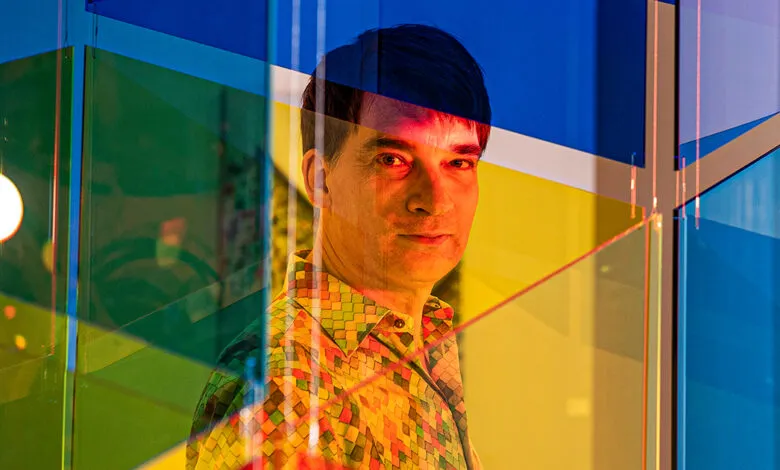
Unlocking the secrets of complex mathematical proofs often feels like solving an intricate puzzle, and researcher Marijn Heule has pioneered a method that does exactly that. Over the past ten years, Heule has tackled legendary problems with names straight out of speculative fiction, the empty hexagon, Schur Number 5, and Keller’s conjecture in dimension seven. These weren’t just abstract curiosities; they represented some of the most persistent challenges in geometry and combinatorics, resisting solution for nearly a century. His weapon of choice? A versatile computational approach known as satisfiability, or SAT, which systematically breaks down these formidable questions into manageable pieces. Now, as part of Carnegie Mellon University’s Institute for Computer-Aided Reasoning in Mathematics, Heule envisions combining SAT with large language models to forge tools capable of conquering even more profound problems in pure mathematics.
Heule points out that while LLMs have achieved remarkable feats, such as earning medals in the International Mathematical Olympiad, they have so far only solved problems within human reach. “My real ambition,” he explains, “is to witness artificial intelligence crack a problem that has stumped humanity entirely. What makes SAT so compelling is its track record, it has already resolved several puzzles for which no human-verifiable proof exists.”
SAT forms a cornerstone of artificial intelligence, though not the flashy variety that dominates headlines with conversational fluency or speculative fears. It belongs instead to the school of symbolic AI, sometimes called GOFAI, or “good old-fashioned AI.” This approach relies on explicitly coded rules rather than the opaque, emergent behaviors of deep neural networks. Conceptually, SAT is elegantly straightforward: it deals with propositions that must be either true or false, connected by unbreakable logical sequences. By reducing problems to these fundamental logical components, specialized programs known as SAT solvers can construct rigorous, error-proof arguments, a technique termed automated reasoning. These proofs might stretch to immense lengths, far beyond human capacity to check manually. Yet their logical soundness remains unquestionable.
(Source: Quanta Magazine)