Matic Robot Vacuum Review: Smarter, Quieter Cleaning
▼ Summary
– Matic is a robot vacuum that addresses common problems like getting stuck, being loud, and requiring high maintenance through superior navigation and mobility.
– It features camera-based navigation that mimics human cleaning patterns and operates entirely offline with local data processing for privacy.
– The robot has a unique rectangular design, is quiet at 55dB, and includes an LCD screen for status updates instead of voice alerts.
– Matic’s drawbacks include being too tall for low furniture, slow cleaning speeds, proprietary expensive bags, and inability to mop and vacuum simultaneously.
– Despite some flaws, Matic is praised for reliability, rarely getting stuck, and consistently completing cleaning tasks with minimal user intervention.
Finding a truly reliable robot vacuum that cleans effectively without constant supervision can feel like an impossible quest. Many models promise a hands-free experience but end up demanding more attention than they save, getting stuck under furniture, creating noise disturbances, or requiring frequent rescues. The Matic robot vacuum and mop enters the market with a bold promise: to deliver a smarter, quieter, and fundamentally more dependable cleaning companion. Developed by former Google Nest engineers, this device takes a completely fresh approach to home robotics, focusing on robust navigation and practical intelligence over raw suction power.
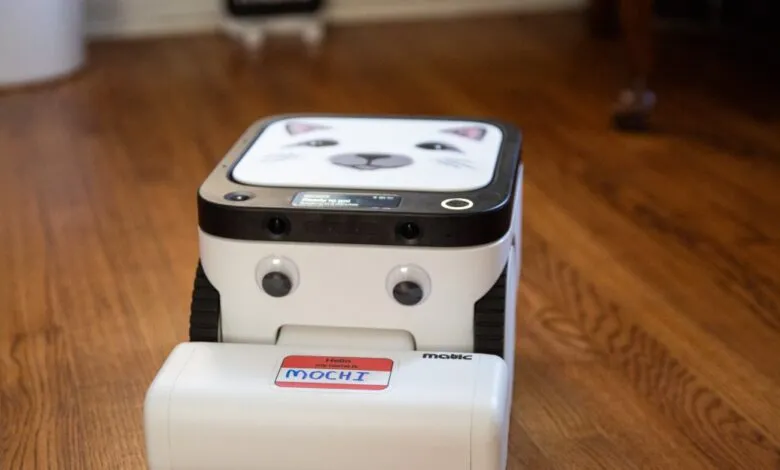
Its unique design immediately stands out. Resembling a friendly robot more than a traditional disc-shaped vacuum, the Matic features a stout white body, a flat head with a large LCD screen, and a simple pause/resume button. This rectangular form factor, standing at eight inches tall, houses a one-liter disposable dust and liquid bin along with a 600ml clean water tank. Because all components are accessible from the top, you never need to flip it over to clear a brush jam or replace a part.
Setting up the Matic is a refreshingly simple process. It arrives in a compact box that opens like a gift, with a small ramp letting the robot roll right out. Upon powering up, it greets you by name on its screen. There’s no complicated account creation; you simply connect via Bluetooth through the iOS or Android app to begin mapping. In just a couple of minutes, it can create a detailed, color 3D map of your living space using its five RGB cameras and infrared sensors.
What truly sets the Matic apart is its exceptional navigation. It moves through a home with a human-like awareness, weaving around obstacles and transitioning smoothly over different floor types. Thanks to its camera-based system powered by an Nvidia module, it avoids common pitfalls like cables, rug tassels, and pet toys. It even adjusts its behavior on the fly, reducing brush speed to avoid scattering popcorn or lowering suction to retreat from fringe. In six months of testing, it only got stuck twice, a remarkable record.
Cleaning performance is methodical and effective. While its suction power, 1,900Pa standard and 3,000Pa for deep cleans, is modest compared to some rivals, its intelligent design compensates. A large roller brush with wide rubber fins provides excellent agitation. When it detects a concentrated area of dirt, it employs a circular, back-and-forth pattern to ensure thorough pickup. It handled dried spills like oatmeal and ketchup well on hard floors, though it left some debris on very high-pile rugs where competitors with stronger suction performed better.
The mopping function is thorough but slow. The roller mop, situated behind the main brush, applies good downward pressure to tackle dried-on messes. It moves deliberately to avoid spreading liquids, though its wheels can pick up grime and require occasional wiping. It cannot vacuum and mop simultaneously, and its edge cleaning for baseboards is less effective than models with specialized, spinning mop pads.
One of its most appreciated features is its remarkably quiet operation at just 55dB. You can comfortably run it while working or watching television in the same room. Instead of a voice that announces problems, it discreetly displays statuses on its screen and sends app notifications. If it encounters an unresolvable issue, like a full bin, it will return to its dock after 15 minutes without human help, ensuring it never dies mid-clean.
A significant advantage is its privacy-focused, local processing. All mapping and navigation data is processed directly on the device, with no cloud dependency or account required for basic operation. You can control it via Bluetooth, and if you connect it to Wi-Fi for updates or remote control, the company states all data is end-to-end encrypted.
However, the Matic is not without its compromises. Its tall stature prevents it from cleaning under low furniture like sofas or beds. The proprietary disposable bags, which collect both dust and wastewater, fill up relatively quickly and represent an ongoing cost. The robot will not function without them. At $12 for a pack of four or $25 for twelve, this is a recurring expense to consider. The cleaning process is also slow, often taking more than twice as long as other models to vacuum and mop an area.
The company’s philosophy is to continuously improve its single model through over-the-air updates. During the testing period, new features like stain cleaning and improved obstacle detection were added. Future updates promise gesture control and Matter support. While this is promising, the long-term viability of a small startup is a valid consideration for a four-figure appliance.
For those willing to invest over a thousand dollars, the Matic offers a uniquely reliable and low-maintenance cleaning experience. It prioritizes consistent, complete cleaning cycles with minimal intervention over raw power or speed. While more powerful and faster options exist, the Matic’s intelligent navigation, quiet operation, and thoughtful design make it a compelling choice for a cleaner, calmer home.
(Source: The Verge)