Zohran Mamdani Takes Over NYPD Surveillance System

▼ Summary
– Mayor-elect Zohran Mamdani has asked current Police Commissioner Jessica Tisch to remain in her role despite their significant policy and geopolitical disagreements.
– Mamdani and Tisch are expected to clash over the NYPD’s extensive surveillance and intelligence-gathering capabilities, which have grown to rival those of a midsize country since 9/11.
– Mamdani’s public safety plan includes creating a $1 billion Department of Community Safety to handle non-emergency calls, while Tisch has a background in the NYPD’s controversial intelligence division.
– Experts warn that federal immigration raids are using local police surveillance data to track and arrest individuals, raising the stakes of police surveillance.
– Andrew Guthrie Ferguson notes that the weaponization of police technology has expanded beyond initial targets to broader communities, prompting a need for a reckoning on surveillance.
When Zohran Mamdani becomes New York City’s next mayor, his administration will face immediate pressure over the NYPD’s sprawling surveillance system, a network of technologies and intelligence operations that has grown dramatically since 9/11. Despite Mamdani’s progressive platform, he has unexpectedly asked Police Commissioner Jessica Tisch to remain in her role, a decision that puzzles many given their opposing political views. Tisch, whose background includes wealth from real estate and a history with the department’s intelligence division, disagrees with Mamdani on issues ranging from bail reform to Middle East politics.
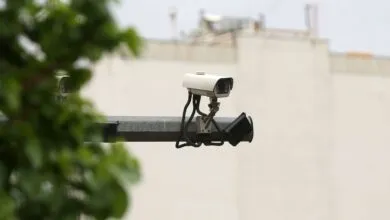
Their most significant conflict, however, may involve the scale and oversight of police surveillance. The NYPD’s capabilities—including networked CCTV, automated license plate readers, gunshot detection systems, and video analytics—now resemble those of a national intelligence agency. At one stage, the department’s Intelligence Division was even led by a former CIA official, with at least one CIA analyst embedded inside the NYPD.
Mamdani’s public safety plan emphasizes creating a new Department of Community Safety, funded with one billion dollars, to manage non-emergency calls instead of deploying armed officers. Still, his stance on surveillance contrasts sharply with Tisch’s professional history. She began her career in the NYPD’s intelligence unit during a period of widespread surveillance targeting Muslim communities, a controversial program often referred to as “mosque-raking.”
Legal experts warn that today’s surveillance risks are greater than ever, especially as federal authorities use data collected by local police—such as fingerprints and license plate scans—to carry out immigration enforcement operations. According to Andrew Guthrie Ferguson, a law professor at George Washington University and author of The Rise of Big Data Policing, these practices reveal how police-collected information can be turned against vulnerable populations.
Ferguson notes that the ongoing federal crackdown has exposed how local law enforcement data can be “weaponized by an authoritarian administration,” broadening public awareness beyond the initial focus on poor Black neighborhoods. He observes that as government targeting expands, so does the public conversation about who is affected by high-tech surveillance and predictive policing.
(Source: Wired)