Grammarly Rebrands as Superhuman, Launches AI Assistant
▼ Summary
– Grammarly is renaming the company to “Superhuman” after acquiring the email client, which is unusual as acquisitions typically involve absorbing the acquired company’s branding.
– The Grammarly product will keep its name, but the company may rebrand other acquisitions like Coda in the future.
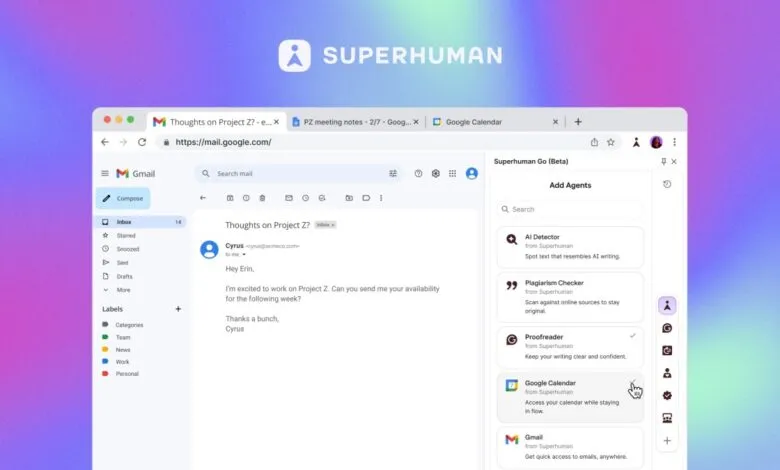
– A new AI assistant called Superhuman Go is being launched, integrated into Grammarly’s extension to provide writing suggestions, email feedback, and connections to apps like Gmail and Google Calendar.
– Superhuman Go can be accessed by all Grammarly users through a toggle in the extension, with additional agents like a plagiarism checker available in the agent store.
– Grammarly is expanding its productivity suite with AI features to compete with platforms like Notion and Google Workspace, offering subscription plans for Pro and Business users.
In a surprising strategic shift, Grammarly is adopting the name “Superhuman” following its acquisition of the email client, marking a departure from conventional post-acquisition branding practices. While the familiar Grammarly writing tool retains its original identity, the corporate entity now operates under the Superhuman banner. This rebranding signals a broader ambition to evolve beyond a simple writing assistant into a comprehensive productivity platform.
The newly introduced Superhuman Go AI assistant integrates directly into Grammarly’s existing browser extension, offering users real-time writing recommendations and email feedback. Its capabilities extend further by connecting with widely-used applications including Gmail, Google Drive, Google Calendar, and Jira. These integrations provide the assistant with contextual awareness, enabling it to perform practical tasks such as creating support tickets or checking your schedule when arranging meetings.
Looking ahead, Superhuman plans to expand the assistant’s functionality by allowing it to pull information from customer relationship management systems and internal company databases. This would empower the tool to recommend specific edits to email content based on richer, external data sources.
Activating Superhuman Go is straightforward, users simply toggle a switch within their Grammarly extension and link their preferred apps. An agent store, introduced earlier, offers additional specialized tools like a plagiarism detector and an advanced proofreader for those seeking more tailored assistance.
Currently, all Grammarly users have access to Superhuman Go, with the company also providing tiered subscription plans. The Pro plan, priced at $12 per month with annual billing, includes grammar and tone adjustments in several languages. For teams, the Business plan costs $33 monthly (billed annually) and unlocks Superhuman Mail alongside other collaborative features.
Future development roadmaps include embedding more AI-powered functionalities into the Coda document platform and Superhuman’s email clients. These enhancements may involve automatically importing details from various external and internal sources to populate documents and draft emails, reducing manual input for users.
Over recent years, Grammarly has deliberately expanded its scope through strategic acquisitions like Coda and Superhuman, transforming from a writing aid into a multifaceted productivity suite. The launch of Superhuman Go positions the company to compete more effectively against established platforms such as Notion, ClickUp, and Google Workspace, all of which have aggressively integrated AI tools into their offerings.
(Source: TechCrunch)