Anatoly Yakovenko Champions Agentic Coding on Solana
▼ Summary
– Solana Labs CEO Anatoly Yakovenko has shifted to a more passive role in software development, relying on AI coding tools like Claude to handle tasks.
– Yakovenko described AI as a “great force multiplier” for experts, allowing him to monitor its work and detect when it goes off track.
– Solana achieved significant financial success with $2.85 billion in annual revenue and a new ETF that attracted nearly $70 million in one day.
– Yakovenko attributed Solana’s success to growing acceptance of crypto, especially from finance professionals who understand settlement and banking risks.
– Solana faces criticism for hosting controversial coins like Trumpcoin, which directed $350 million to the president, but Yakovenko noted the open protocol limits his control.
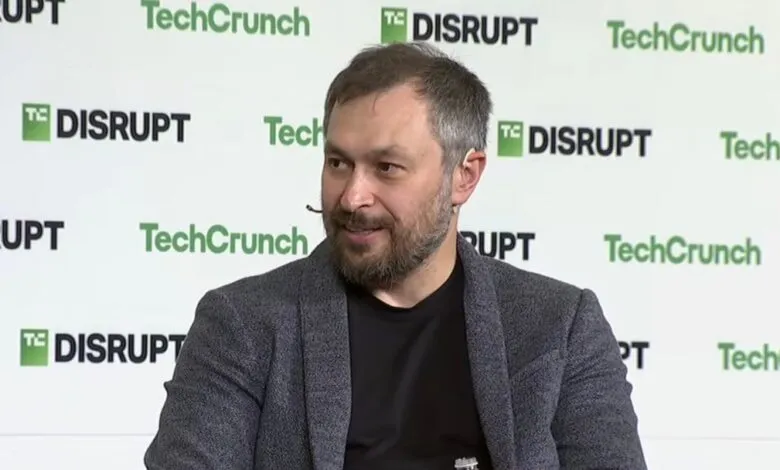
The emergence of agentic coding tools is reshaping how software engineers approach their work, and for Solana Labs CEO Anatoly Yakovenko, this shift has been especially profound. Speaking recently at TechCrunch Disrupt, Yakovenko revealed he’s grown increasingly comfortable stepping back from hands-on development duties, letting AI assistants handle much of the coding workload.
“AI has become a tremendous force multiplier for experienced developers,” Yakovenko noted, drawing from his fifteen-plus years in software development. He described his current relationship with coding assistants as almost intuitive: “I can observe Claude working through problems and practically sense when it’s about to go astray.” The executive even admitted that during meetings, if he appears distracted, “it’s probably because I’m monitoring Claude’s progress.”
As co-founder of the Solana cryptocurrency protocol, Yakovenko has witnessed remarkable success during a period when many digital assets have faced challenges. The platform recently reported $2.85 billion in annual revenue, driven primarily by cryptocurrency trading platforms operating on its network. Another significant milestone occurred just before Yakovenko’s appearance, the launch of Solana’s first exchange-traded fund by crypto asset manager Bitwise, which attracted nearly $70 million in investments within its first day.
Yakovenko credits this success to growing mainstream acceptance of cryptocurrency, particularly within traditional finance circles. “Back-office finance professionals actually grasp cryptocurrency concepts very quickly,” he observed. “These individuals constantly work with settlement risks and banking uncertainties, so they understand the value proposition immediately.”
Despite these achievements, the cryptocurrency space continues to face scrutiny, particularly regarding political fundraising through digital assets. The Solana-hosted Trumpcoin has drawn criticism for directing approximately $350 million to the former president, with detractors viewing this as a form of political bribery, especially following high-profile pardons for other crypto figures.
Yakovenko emphasized that as an open protocol, Solana maintains limited control over the tokens created on its network. “I could email you a link to Trumpcoin or Fartcoin,” he explained, “and both represent protocols, the email itself and the underlying technology that enables those markets to exist.” This fundamental characteristic of decentralized networks means creators cannot selectively restrict certain applications while supporting others.
(Source: TechCrunch)

