Conquer Math Anxiety With a Python Super-Calculator
▼ Summary
– David Delony built a Python-based engine similar to Wolfram Mathematica, using SymPy for symbolic math support.
– For statistics, the system integrates NumPy for arrays and basic stats, pandas for tabular data handling, and SciPy for scientific computing operations.
– The engine can handle various data sources and probability distributions, extending to multidimensional data and different regression types.
Building a powerful computational tool using Python can transform how you approach complex mathematical problems, turning anxiety into confident understanding. By leveraging a suite of specialized libraries, you can create an engine reminiscent of professional software like Wolfram Mathematica, capable of handling everything from symbolic algebra to advanced statistical analysis.
The foundation of this system is SymPy, a library dedicated to symbolic mathematics. Working with symbols rather than just numbers allows for a deeper grasp of calculus and linear algebra concepts, making abstract ideas more tangible. For statistical computations, the setup integrates NumPy, pandas, and SciPy. NumPy excels at managing multidimensional arrays and provides essential descriptive statistics, including mean, median, and standard deviation. Pandas operates on structured tabular data through its DataFrame objects, seamlessly importing information from spreadsheets like Excel and relational databases. SciPy acts as a comprehensive toolkit for scientific computing, offering a wide range of probability distributions such as the binomial, normal, and Student’s t-distribution.
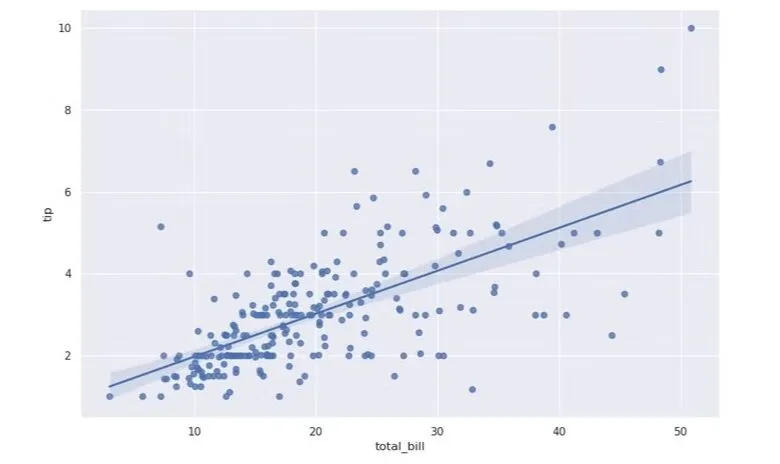
When it comes to modeling relationships within data, the engine incorporates statsmodels and Pingouin for regression analysis. This technique essentially involves fitting curves to data points. For two-dimensional datasets with a single dependent variable, simple linear regression produces a function in the form y = mx + b, defining both the slope (m) and y-intercept (b). The approach scales effectively to higher dimensions and supports various other regression types, providing robust tools for predictive modeling.
Exploring symbolic mathematics through these Python libraries opens up a world of computational possibility. For those intrigued by the intersection of symbolic computation and accessible hardware, projects involving platforms like the Raspberry Pi offer further exciting avenues for discovery.
(Source: NewsAPI Tech Headlines)
