Samsung’s XR Headset: Price, Specs, and Release Date Revealed

▼ Summary
– Samsung Galaxy XR is a $1,800 mixed reality headset launching today in the US, powered by Google’s Android XR OS and Qualcomm’s Snapdragon XR2+ Gen 2 chipset.
– The headset features dual high-resolution Micro-OLED displays, 16GB RAM, 256GB storage, and a tethered battery providing up to 2.5 hours of video playback.
– It supports eye and hand tracking and offers optional $250 motion controllers with a standard gaming layout, plus accessories like a carrying case and prescription lenses.
– Key software includes Google Gemini AI integration, Android XR-optimized apps like Google Maps and YouTube, and content such as NFL PRO ERA and Adobe Project Pulsar.
– Samsung positions Galaxy XR as the first in a new category of AI-native devices, targeting prosumers and enterprise while acknowledging it’s an initial step in a broader XR roadmap.
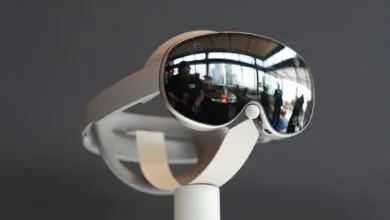
Samsung has officially launched its highly anticipated Galaxy XR headset, positioning it as a direct competitor to Apple’s Vision Pro. Available now in the United States for $1,800, the device marks Samsung’s reentry into the extended reality market and is the first to run on Google’s Android XR platform. This integration allows users to access a wide array of standard Android mobile applications alongside native XR experiences, creating a versatile ecosystem right out of the box.
The Galaxy XR comes in a single 256GB configuration, featuring dual Micro-OLED displays with a resolution of 3,552 by 3,840 pixels. These screens operate at a default refresh rate of 72Hz, which can be boosted to 90Hz for smoother motion. Under the hood, the headset is powered by the Qualcomm Snapdragon XR2+ Gen 2 chipset, supported by 16GB of RAM. Similar to its Apple counterpart, the Galaxy XR utilizes a tethered battery pack to manage power consumption. This external battery provides approximately two hours of general use or up to two and a half hours for 2D video playback on platforms like YouTube. Importantly, the headset can be used while the battery is charging.
For interaction, the Galaxy XR supports both eye and hand tracking. Additionally, Samsung is offering optional motion controllers for $250. These controllers feature a familiar layout with dual joysticks, grip buttons, triggers, face buttons (X, Y, A, B), and menu buttons, drawing comparisons to Meta’s Touch Plus controllers. A $250 official carrying case is also available, designed to hold both the headset and its battery pack. For users who require vision correction, prescription lenses can be purchased separately through EssilorLuxottica’s EyeBuyDirect.com.
At launch, several apps were highlighted to showcase the headset’s capabilities. These include games like NFL PRO ERA and Vacation Simulator, Adobe’s video editing tool Project Pulsar, a short 180-degree film titled Asteroid, and the meditation app Calm. The Android XR environment also brings optimized versions of popular Google services, such as Google Maps, YouTube, Circle to Search, and Google Photos. A significant feature is the integration of Google Gemini, Google’s advanced AI. Gemini enables users to navigate 3D locations in Maps, receive personalized suggestions, get context for YouTube videos, and ask questions about their physical surroundings. It can also “auto-spatialize” standard 2D photos and videos, transforming them into 3D by inferring depth information.
Samsung is sweetening the deal for early adopters. Customers who purchase the Galaxy XR before the end of 2025 will receive “The Explorer Pack.” This bundle includes a 12-month subscription to Google AI Pro, YouTube Premium, Google Play Pass, and a collection of specialized XR content. The company values this package at over $1,000.
Technical Specifications at a Glance:
- Memory & Storage: 16GB RAM, 256GB Storage
- Display: Dual 3,552 x 3,840 Micro-OLED, 29 million pixels, 96% DCI-P3 color gamut
- Refresh Rates: 60Hz, 72Hz (default), 90Hz
- Field of View: 109 degrees horizontal, 100 degrees vertical
- Chipset: Snapdragon XR2+ Gen 2 Platform
- Sensors: Comprehensive array including high-resolution passthrough cameras, world-facing tracking cameras, eye-tracking cameras, and a depth sensor.
- Audio: Two-way speaker system and a six-microphone array with beamforming support.
- Battery: Up to 2 hours of general use; can be used while charging.
- Connectivity: Wi-Fi 7, Bluetooth 5.4
- Weight: 545 grams (with forehead cushion); separate battery weighs 302 grams.
With the Galaxy XR, Samsung delivers a powerful Android-based alternative to the Vision Pro at nearly half the price. However, its $1,800 price tag likely confines its initial appeal to prosumers and enterprise clients rather than the mass market. Gamers hoping for a library as extensive as the Meta Quest’s may find the current offerings limited, despite the potential for easier porting of OpenXR games. The higher cost compared to devices like the Quest 3 could also deter some developers from fully committing to the platform.
While the Galaxy XR is a technically impressive device with all the right components, it feels like a strategic first step in a larger plan. Samsung and Google have indicated that their focus extends beyond this single headset. They are framing the Galaxy XR as the initial offering in a new category of AI-native devices, with a broader roadmap that includes multiple form factors, particularly AI glasses. This long-term vision points towards smart glasses as a stepping stone to all-day augmented reality wearables, which many in the industry believe will eventually replace smartphones. In this context, mixed reality headsets like the Galaxy XR serve as crucial platforms for gathering user feedback and refining the technology for future, more ambitious products.
For now, the Galaxy XR is unlikely to disrupt the market significantly, but it represents a solid and competent opening bid from Samsung and Google as they reenter the XR arena. The success of their broader vision will depend on sustained development and whether they can learn from the past to build a more compelling and accessible future for extended reality.
(Source: Road to VR)