GM’s ‘Eyes-Off’ Driving: What Happens When Cars Go AI?
▼ Summary
– General Motors will launch an “eyes-off” driving system in 2028 on the Cadillac Escalade IQ, allowing drivers to engage in other activities on approved highways.
– The system is a collaboration between GM’s Super Cruise team and its Cruise robotaxi subsidiary, positioning GM to compete with Toyota and Tesla in self-driving technology.
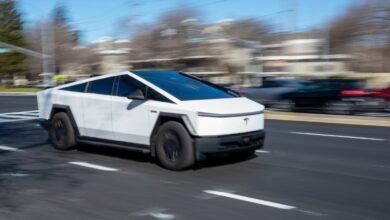
– Unlike Tesla’s camera-only Full Self-Driving system, GM’s feature will use lidar, radar, and cameras for decision-making.
– The system will alert drivers when to resume control through haptic, audible, and visual signals, addressing concerns about inattentive drivers.
– GM also announced AI integrations, including a Google Gemini chatbot in 2025 and a future custom AI for personal preferences, enabled by a new computing platform in 2028.
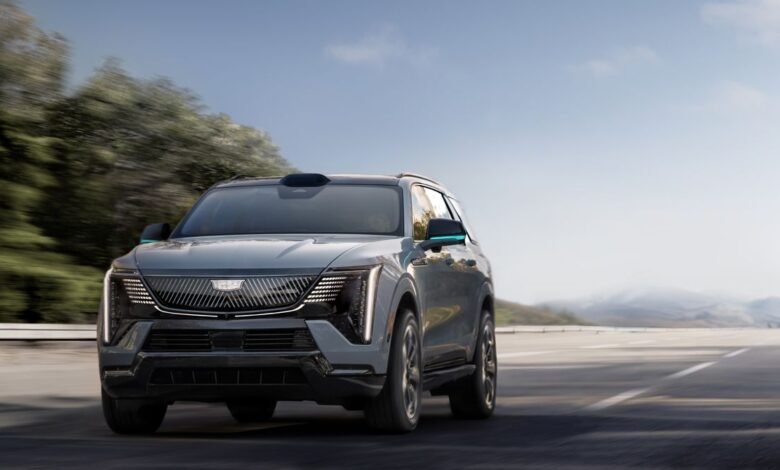
General Motors is preparing to introduce a groundbreaking “eyes-off” driving system in 2028, designed for the electric Cadillac Escalade IQ. This technology will allow drivers on specific mapped highways to engage in other activities without monitoring the road. Passengers could eat, handle emails, watch entertainment, or even rest, with the vehicle ensuring it pulls over safely if the driver fails to resume control when prompted.
This new system results from a partnership between the teams behind GM’s existing Super Cruise hands-free highway assistance and Cruise, the company’s robotaxi division. By combining these expertise streams, GM aims to compete directly with rivals like Toyota and Tesla, who are also advancing self-driving features for consumer vehicles.
A key distinction lies in the sensor technology. Unlike Tesla’s camera-only Full Self-Driving system, GM’s approach integrates lidar, radar, and cameras for environmental perception. According to Sterling Anderson, GM’s executive vice president of global product, the system will use a combination of haptic, audible, and visual alerts to clearly signal when the driver must retake control. Anderson, who previously co-founded Aurora and helped develop Tesla’s Autopilot, emphasized the critical need for this design. He stated that expecting an inattentive person to instantly resume driving is unrealistic, a lesson reinforced by industry experience over recent years.
The “eyes-off” capability was part of a broader GM announcement focused on artificial intelligence applications in their vehicles. This signals an intensifying race among automakers to implement advanced AI. Starting next year, GM plans to integrate a Google Gemini-based chatbot, enabling more natural voice commands for tasks like finding a nearby coffee shop. Future developments include a proprietary AI that learns individual driver preferences for settings like music, temperature, and seat position, and could proactively alert owners to required vehicle maintenance. A new centralized computing platform, launching in 2028, will serve as the foundation for all these AI-driven features.
(Source: Wired)