Ex-OpenAI, DeepMind Scientists Land $300M to Automate Science
▼ Summary
– Periodic Labs emerged from stealth with $300 million in seed funding from prominent investors including Andreessen Horowitz, Nvidia, and Jeff Bezos.
– The company was founded by Ekin Dogus Cubuk, who led materials research at Google Brain/DeepMind, and Liam Fedus, a former OpenAI VP who helped create ChatGPT.
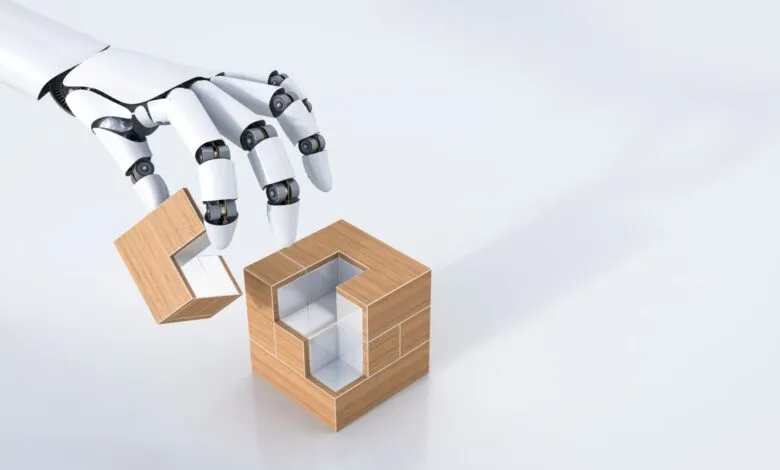
– Periodic Labs aims to automate scientific discovery by building autonomous laboratories where AI scientists conduct physical experiments and iterate on findings.
– Its primary goal is to discover new superconductors and other materials while collecting all physical world data generated during experiments.
– The startup operates in a competitive space where other organizations like Tetsuwan Scientific and academic institutions are also developing AI scientists for materials discovery.
A new venture named Periodic Labs has officially launched with a staggering $300 million seed funding round, positioning itself at the forefront of automated scientific discovery. Backed by a formidable roster of tech investors including Andreessen Horowitz, DST Global, Nvidia, Accel, Elad Gil, Jeff Dean, Eric Schmidt, and Jeff Bezos, the startup aims to revolutionize how research is conducted by developing AI scientists that can perform experiments autonomously.
The company was co-founded by Ekin Dogus Cubuk, who previously headed the materials and chemistry team at Google Brain and DeepMind, and Liam Fedus, a former OpenAI research vice president. Cubuk’s work includes leading the development of GNoME, an artificial intelligence system that identified more than two million novel crystals in 2023. These materials hold potential for future technological breakthroughs. Fedus contributed to the creation of ChatGPT and oversaw the team that built the first neural network with a trillion parameters.
Periodic Labs has assembled a compact but highly experienced team, with members who have worked on significant AI and materials science initiatives. Their backgrounds include developing OpenAI’s Operator agent and contributing to Microsoft’s MatterGen, a large language model designed for materials discovery.
The core mission of Periodic Labs is to automate scientific discovery by establishing laboratories where robotic systems carry out physical experiments. These AI-driven labs will gather data, iterate on processes, and continuously learn from their results. The company’s initial objective focuses on inventing advanced superconductors that offer improved performance and potentially lower energy requirements compared to existing options. Beyond superconductors, the startup intends to discover various other new materials.
Another critical aim is to compile comprehensive datasets generated by its AI scientists as they manipulate powders and raw materials through mixing, heating, and other procedures. According to the company, current AI progress has relied heavily on models trained on internet-sourced data, which is becoming depleted. Periodic Labs plans to address this by producing entirely new, real-world data through its autonomous research activities.
The expectation is that these labs will not only yield next-generation materials but also supply invaluable fresh data to fuel further evolution in AI models. While Periodic Labs boasts one of the most distinguished research teams in this emerging field, it is not alone in pursuing AI-driven science. The concept of using artificial intelligence to automate chemistry discoveries has been an academic focus since at least 2023. Other organizations, such as the small startup Tetsuwan Scientific, the nonprofit Future House, and the University of Toronto’s Acceleration Consortium, are also engaged in similar pioneering work.
(Source: TechCrunch)