Lyft Launches First Robotaxi Service in Atlanta
▼ Summary
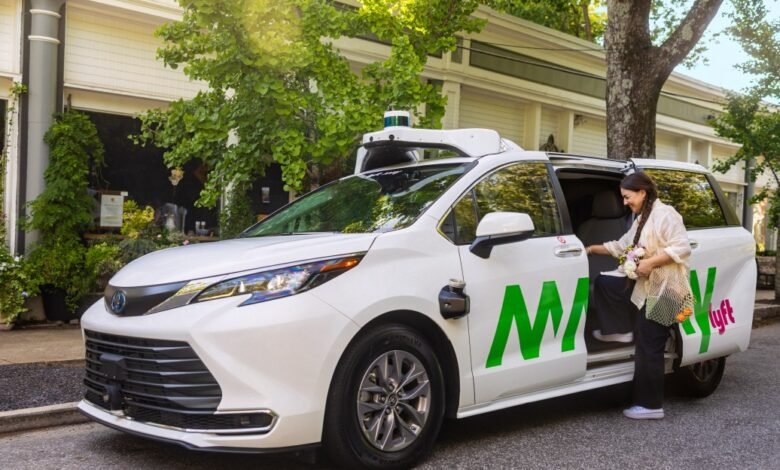
– Lyft is launching its first customer-ready robotaxi pilot in Atlanta in partnership with May Mobility, using Toyota Sienna minivans equipped with autonomous sensors.
– The service will initially include safety drivers, called “standby operators,” who can manually control the vehicle and assist passengers during the early phase of the pilot.
– Lyft has additional robotaxi partnerships planned, including a self-driving shuttle with Benteler Mobility and a fleet using Mobileye technology in Dallas, both set for 2026.
– The company is adopting an “asset light” strategy, relying on partners to own and operate the autonomous vehicles while Lyft provides the ridehail platform.
– Lyft previously had its own autonomous vehicle division but sold it to a Toyota subsidiary in 2021, shifting focus to partnerships rather than in-house development.
Lyft has officially launched its first commercial robotaxi service in Atlanta, marking a significant step in the ride-hailing company’s autonomous vehicle strategy. Partnering with May Mobility, a firm backed by Toyota and BMW, Lyft is deploying a fleet of Toyota Sienna minivans equipped with advanced sensors including cameras, radar, and lidar. The service will cover a roughly seven-square-mile area in and around Midtown Atlanta, offering customers the option to select an autonomous vehicle when booking rides within the designated zone.
Unlike some competitors who have rushed into driverless operations, Lyft is adopting a cautious approach. Each vehicle will be staffed with a “standby operator”, Lyft’s term for a safety driver, trained to take manual control when necessary. These operators will also assist passengers, answer questions, and help ensure a smooth rider experience. Over time, as confidence in the technology grows, their role is expected to diminish.
The use of safety drivers is common in early-stage autonomous vehicle deployments. Companies like Waymo and Tesla have employed similar measures during initial rollouts. Currently, only a handful of operators, including Waymo and Zoox, offer fully driverless commercial services without any human backup.
Beyond the Atlanta initiative, Lyft is pursuing multiple partnerships in the autonomous vehicle space. The company is collaborating with Benteler Mobility to introduce a self-driving shuttle service by late 2026. Additionally, Lyft plans to deploy a fleet of robotaxis in Dallas using technology from Intel’s Mobileye, with ambitions to expand to thousands of vehicles across other markets shortly after.
Though Lyft has historically trailed Uber in forming autonomous vehicle alliances, its strategy mirrors that of its larger rival. By offering its platform to self-driving developers, Lyft avoids the heavy capital investment required to build and maintain its own fleet. This “asset light” model allows the company to focus on customer acquisition and service integration while partners handle vehicle ownership and operation.
This is not Lyft’s first venture into autonomous technology. The company previously operated its own self-driving research division but sold it to a Toyota subsidiary in 2021, shifting toward a partnership-driven model instead. The Atlanta launch represents the latest evolution in that strategy, positioning Lyft to remain competitive in the rapidly advancing world of automated transportation.
(Source: The Verge)