Philips Hue: Your Lights Will Soon Be Motion Sensors
▼ Summary
– Philips Hue is introducing MotionAware, a feature enabling smart bulbs to detect motion using radio-frequency sensing without separate sensors.
– The feature requires the new Hue Bridge Pro and at least three compatible mains-powered devices in a room, covering most products made since 2014.
– MotionAware supports lighting automations and integrates with Hue Secure for security alerts, though some functions require a subscription.
– It uses Zigbee-based RF sensing for improved reliability over Wi-Fi alternatives and keeps motion data local unless used for security.
– The technology represents a step toward ambient smart home control but currently does not work with third-party platforms like Apple Home.
Philips Hue is transforming its entire ecosystem of smart lighting into a sophisticated motion detection network, bringing advanced automation to homes without the need for additional hardware. This groundbreaking feature, known as Hue MotionAware, leverages radio-frequency sensing to interpret disruptions in the Zigbee signal between bulbs, effectively turning them into a responsive motion-sensing grid. The upgrade applies to both new and existing Philips Hue bulbs manufactured after 2014, making it accessible to the vast majority of current users.
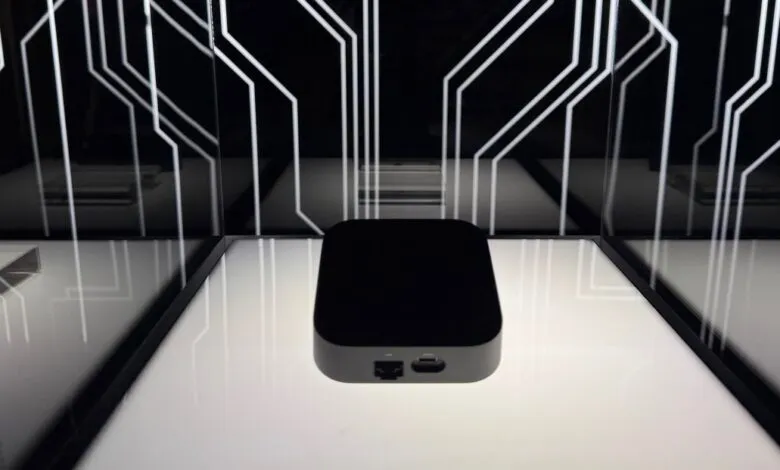
To activate MotionAware, users will need the new Hue Bridge Pro, priced at $90, which was introduced at the IFA 2025 tech exhibition. Once installed, the system requires at least three mains-powered Hue devices in a room, such as bulbs, light strips, or fixtures, to establish a sensing zone. Portable or battery-operated accessories, including the Hue Go or smart plugs, are not compatible with the feature.
Setting up a MotionAware zone is straightforward through the Hue app. Users select a room, choose the participating lights, and define the detection area. For optimal performance, lights should be arranged to form a broad zone rather than a narrow line. Each Bridge Pro supports up to four distinct sensing zones, which can then trigger automations for any connected Hue device, not just those within the zone.
According to George Yianni, Hue’s CTO and founder, the functionality mirrors that of physical motion sensors, including the ability to turn lights on when motion is detected and off after a period of inactivity. He emphasizes that the system offers improved coverage compared to traditional passive infrared sensors, as it isn’t limited by line of sight and can cover larger areas. However, like PIR sensors, it requires movement to trigger and may be activated by pets or other motion. An adjustable sensitivity slider helps users fine-tune detection to reduce false alerts.
One limitation is that MotionAware cannot detect ambient light levels, though it can be paired with a separate light sensor if needed. The effectiveness of motion sensing also depends on light placement, with recommendations suggesting that lights should surround the area where detection is desired for best results.
Beyond lighting, MotionAware integrates with Hue Secure, the brand’s DIY security platform. Motion events can trigger alarms, flashing lights, and smartphone alerts. While basic lighting automations are free, security notifications require a subscription starting at $40 per year, or $1 per month for users without cameras. All motion processing occurs locally on the Bridge Pro, with cloud connectivity only used for sending alerts.
Privacy is a central concern, and Hue assures that MotionAware is entirely opt-in. Users must manually enable the feature, and motion data remains local unless used for security purposes. The company has abandoned earlier plans to require a Hue account and adheres to strict privacy standards including GDPR.
The technology behind MotionAware is built on RF sensing, which uses wireless signals to detect movement by analyzing disruptions in the Zigbee network. This data is processed by AI algorithms on the Bridge Pro, which is more powerful than previous models and necessary for handling the computational load. While Wi-Fi-based RF sensing has existed for some time, Hue is the first to implement it using Zigbee, resulting in greater reliability and fewer false positives.
Developed in collaboration with Ivani, a U.S. tech firm, MotionAware uses Sensify firmware that can be layered onto various wireless protocols. Yianni notes that refining the system for real-world home environments took several years to ensure low latency and high reliability. To maintain stability, each bridge is limited to four sensing zones, though this may expand in the future.
Currently, MotionAware zones cannot be used to trigger automations in third-party platforms like Apple Home or exposed via Matter, though they are part of Hue’s public API. The company is exploring ways to broaden compatibility.
This innovation represents a significant step toward the ambient smart home, where environments respond intuitively to occupants. RF sensing holds promise for applications beyond motion detection, including fall monitoring and sleep tracking. As Yianni states, lighting is uniquely positioned to deliver unobtrusive, room-level presence sensing. By transforming existing lights into a smart sensing network, MotionAware brings us closer to a home that truly understands and adapts to our presence.
(Source: The Verge)