Joby Aviation & L3Harris to Test Autonomous Hybrid Aircraft
▼ Summary
– Joby Aviation is expanding its focus beyond electric air taxis by collaborating with the U.S. Department of Defense, leveraging years of R&D for defense applications.
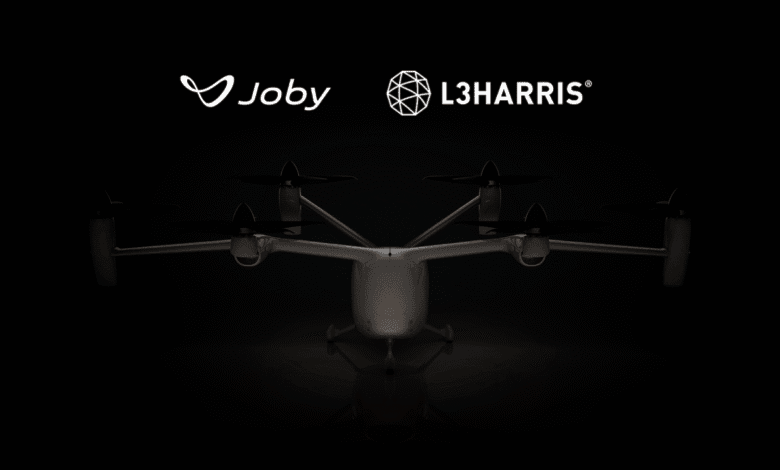
– The company signed an agreement with L3Harris Technologies to develop a gas-turbine hybrid VTOL aircraft for defense, based on its S4 platform.
– Joby previously demonstrated a hydrogen-electric hybrid version of the S4, achieving a 521-mile flight range, more than double its battery-electric prototype.
– Flight testing for the new hybrid VTOL will begin in fall 2024, with operational demonstrations expected by 2026, aiming for a military contract.
– The partnership with L3Harris aims to combine Joby’s aircraft with advanced sensors and autonomy for defense missions like logistics and electronic warfare.
Joby Aviation is teaming up with defense giant L3Harris Technologies to push the boundaries of autonomous hybrid aircraft technology for military applications. While best known for its electric air taxi ambitions, the company has quietly built a parallel track through years of collaboration with the U.S. Department of Defense, an effort now gaining momentum with this strategic partnership.
The newly announced agreement focuses on developing a gas-turbine hybrid VTOL (vertical take-off and landing) aircraft capable of autonomous operation. Built on Joby’s existing S4 platform, this variant represents a shift from the company’s all-electric focus, leveraging hybrid propulsion to achieve significantly extended range. Last year, Joby demonstrated a hydrogen-electric hybrid version under government contract that flew 521 miles, more than double the distance of its battery-powered prototype.
Flight testing for the new hybrid model is slated to begin this fall, with operational demonstrations expected by 2026. Though the partnership remains exploratory, the goal is clear: securing a military contract by proving the aircraft’s viability for defense missions. Paul Sciarra, Joby’s executive chairman, emphasized that range and mission adaptability were critical factors in aligning with DoD requirements.
The collaboration with L3Harris brings crucial expertise to the table. As a defense contractor with deep experience in sensors, autonomy, and communications systems, L3Harris can help tailor Joby’s platform for specific military use cases. Jon Rambeau of L3Harris highlighted the potential for long-range, crewed-uncrewed teaming missions, including contested logistics, electronic warfare, and counter-drone operations.
Joby’s dual-track strategy, commercial air taxis and defense applications, reflects a pragmatic approach to scaling advanced air mobility. While pursuing FAA certification for urban passenger transport, the company has simultaneously refined its technology through government partnerships. Sciarra noted that working with the DoD provided invaluable insights, pushing Joby to prioritize capabilities like extended range and modular mission systems.
The defense sector offers a compelling pathway for advanced air mobility innovators, combining rigorous testing environments with clear operational needs. For Joby, this partnership could accelerate real-world deployment while diversifying revenue streams beyond civilian markets. As hybrid and autonomous technologies mature, their role in military logistics and reconnaissance may soon become indispensable.
(Source: TechCrunch)