Trump’s AI Order Claims Anti-Bias But Promotes More Bias
▼ Summary
– The Google AI event highlighted responsible AI as a theme, revealing AI’s malleability as both a tool to minimize biases and a potential means for authoritarian manipulation.
– The Trump administration’s AI manifesto aims to counter China’s AI dominance but includes provisions aligning AI outputs with Trump’s definition of truth, raising concerns about ideological bias.
– The executive order targets “woke” AI, banning federal procurement of models deemed to prioritize diversity, equity, or climate change, while framing it as protecting truth and objectivity.
– AI companies have not publicly opposed the order, likely due to the plan’s broader benefits, such as reduced regulation and support for private-sector AI research.
– Critics warn the order could lead to government-influenced AI models, undermining free speech principles, with Senator Markey urging tech CEOs to resist the directive.
The intersection of artificial intelligence and political influence has become a contentious battleground, raising critical questions about bias, truth, and government overreach. During a recent Google AI event in New York, discussions on responsible AI highlighted how easily models could be adjusted, either to reduce bias or to push specific narratives. While authoritarian regimes might openly manipulate AI for propaganda, the U.S. has long relied on constitutional protections to prevent government interference in private-sector technology.
That dynamic shifted this week with the Trump administration’s sweeping AI policy directive. Framed as a strategy to outpace China in the global AI race, the plan includes a controversial provision demanding that AI models reflect what the White House deems “truth.” The document emphasizes free speech and opposes “social engineering agendas,” but buried within its 28 pages is a directive to scrub references to misinformation, diversity, equity, inclusion, and climate change from federal AI guidelines.
The irony is hard to miss. While the administration claims to champion objectivity, its definition of truth often clashes with established science and historical consensus. A fact sheet accompanying the plan insists AI must prioritize “historical accuracy and scientific inquiry,” yet the same administration has dismissed climate change, promoted revisionist history, and amplified fabricated content, like a recent AI-generated video of Obama behind bars shared on Trump’s Truth Social platform.
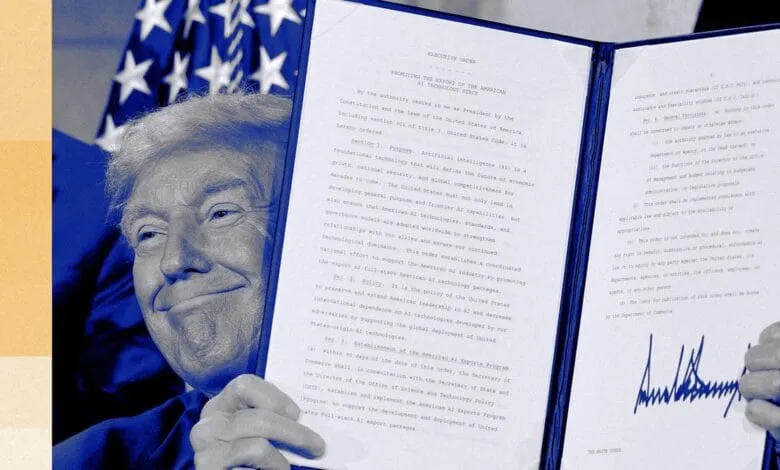
During a speech in Washington, Trump doubled down, labeling opposition to his vision as “woke Marxist lunacy” and signing an executive order titled “Preventing Woke AI in the Federal Government.” Though the order stops short of regulating private AI development, it pressures companies by threatening to withhold federal contracts from those whose models deviate from the administration’s ideological preferences. This creates a dangerous precedent: AI firms reliant on government deals may self-censor to avoid backlash, effectively outsourcing content moderation to political operatives.
Tech companies have remained conspicuously silent. OpenAI, Google, and Anthropic have publicly praised aspects of the plan while sidestepping its more contentious elements. Their reluctance to challenge the administration is unsurprising, the policy offers significant financial incentives, from relaxed environmental regulations for data centers to increased research funding. But the silence comes at a cost. By not defending their right to unbiased AI development, these companies risk enabling government-mandated distortions of fact.
Critics argue the order undermines foundational principles of free expression. Senator Edward Markey has warned that financial incentives could push AI models to echo White House talking points, turning chatbots into partisan mouthpieces. “Republicans want to use the power of the government to make ChatGPT sound like Fox & Friends,” he remarked.
The White House insists its goal is neutrality, accusing opponents of conflating bias with accountability. Yet the administration’s track record suggests otherwise. By targeting topics like racial equity and climate science, the policy doesn’t eliminate bias, it codifies a different kind of bias, one aligned with political dogma rather than empirical evidence.
As AI becomes a primary conduit for information, the stakes couldn’t be higher. Allowing any administration to dictate what constitutes “truth” in machine learning sets a dangerous precedent, one that could erode public trust in technology and deepen societal divisions. The question isn’t just whether AI can be neutral, but who gets to define neutrality in the first place.
(Source: Wired)