AI Moratorium’s Defeat Marks a Political Turning Point
▼ Summary
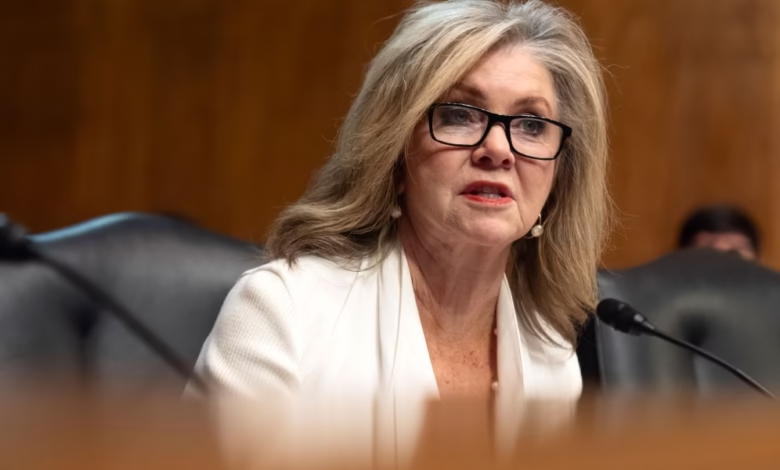
– Blackburn opposed the moratorium due to concerns about children’s online safety and musicians’ rights, while state lawmakers resisted federal interference in their legislation.
– The Trump administration may have abandoned the moratorium to prioritize tax breaks and entitlement cuts, aiming to pass the broader bill by Independence Day.
– Tech firms like Andreessen Horowitz and OpenAI lobbied for the moratorium but faced challenges, with OpenAI opposing state-by-state AI regulation.
– The moratorium’s broad scope and decade-long duration united diverse opponents, reflecting AI’s wide-ranging impact on different industries and livelihoods.
– Politicians across parties are increasingly advocating for serious AI regulation, with figures like Marjorie Taylor Greene reversing support due to uncertainty about AI’s future capabilities.
The recent failure to pass an AI moratorium signals a significant shift in political dynamics surrounding technology regulation. While the proposal had its supporters, including major tech investors and AI firms, opposition emerged from unexpected quarters. Lawmakers focused on issues like child safety and intellectual property rights found common ground with state legislators protective of their regulatory authority.
The moratorium’s sweeping scope and decade-long timeline may have ultimately worked against it, uniting a broad coalition of critics. Experts suggest the Trump administration prioritized other legislative goals, like tax reforms, over pushing for AI restrictions. “Sacrificing the moratorium might have been a strategic move to advance the broader bill,” noted Baobao Zhang, a political science professor at Syracuse University.
Tech giants remained divided on the issue. OpenAI publicly rejected a patchwork of state-level AI rules but avoided commenting directly on the moratorium’s collapse. Meanwhile, opposition figures like Marjorie Taylor Greene shifted positions dramatically, initially supporting the measure before backtracking, citing uncertainty about AI’s future impact.
What made this debate unique was how AI’s far-reaching implications bridged traditional divides. From country musicians worried about deepfakes to Silicon Valley developers concerned about ethical oversight, the technology sparked anxieties cutting across industries and ideologies. “These concerns are forging new alliances,” observed one analyst. “People who rarely agree are finding common cause in regulating AI.”
As public awareness grows, politicians face mounting pressure to address AI’s risks without stifling innovation. The moratorium’s defeat doesn’t mark the end of the conversation, it’s just the beginning of a more nuanced, high-stakes debate about balancing progress with protection.
(Source: Technology Review)