Why Tesla’s Robotaxis Still Need Human Supervisors

▼ Summary
– Tesla’s global sales dropped 13% last quarter, continuing a dismal year amid declining public opinion of CEO Elon Musk.
– Despite falling sales, Tesla remains the world’s most valuable automaker, partly due to the launch of its autonomous ride service in Austin.
– Tesla’s robotaxi service has had no reported crashes, with early riders praising it, though the program is limited to influencers and lacks public access.
– The service relies on human safety monitors and possibly remote teleoperators, raising transparency concerns and lagging behind competitors like Waymo.
– Experts argue Tesla’s autonomous technology is immature, failing to meet Musk’s promise of unsupervised self-driving by June.
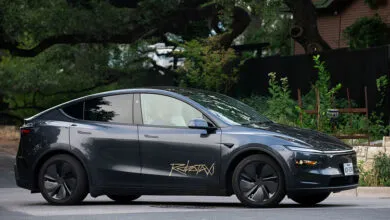
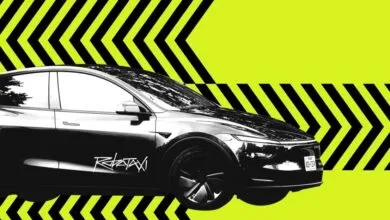
Tesla’s robotaxi service has officially launched in Austin, but despite claims of full autonomy, human oversight remains a critical component of the operation. While the company touts this as a step toward driverless transportation, experts argue the reliance on safety monitors and remote operators reveals significant gaps in Tesla’s self-driving capabilities.
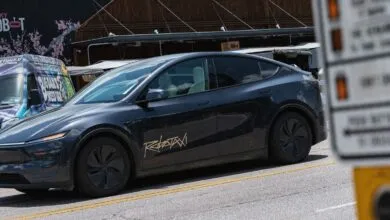
The service, which began in late June, has so far avoided any reported accidents, with early riders praising the experience. However, these initial users appear to be Tesla enthusiasts or influencers with vested interests in the company’s success. The limited rollout and selective access raise questions about whether the technology is truly ready for widespread public use. Unlike competitors like Waymo, which operates in multiple cities, Tesla’s pilot remains confined to a small area in Austin.
A closer look reveals that Tesla’s so-called autonomous vehicles still require human intervention. Each robotaxi includes a safety monitor in the front seat, ready to take control if needed. Additionally, the company employs remote teleoperators who can assist or even drive the vehicles from afar, though Tesla hasn’t clarified how often this happens. Experts suggest remote driving is safer than partial assistance, but without transparency, it’s unclear which method Tesla relies on.
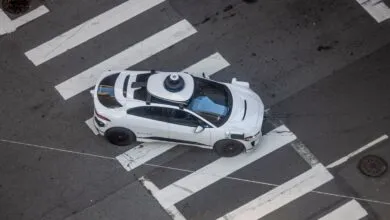
Missy Cummings, an autonomous vehicle researcher at George Mason University, describes Tesla’s approach as a “trifecta of babysitting.” While she commends the company for prioritizing safety, she believes the extensive human involvement signals that Tesla lags behind competitors. “If self-driving development were a school curriculum, Tesla is still in first grade,” she says. Waymo and Zoox, by comparison, have progressed to offering fully driverless services in multiple locations.
This slow progress contradicts Elon Musk’s bold predictions. Earlier this year, he assured investors that Tesla would launch “unsupervised full self-driving” by June, with no human presence required in the vehicle. The reality, human monitors, remote operators, and a cautious rollout, falls far short of that promise.
For now, Tesla’s robotaxis remain an experiment rather than a fully realized autonomous service. Until the company can eliminate human oversight entirely, its claims of full self-driving capability remain more aspirational than actual. As competitors expand their driverless fleets, Tesla faces mounting pressure to prove its technology can operate safely, and independently, on a larger scale.
(Source: Wired)