Waymo Hits 170 Million Miles With Zero Serious Crashes
▼ Summary
– Waymo reports its autonomous vehicles have driven over 170 million miles and cause significantly fewer serious-injury and airbag-deployment crashes compared to human drivers.
– Despite this safety data, recent incidents involving a child, school buses, and an obstructed ambulance highlight ongoing operational challenges and safety concerns.
– Safety advocates argue Waymo’s public data presents an incomplete picture, noting many reported crashes lack passengers, which can lower injury rates.
– Critics also point out that Waymo’s total driven miles represent a tiny fraction of annual human driving, limiting the statistical evidence for its safety claims.
– Waymo defends its methodology, stating it considers injuries to all people involved in a crash and that its safety benefits are substantial even when vehicles are unoccupied.
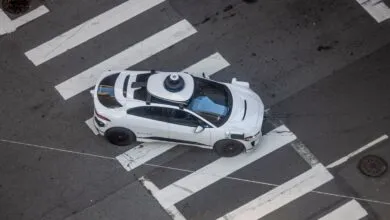
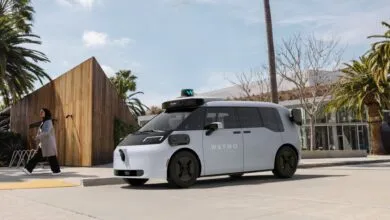
Waymo’s autonomous vehicles have now surpassed a significant milestone, logging over 170 million miles of real-world driving without a single serious crash or injury. This achievement, equivalent to roughly 200 human lifetimes of driving, forms the core of the company’s argument that its technology can dramatically improve road safety. The data, presented through an online safety hub, indicates that compared to human drivers, Waymo’s fleet is involved in 92 percent fewer crashes causing serious injuries, 83 percent fewer crashes triggering airbag deployment, and 82 percent fewer crashes involving any injury at all. With a fleet of about 3,000 vehicles operating in ten cities, the company estimates its technology is preventing a serious-injury crash approximately every eight days.
Despite these impressive statistics, the company’s safety narrative faces scrutiny from advocacy groups and recent incidents highlight ongoing challenges. A collision involving a Waymo vehicle and a child in Santa Monica, though resulting in only minor injuries, is under investigation by the National Transportation Safety Board (NTSB). This follows other concerning events, including robotaxis improperly passing school buses in Austin, Texas, and a separate incident where a driverless Waymo blocked an ambulance for two minutes during an emergency response. Critics point out that such operational issues, which rarely appear in federal crash reports, present an incomplete picture of the technology’s real-world performance.
The debate extends to how Waymo interprets and presents its safety data. Under a federal standing general order, companies must report crashes involving autonomous systems. Waymo uses this data to build its safety case, even submitting it for peer-reviewed publication. However, safety advocates like the group Advocates for Highway and Auto Safety argue the presentation is misleading. They note that 45 percent of Waymo’s reported crashes involve no passengers, which automatically lowers potential injury rates since there are no occupants to harm. Furthermore, approximately 80 percent of the company’s crashes are rear-end collisions, a rate far higher than the national average for human drivers of about 30 percent.
“Claiming a safety benefit from crashes where no occupant is present is incongruous if the goal is to transport people,” stated Cathy Chase, president of Advocates for Highway and Auto Safety, in a recent letter to lawmakers. The group also contextualizes Waymo’s mileage, noting that 170 million miles represents a minuscule fraction,about 0.004 percent,of the distance Americans drive in a single year. From this perspective, the accumulated data is seen as insufficient to draw broad conclusions about safety superiority.
Waymo addresses some of these critiques directly. The company acknowledges that having an unoccupied vehicle during a crash is part of the safety benefit, but argues this alone doesn’t explain the large reduction in injury-causing crashes, as pedestrians and cyclists outside the vehicle are still at risk. A spokesperson emphasized that their injury analysis considers “any person involved in the crash sequence.”
For researchers like Shaun Kildare of Advocates for Highway and Auto Safety, the fundamental question is whether the multi-billion dollar investment in autonomous driving yields a system that outperforms not just average human drivers, but the most dangerous ones. Incidents like driving onto light rail tracks or past stopped school buses suggest the technology still has critical gaps. “It should be better than the worst of our drivers out there,” Kildare remarked, underscoring the high expectations for a system designed to operate without human intervention. The journey to 170 million miles marks progress, but the road to proving comprehensive safety and public trust appears to have many miles left.
(Source: The Verge)