Google’s AI Assistant Is Now Free for Everyone in the U.S.
▼ Summary
– Google is making its Personal Intelligence feature free for U.S. users with personal accounts, having previously required a paid AI Pro or Ultra subscription.
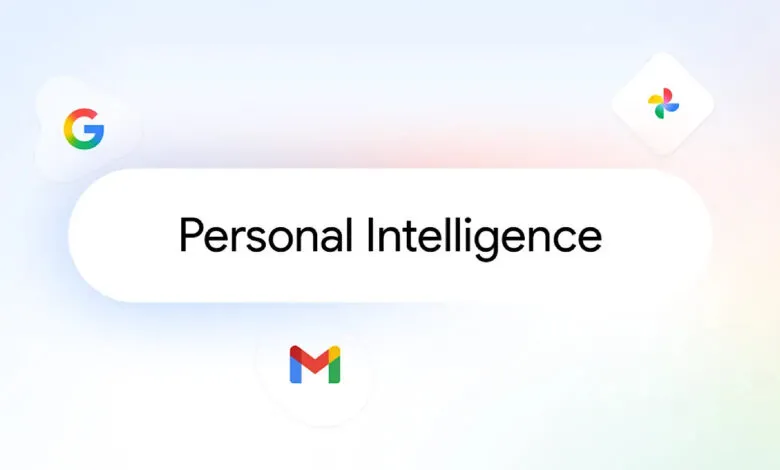
– The feature connects a user’s Gmail and Google Photos to AI Mode and Gemini, allowing these tools to reference personal data like emails and photos to answer questions.
– Google states that while prompts using the feature may include personal details, its AI models are not trained directly on the raw data from Gmail or Photos libraries.
– This expansion significantly increases the feature’s potential user base and could lead to more personalized, varied search results between users.
– The availability is currently limited to U.S. personal accounts, with no announced plans for international or Google Workspace account expansion.
A significant shift in the AI landscape is underway as Google makes its advanced Personal Intelligence feature free for all personal account users in the United States. Previously locked behind a paywall for AI Pro and AI Ultra subscribers, this powerful tool is now accessible to a vastly larger audience. This expansion fundamentally changes who can use AI that taps directly into their personal Google ecosystem.
The update, detailed in a company announcement, brings this capability to AI Mode within Google Search, the dedicated Gemini application, and Gemini extensions in the Chrome browser. Access within AI Mode is live immediately, with the app and browser integrations beginning their rollout now. The core function of Personal Intelligence is to link a user’s Gmail and Google Photos accounts to the AI, allowing it to reference personal information to answer questions. For instance, it could pull details from a flight confirmation email or locate a specific photo memory without the user having to manually provide that context.
This represents a major policy reversal from just a few months ago. When the feature first debuted, it was exclusively a premium subscription benefit. The removal of this barrier for U.S.-based personal accounts dramatically increases its potential user base. It is important to note that the offering remains unavailable for accounts managed through Google Workspace for business, education, or enterprise clients.
Users who wish to enable the feature can do so through the settings in either Google Search or Gemini. The connections to Gmail and Photos can be toggled on or off at any time, providing a degree of user control. Alongside the rollout, Google included clarifications on data usage. The company states that its AI models are not trained directly on the raw contents of a user’s Gmail inbox or Google Photos library. Instead, training may involve the specific prompts a user submits while the feature is active and the AI’s corresponding responses. This means that while prompts might contain private details drawn from connected apps, Google asserts it does not scan or train on the underlying data repositories themselves.
The strategic importance of this move cannot be overstated. Transitioning from a paid to a free model massively scales the feature’s reach and influence. This shift also introduces a new layer of variability in search results. Two individuals entering the identical query could receive different AI-generated answers if one has their personal data connected and the other does not. This personalization makes it challenging to establish a standard, benchmark response for any given search topic.
Furthermore, this integration may begin to change user behavior. As people grow accustomed to the AI having background context, we might see a trend toward shorter, more conversational queries, relying on the assistant to fill in the gaps using known information. While there is no current timeline for an international expansion or inclusion of Workspace accounts, the rapid transition from a paid to free service suggests strong internal confidence in the technology’s readiness and value. How the public responds to this deeper linking of personal data with AI-powered search will undoubtedly guide Google’s future plans for this and similar features.
(Source: Search Engine Journal)