Gamers Revolt Over DLSS 5’s AI ‘Glow-Ups’
▼ Summary
– Nvidia’s upcoming DLSS 5 technology moves beyond simple upscaling to use generative AI for overhauling lighting and textures in games.
– The company describes DLSS 5 as a “real-time neural rendering model” aiming for Hollywood-level photorealism while preserving artistic control.
– Unlike typical generative video models, DLSS 5 uses a game’s internal data to create consistent, controllable, and photorealistic lighting and materials.
– The technology has been demonstrated using two high-end RTX 5090 GPUs, with one entirely dedicated to running DLSS 5.
– Despite impressive technical demonstrations, the initial reaction from the gaming community and industry to DLSS 5’s visual output has been overwhelmingly negative.
The gaming community is pushing back hard against Nvidia’s latest innovation, DLSS 5, which moves beyond simple resolution upscaling into a realm of AI-driven visual overhauls. Announced with a planned Autumn launch, this “real-time neural rendering model” promises Hollywood-level photorealism by using generative AI to completely reinterpret a game’s lighting and textures. While the technology is a technical marvel, many players argue it strips away artistic intent, replacing unique visual styles with a uniform, glossy sheen that feels artificial and disconnected from the original creative vision.
Nvidia’s presentation, led by CEO Jensen Huang, positioned DLSS 5 as a revolutionary fusion of generative AI and traditional rendering. The goal is to achieve unprecedented visual realism while supposedly preserving the control game artists require. The system distinguishes itself from typical generative video models by using a game’s own internal data, like color information and motion vectors, as a foundation. This allows the AI to inject photorealistic lighting and material effects that are consistent from one frame to the next and anchored to the original 3D assets.
According to Nvidia, this deep integration lets the system comprehend complex scene elements. It can identify characters, hair, fabric, and skin, and then adjust environmental lighting conditions like backlighting or overcast skies with a new level of detail. The underlying promise is a leap in fidelity without sacrificing the predictability that gamers and developers demand from a rendering pipeline.
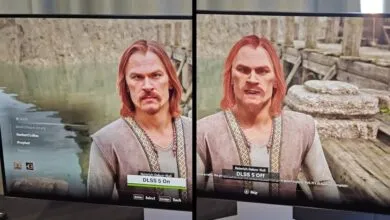
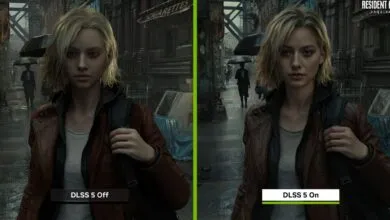
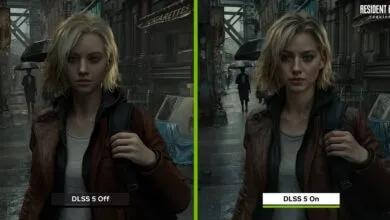
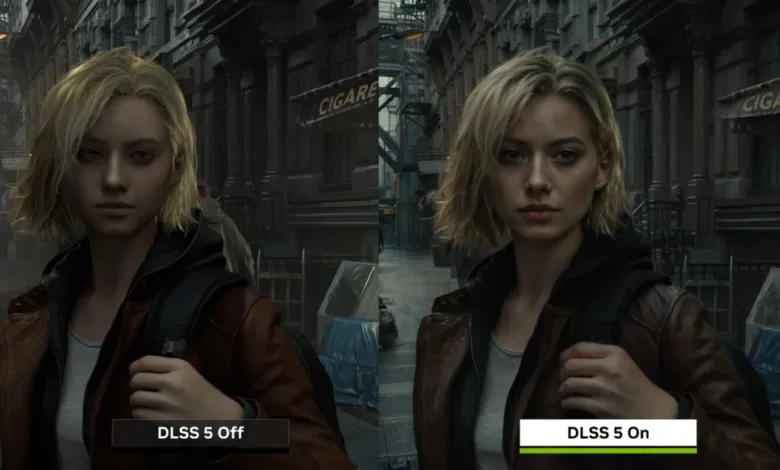
Early demonstrations, however, have sparked a fierce backlash. Analysis from outlets like Digital Foundry, which had access to a powerful dual-RTX 5090 setup for testing, acknowledged the “astonishing” and “transformational” lighting effects from a purely technical standpoint. Yet, the broader reaction from gamers and critics online has been intensely critical. The prevailing sentiment is that the AI’s interpretation results in a homogenized look, often described as a bland, uncanny gloss that over-polishes every surface. This has led to accusations that the technology overrides distinctive art direction, applying a one-size-fits-all aesthetic that can make diverse games look strangely similar.
The core of the controversy lies in the balance between technological advancement and artistic integrity. While DLSS 5 undeniably produces sharper, more physically accurate lighting in its demos, many argue that visual storytelling in games relies on more than just photorealism. A deliberately gritty, stylized, or low-contrast look is often a key part of a game’s identity and emotional impact. The fear is that an AI mandated to “improve” visuals could inadvertently erase those carefully crafted moods, leading to what some have sarcastically dubbed “the end of art direction.”
This revolt highlights a growing tension in the industry. Gamers have largely embraced upscaling technologies like DLSS for their clear performance benefits, but DLSS 5 represents a fundamental shift from assisting performance to actively redefining visuals. The question now is whether this AI-powered path is one players and developers truly want to follow, or if the push for hyper-realism has begun to clash with the value of unique artistic expression.
(Source: Ars Technica)