Sandbar Raises $23M for AI-Powered Note-Taking Ring
▼ Summary
– Sandbar, a startup founded by former Meta employees, has raised $23 million in Series A funding to support its Stream smart ring, a wearable device focused on voice note-taking and AI assistance.
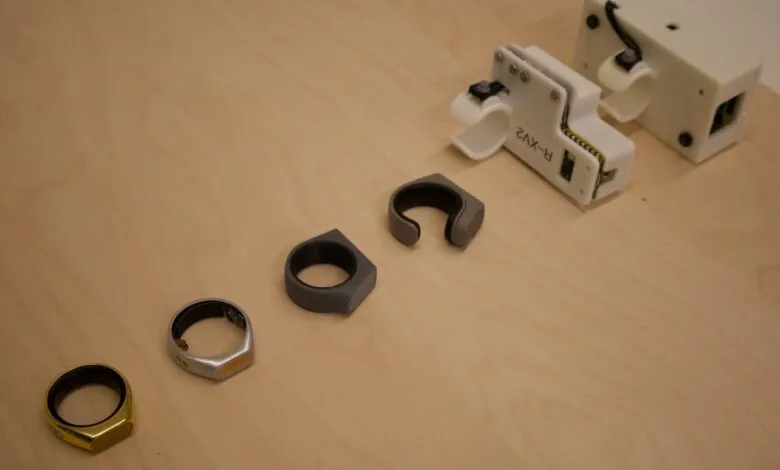
– The Stream ring features a touch-activated microphone for recording notes and controlling media, and it is designed for proximity, requiring the user to lift their hand to their face to activate.
– The company reports strong early interest, with initial pre-orders selling out and some users engaging with the ring over 50 times daily for planning tasks.
– Sandbar plans to ship the ring this summer while refining its app, developing a web platform, and working on enabling conversational AI and agentic workflows for user notes.
– The note-taking hardware market is growing, with investors believing Sandbar’s ring has a superior, privacy-signaling form factor suited for widespread adoption beyond a niche “tech bro” audience.
A new player in the wearable tech space has secured significant backing to advance its vision for AI-powered note-taking. Sandbar, a startup founded by former Meta employees, has raised $23 million in a Series A funding round. The investment was led by Adjacent and Kindred Ventures, fueling the company’s mission to refine and ship its unique Stream smart ring. Unlike popular health-tracking rings, this device is specifically engineered for capturing thoughts and managing tasks through voice.
The Stream ring features a microphone that remains off by default, activated only by touching a flat, sensitive panel on its top. Users hold this panel to record notes, interact with an AI assistant via a companion phone app, or control media playback. A key design choice is the microphone’s tuning for proximity; you must lift your hand toward your face to record, which the creators believe signals a deliberate, private intent. This distinguishes it from devices that might passively capture ambient conversations.
Co-founder Mina Fahmi, whose background includes stints at CTRL-Labs and Magic Leap, revealed the team has been developing the ring for over two years. Following a discreet testing phase, the product’s unveiling last year generated an unexpectedly warm reception. “A lot of people said they could see themselves wearing this,” Fahmi noted. Early traction has been promising, with the first pre-order batch selling out and a second batch opened due to demand. Some early users reportedly engage with the ring more than fifty times daily for planning presentations, trips, or meals.
Shipments are slated to begin this summer. Currently, Sandbar is concentrating on enhancing the app experience and expanding what users can accomplish with their recorded notes. Efforts include building a web platform, refining the user interface, and reducing AI response latency. The long-term ambition is to enable “agentic workflows,” allowing notes to trigger automated actions. The company is also deeply focused on developing sophisticated conversational AI. Fahmi explained that many users query the assistant about incomplete notes, necessitating a system capable of multi-turn, iterative dialogue, far beyond simple one-command transcription.
While the phone app currently requires the Stream ring, Sandbar is considering opening access to non-owners for standalone note-taking, useful when the ring is charging or lost. The startup, now with 15 employees from companies like Amazon, Google, and Apple, plans to use the new funds to double its software and machine learning teams and hire marketing personnel.
The market for dedicated note-taking hardware is expanding. Competitors like Plaud offer meeting-focused devices, while Pebble aims to launch a budget-friendly $75 ring. Other startups, such as Taya, are adopting a premium, jewelry-like design to appeal to a broader audience. Nico Wittenborn of Adjacent, an investor with experience in voice-tech startups like Blinkist, believes Sandbar’s form factor is superior for widespread adoption. He argues it moves beyond catering only to “tech bros” and that the intentional gesture of raising your hand to speak makes the use case feel personal and private.
This latest financing follows a $13 million raise from True Ventures last November, bringing Sandbar’s total funding to $36 million to date.
(Source: TechCrunch)