Startup Challenges 140-Year-Old Transformer Tech
▼ Summary
– The 140-year-old iron-core transformer is a reliable but bulky technology facing limits due to skyrocketing data center power demand and grid changes.
– Its electronic replacement, the solid-state transformer, is gaining momentum, promising to reduce components, improve grid stability, and shrink equipment size.
– Startups in this field have raised significant funding, with Hyperscale Power recently securing €5 million to build a prototype it claims will be exceptionally small.
– Hyperscale aims to achieve its size advantage by operating its transformer at much higher frequencies than competitors, a critical need as server rack power density increases dramatically.
– Industry experts argue that solid-state transformers are becoming a necessity to avoid slowing data center expansion, framing their adoption as a matter of timing, not possibility.
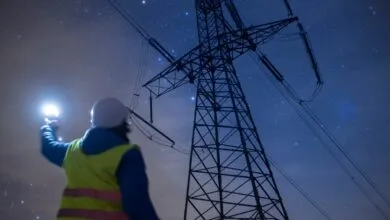
The electrical grid and the booming artificial intelligence industry both rely on a surprisingly old piece of technology: the iron-core transformer. For over a century, these clunky but dependable devices have been fundamental to power conversion. However, the unprecedented surge in data center energy consumption, coupled with the integration of renewable energy and battery storage, is pushing this venerable technology to its physical limits. This pressure is creating a major opportunity for a modern replacement known as the solid state transformer, a shift that is now attracting significant venture capital investment.
Recently, startups focused on this advanced technology have secured approximately $280 million in funding. These electronic transformers promise substantial benefits, including a drastic reduction in component count for data centers, enhanced grid stability, and a much smaller physical footprint for power conversion equipment. The market has rapidly evolved from a niche concept to a competitive field with several well-funded players like Amperesand, DG Matrix, and Heron Power, which together have raised over $330 million.
A new contender, Hyperscale Power, believes it can push the boundaries of miniaturization even further. The company recently closed a €5 million seed funding round led by World Fund and Vsquared Ventures to build a prototype. Co-founder and CEO Daniel Rothmund claims their design will be exceptionally compact. “We haven’t seen something that is as small as our system will be,” he stated.
While Hyperscale might seem like a late entrant, both Rothmund and his co-founder Sami Pettersson bring deep expertise. Rothmund’s PhD work at ETH Zürich involved designing and building a solid-state transformer with a remarkable 99.1% efficiency rating. The company’s technical approach centers on operating its transformer at much higher frequencies than competing designs. The process involves stepping incoming power up to a range in the tens of kilohertz, converting it to the required voltage, and then stepping the frequency back down for use. This high-frequency operation is key to achieving a smaller size.
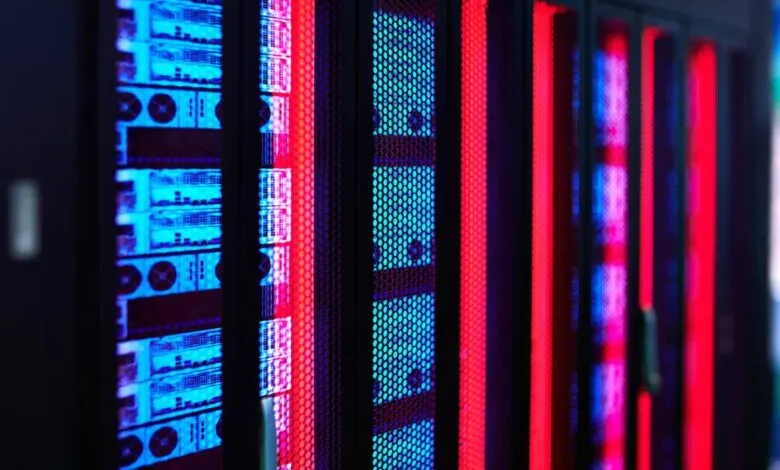
Size is becoming a critical bottleneck inside modern data centers as server rack power density soars. Current high-performance racks from companies like Nvidia already consume over 100 kilowatts, with plans underway for racks demanding a full megawatt, enough electricity for about a thousand homes. At these immense power levels, the traditional transformers and rectifiers needed to condition electricity for servers would become prohibitively large, potentially occupying more than twice the space of the server racks themselves.
This looming physical constraint is what makes the adoption of solid-state technology urgent. According to Rothmund, the ambitious expansion plans of AI firms and data center developers have made these advanced transformers essential infrastructure. He argues that progress in scaling data centers will be hampered without them. “It will actually slow down the progress in scaling up data centers if you don’t have solid state transformers ready quite soon,” he explained. “It’s not a question if solid state transformers will come, it’s a question when they will come.” The race is on to replace a 140-year-old cornerstone of electrical engineering with a sleek, high-tech successor.
(Source: TechCrunch)