How AI is Revolutionizing SEO Tools

▼ Summary
– AI in SEO has fundamentally shifted from content generation to transforming the infrastructure of research, auditing, and performance measurement.
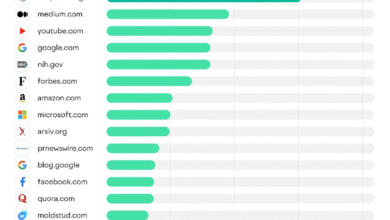
– Google’s AI Mode primarily cites sources (88%) not found in the traditional organic top 10, pulling from a wider net like YouTube, Reddit, and niche sites.
– Key modern SEO signals now include topic authority, off-site presence on UGC platforms, video content, and covering related queries through topic clustering.
– New essential tools and metrics focus on tracking brand visibility and share of voice within AI-generated answers across multiple platforms.
– While AI tools greatly accelerate execution, strategic critical thinking and verification remain essential, as AI can produce confident but incorrect information.
The landscape of search engine optimization is undergoing a fundamental transformation, driven by the deep integration of artificial intelligence into the very fabric of how search works. The old playbook of chasing a single top-ranking position is becoming insufficient, as AI-generated answers pull information from a much broader web. Recent analysis of nearly 40,000 queries reveals a startling shift: 88% of citations in Google’s AI Mode do not come from the traditional organic top ten results. This signals a move from optimizing for keywords to mastering entire topics and establishing authority across diverse platforms.
This evolution means AI Mode is casting a wider net, assembling answers from sources like YouTube, Reddit, LinkedIn, and niche authority sites. It operates on a “fan-out” methodology, running multiple related searches behind the scenes to gather information from variations and adjacent intents. Consequently, ranking number one only sometimes leads to a citation. The concentration of citations is also notable, with the top four domains, including Wikipedia and YouTube, accounting for a significant portion. For specialized fields like health, trusted entities like the Mayo Clinic dominate, underscoring the critical role of established authority.
For SEO professionals, this is less a threat and more a significant opportunity. The signals that drive visibility are expanding. Topic clustering has become essential, as content must cover a breadth of related subtopics and follow-up questions to be cited. Modern SEO tools reflect this change. Platforms now offer features that identify which keywords trigger AI Overviews and provide semantically related keyword suggestions based on actual search patterns, moving beyond simple stem matching.
Off-site visibility has shifted from a bonus to a necessity. Since platforms like Reddit and YouTube are key citation sources, a brand’s absence there can mean invisibility in AI answers, regardless of website ranking. Contributing to expert discussions and building robust third-party profiles is now core SEO work. Similarly, video content is no longer optional; YouTube’s position as the second-most-cited domain makes it a fundamental channel for building trustworthy answers that AI models seek out.
While AI tools have become incredibly powerful, they augment rather than replace human expertise. Integrations that combine audit data with large language models can compress days of analysis into hours, generating impressive briefs and competitive insights. However, the strategic thinking, knowing what to ask for and why, still resides with the practitioner. AI can sometimes be confidently incorrect, making the manual verification of outputs and a deep understanding of the fundamentals non-negotiable for effective use.
Perhaps the most critical development is in measurement. Tracking brand presence in AI-generated answers across platforms like ChatGPT and Gemini is now as crucial as traditional rank tracking. New tools monitor not just mentions, but also citation sources, share of voice, and the specific prompts that trigger brand appearances. This capability, which didn’t exist eighteen months ago, is rapidly becoming a standard part of the SEO toolkit, supported by a growing market dedicated to generative engine optimization.
Site auditing has also grown smarter through AI. Instead of overwhelming users with a flat list of issues, new systems intelligently prioritize problems based on their estimated traffic impact. This means a critical error on a high-traffic page gets attention before a minor issue on an obscure one. Furthermore, some audits now include AI content detection, reflecting the new need for quality assurance in an era of proliferating synthetic text.
In local SEO, AI delivers practical, immediate value. Tools can now automatically generate and optimize unique business descriptions across dozens of directories, saving hours of manual work. Others suggest contextual responses to customer reviews by analyzing the feedback itself, moving beyond generic templates to solve real daily operational problems.
Moving forward, a modern SEO strategy should focus on several key areas. Building comprehensive entity clusters that cover the full range of related queries is vital. Reporting must evolve beyond simple traffic metrics to include share of voice in AI answers. Leveraging communities on platforms like Reddit and LinkedIn is directly tied to growth, as they are active citation sources. Additionally, optimizing content for agentic AI systems that make decisions for users, doubling down on demonstrable E-E-A-T signals, and investing in influence across the entire digital ecosystem are all critical components.
This shift is ultimately a positive development. The current landscape rewards the skills thoughtful practitioners have cultivated for years: topic authority, robust content structure, off-site expertise, and genuine community engagement. The tools that will lead the next era are those that solve the new measurement and optimization challenges AI search creates, connecting both traditional rankings and AI citation visibility to tangible business outcomes. The central question is no longer whether a tool has AI features, but whether it helps navigate a world where AI generates the answers.
(Source: The Next Web)