Oxa Raises $103M in Funding Backed by NVIDIA
▼ Summary
– Oxa, an autonomous vehicle software company, has raised $103 million in a Series D funding round, including a $50 million commitment from the UK National Wealth Fund.
– The company develops software for self-driving vehicles in controlled industrial environments like ports, factories, and airports, rather than for public roads.
– Its core technology consists of three components: Oxa Driver for vehicle control, Oxa Foundry for configuration, and Oxa Hub for fleet and data management.
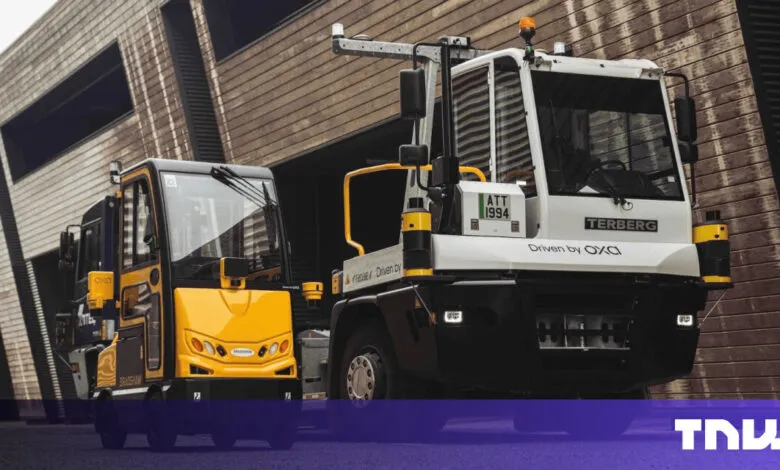
– Oxa integrates its software into existing industrial vehicles, such as tow tractors, to automate repetitive tasks like transporting goods within facilities.
– The funding will support software development and expand commercial deployments, targeting industrial logistics operators where regulatory barriers are lower.
Oxford-based autonomous vehicle software firm Oxa has secured a substantial $103 million in the initial phase of its Series D funding round. This investment will accelerate the deployment of its self-driving platform across controlled industrial sites. The funding round features a notable $50 million commitment from the UK National Wealth Fund, with additional backing from NVentures (NVIDIA’s venture arm), IP Group, Hostplus, and bp Ventures. The capital injection is earmarked to drive the expansion of Oxa’s autonomous mobility solutions in environments like ports, airports, manufacturing plants, and solar energy facilities.
Oxa develops software specifically for autonomous operations in structured industrial settings, avoiding the complexities of public roads. Its technology is built around three core elements. Oxa Driver serves as the core autonomy software that controls vehicle movements. Oxa Foundry provides a development toolkit for customizing deployments to specific operational needs. Oxa Hub is the platform for managing entire fleets and analyzing operational data. Rather than building its own vehicles, the company specializes in integrating its software into existing industrial vehicles, such as tow tractors and logistics shuttles. This approach allows businesses to retrofit their current fleets, automating repetitive tasks like moving materials across a factory yard or conducting surveillance across large sites.
The company’s commercial strategy is tightly focused. Oxa directs its efforts toward industrial logistics operators and infrastructure owners, including major ports and large-scale energy facilities. In these closed environments, autonomous systems face fewer regulatory hurdles and can be deployed more rapidly. Publicly acknowledged customers include global names like DHL, Vantec, and bp. The $103 million figure represents the first close of this funding round, with expectations for additional capital in a subsequent closing. The significant £50 million contribution from the UK National Wealth Fund underscores a strategic governmental push to bolster domestic capabilities in robotics and autonomous technology.
Alongside NVIDIA’s venture arm, the round saw participation from existing investors IP Group, Hostplus, and bp Ventures. Oxa has not publicly disclosed its current valuation or a detailed breakdown of individual investment amounts. The newly acquired funds will be channeled into further development of the Oxa Driver software and its associated developer tools. A key focus will also be scaling commercial deployments across target regions, including Europe, the United Kingdom, and the Middle East.
Oxa’s fundamental premise is that autonomous technology will achieve widespread adoption first in logistics yards and industrial campuses, not on public highways. If this perspective proves correct, the company’s industrial specialization may lack the headline-grabbing appeal of robotaxi services but could result in solutions that are far more practical and immediately deployable in the real world.
(Source: The Next Web)