Sarvam AI’s Open-Source Models Bet Big on India’s AI Future
▼ Summary
– Indian AI startup Sarvam launched new open-source large language models, betting smaller, efficient models can compete against larger U.S. and Chinese rivals.
– The new lineup includes 30-billion and 105-billion parameter models, plus text-to-speech, speech-to-text, and vision models, representing a major upgrade from its previous release.
– These models use a mixture-of-experts architecture to reduce computing costs and are designed to support real-time applications and Indian languages.
– The models were trained from scratch using government-backed computing resources and are planned to be open-sourced, though full details are unspecified.
– Sarvam plans a measured scaling approach focused on real-world applications and is developing specialized enterprise tools and a conversational AI platform.
A new wave of Indian artificial intelligence has arrived, with domestic lab Sarvam AI launching a powerful suite of open-source models designed to challenge global giants. The company is placing a significant bet that smaller, efficient, and locally-tailored AI systems can carve out a substantial market share, reducing the nation’s reliance on expensive foreign technology. This strategic move directly supports the Indian government’s initiative to foster homegrown AI solutions that better understand regional languages and specific use cases.
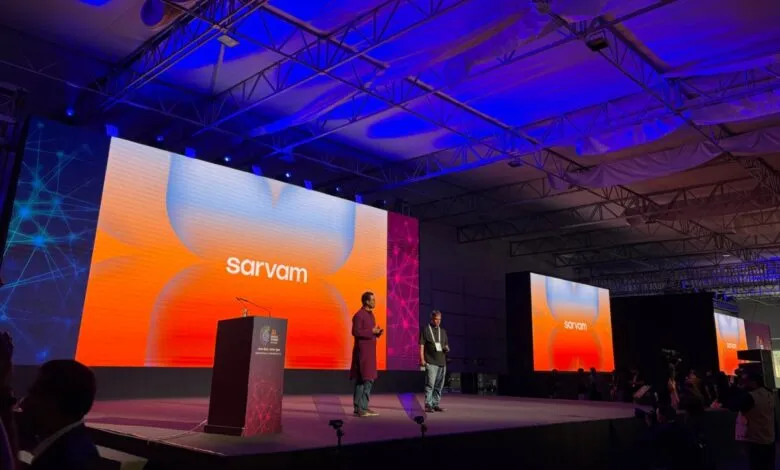
The announcement, made at the India AI Impact Summit in New Delhi, introduces a major technological leap from Sarvam’s previous offerings. The new lineup is headlined by two large language models boasting 30 billion and 105 billion parameters, respectively. These are joined by a dedicated text-to-speech model, a speech-to-text model, and a vision model capable of parsing documents. This represents a dramatic upgrade from the company’s initial 2-billion-parameter model released just last year.
A key innovation in the two primary language models is their use of a mixture-of-experts architecture. This design cleverly activates only a portion of the total parameters for any given task, which slashes computing costs and improves efficiency. The 30-billion-parameter model supports a 32,000-token context window, making it ideal for real-time conversational applications. Its larger sibling, the 105-billion-parameter model, offers an expansive 128,000-token window, enabling it to handle more complex, multi-step reasoning tasks.
Sarvam positions its 30B model as a direct competitor to systems like Google’s Gemma 27B and OpenAI’s GPT-OSS-20B. The more formidable 105B model is touted to rival OpenAI’s GPT-OSS-120B and Alibaba’s Qwen-3-Next-80B. Critically, the company states these models were trained from scratch on vast datasets of Indian language text, rather than being fine-tuned on existing open-source systems. The 30B model was pre-trained on approximately 16 trillion tokens, while the 105B model ingested trillions of tokens spanning multiple Indian languages.
This foundational training approach is intended to create models that excel in real-time applications, such as voice-based assistants and chat systems functioning seamlessly in local dialects. The development was powered by computing resources from the government-backed IndiaAI Mission, with crucial infrastructure support from data center operator Yotta and technical assistance from Nvidia.
Company leadership emphasizes a pragmatic philosophy toward growth. Sarvam co-founder Pratyush Kumar explained at the launch that the focus is on thoughtful scaling aligned with practical applications. “We want to be mindful in how we do the scaling,” Kumar stated. “We don’t want to do it mindlessly. We want to understand the tasks which really matter at scale and go and build for them.”
As part of its commitment to the open-source community, Sarvam plans to release both the 30B and 105B models publicly, though specifics regarding the release of training data or full code were not provided. Looking ahead, the company outlined a roadmap that includes building specialized AI systems. This includes coding-focused models and enterprise tools under a product dubbed Sarvam for Work, alongside a conversational AI agent platform named Samvaad.
Since its founding in 2023, Sarvam has secured over $50 million in funding from prominent investors, including Lightspeed Venture Partners, Khosla Ventures, and Peak XV Partners. This latest suite of models marks a bold step in its mission to build a uniquely Indian AI ecosystem that prioritizes efficiency, local relevance, and real-world utility over merely chasing the largest possible model size.
(Source: TechCrunch)