AI-Powered Hunt for Antibiotics in Unexpected Places
▼ Summary
– César de la Fuente’s team uses AI to search genomes for novel antibiotic peptides, aiming to create configurations not found in nature to combat drug-resistant microbes.
– His research has discovered promising peptide candidates from diverse sources, including ancient archaea, animal venoms, and the genetic sequences of extinct species like Neanderthals and woolly mammoths.
– De la Fuente is a recognized, award-winning pioneer in applying AI to real-world problems like antibiotic discovery, earning praise from leaders in the field.
– Antimicrobial resistance is a critical challenge exacerbated by the high cost and frequent failure of traditional drug development methods, which often deter commercial investment.
– The field of antibiotic discovery is inherently difficult and statistically driven, requiring the exploration of a vast number of molecular combinations to find effective new drugs.
The search for new antibiotics is undergoing a revolutionary shift, driven by artificial intelligence that can analyze biological data at an unprecedented scale. Researchers are now training sophisticated AI models to scan vast genetic libraries, uncovering potential antimicrobial compounds in places once thought impossible to explore. This innovative approach is essential in the global fight against antimicrobial resistance, a growing crisis fueled by the overuse of existing drugs and the traditional high cost and low success rate of conventional discovery methods.
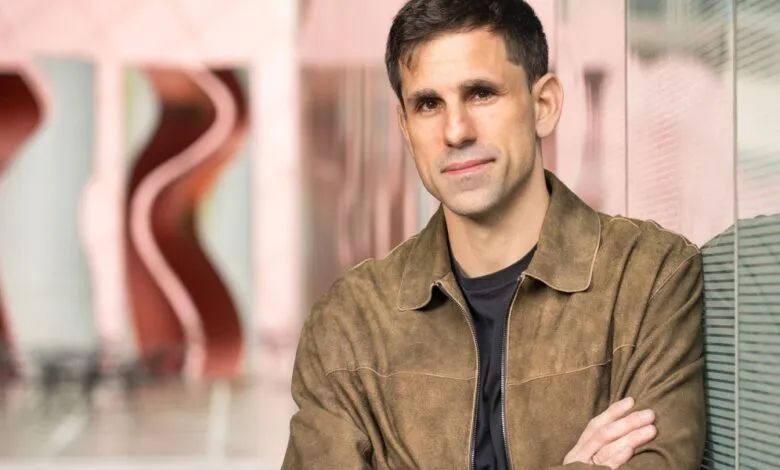
Leading this charge is César de la Fuente and his team at the University of Pennsylvania’s Machine Biology Group. They are employing AI to meticulously search through genomes, identifying peptides, small chains of amino acids, with powerful antibiotic properties. The goal is to assemble these molecules into novel configurations, some of which may never have existed in nature, to combat microbes that resist all current treatments.
This high-tech hunt has already yielded remarkable results from surprising sources. In one project, the team discovered promising peptides hidden within the genetic code of ancient single-celled organisms known as archaea. Previous work had identified candidates in the venom of creatures like snakes, wasps, and spiders. Perhaps most intriguing is an ongoing initiative de la Fuente terms “molecular de-extinction,” where his group scans published genetic sequences of long-vanished species. By examining the DNA of Neanderthals, woolly mammoths, giant sloths, and even ancient penguins, they reason that evolution may have crafted a perfect antimicrobial defense now lost to time. This effort has resurrected compounds with names like mammuthusin-2 and mylodonin-2, contributing to a library of over a million genetic recipes for potential new drugs.
De la Fuente’s pioneering work has earned him significant recognition, including awards from major scientific societies and being named one of the top innovators in his field. Colleagues like Jim Collins at MIT, a leader in using AI for drug discovery, praise his contributions. “He’s really helped pioneer that space,” Collins notes, emphasizing that the antibiotic development field desperately needs such creativity. Collins’s own team used an AI model to identify a broad-spectrum antibiotic called halicin, now in preclinical development, highlighting the tangible progress being made.
The challenge of antimicrobial resistance is one de la Fuente describes as “almost impossible,” but he is motivated by that very difficulty. The core of the problem lies in how the misuse of existing drugs accelerates resistance, while the traditional discovery pipeline is too costly and inefficient for most companies to sustain. “A lot of the companies that have attempted to do antibiotic development in the past have ended up folding because there’s no good return on investment,” he explains.
Historically, finding antibiotics has been a messy process reliant on serendipity, with researchers using brute-force methods like sifting through soil or water samples to extract potential molecules. The complexity is staggering; the number of possible organic compounds that could be synthesized is astronomically larger than the number of grains of sand on Earth. As chemical biologist Jonathan Stokes of McMaster University explains, “Drug discovery in any domain is a statistics game. You need enough shots on goal to happen to get one.” AI provides the powerful computational engine to take those shots, sifting through the noise and complexity to identify the most promising candidates for a new generation of life-saving medicines.
(Source: Technology Review)