Robotaxi Door Left Open? DoorDash Has a Fix.

▼ Summary
– Autonomous vehicles offer significant potential benefits, including strict adherence to traffic laws and the elimination of human driver impairments like intoxication.
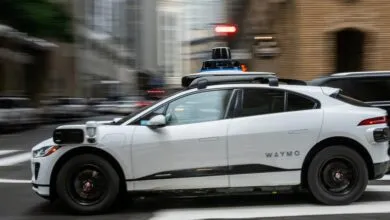
– Waymo is the current industry leader, operating commercial robotaxi services in six U.S. cities with plans to expand to over a dozen more locations.
– The company is upgrading its fleet with a new generation of vehicles featuring enhanced sensors for better performance in darkness and bad weather.
– These technological upgrades include microphones that can detect sirens to help the vehicle locate approaching emergency vehicles.
– Despite these advances, robotaxis still lack basic physical capabilities, such as being able to close a car door left open by a passenger.
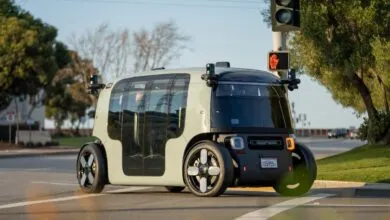
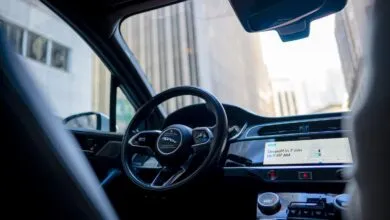
The future of urban mobility is being reshaped by autonomous vehicles, which promise safer and more consistent transportation by eliminating human error from driving. While the initial excitement has matured into steady progress, companies like Waymo are demonstrating that commercial robotaxi services are not just a concept but a growing reality. Operating in multiple American cities with plans for significant expansion, these driverless cars represent a tangible shift in how people get around. A key advancement is the upcoming deployment of Waymo’s sixth-generation system in new vehicle platforms, featuring enhanced sensors that improve performance in challenging conditions like darkness and bad weather. This technological evolution addresses many early limitations, yet some seemingly simple tasks still require a human touch.
Even the most advanced self-driving car faces a fundamental physical constraint: it cannot reach out and close its own door. When a passenger exits and inadvertently leaves a vehicle door ajar, the robotaxi is rendered immobile. This scenario creates a logistical problem, as the car’s safety protocols prevent it from moving until the door is securely shut. All the sophisticated lidar, radar, and camera arrays are powerless to solve this basic mechanical issue. The vehicle’s software might detect the open door, but without a robotic arm or a passenger inside, it has no way to resolve the situation on its own.
This is where an innovative partnership comes into play. To solve this operational hiccup, Waymo has integrated with DoorDash. If a Waymo vehicle detects an open door at the end of a ride and no subsequent passenger is waiting to board, the system can dispatch a DoorDash driver to the location. This courier arrives to perform the simple but crucial task of shutting the car door, allowing the robotaxi to continue its journey and re-enter service. This clever workaround treats the stationary vehicle as a delivery point, with the “item” to be delivered being the action of closing the door.
The solution highlights a current phase in autonomy where human assistance remains valuable for edge cases. It underscores that while the core driving task is being automated, full independence from human support in all circumstances is a more complex challenge. This collaboration between a robotaxi service and a gig-economy platform shows a pragmatic approach to scaling operations, ensuring that minor physical obstacles don’t lead to significant fleet downtime. As the technology continues to evolve, such integrations may become stepping stones toward fully automated solutions, but for now, they provide a reliable fix to keep the vehicles moving.
(Source: Ars Technica)