OpenAI President’s Millions to Trump: A Bet on Humanity?
▼ Summary
– Greg Brockman, OpenAI’s president, donated $25 million to a pro-Trump super PAC and an equal amount to a bipartisan AI-focused super PAC, pledging more future support.
– He frames these substantial political donations as serving OpenAI’s mission to develop beneficial AI for all of humanity, which he considers the most important global endeavor.
– This marks a major shift for Brockman, who had minimal prior political spending, and he cites rising public concern about AI as a key reason for his increased involvement.
– His donations, particularly to Trump, have sparked external backlash, including a subscriber boycott movement, and caused internal consternation among some OpenAI employees.
– OpenAI officially states the donations are personal, reflecting the Brockmans’ focus on AI as a critical issue, and not a reflection of the company’s politics.
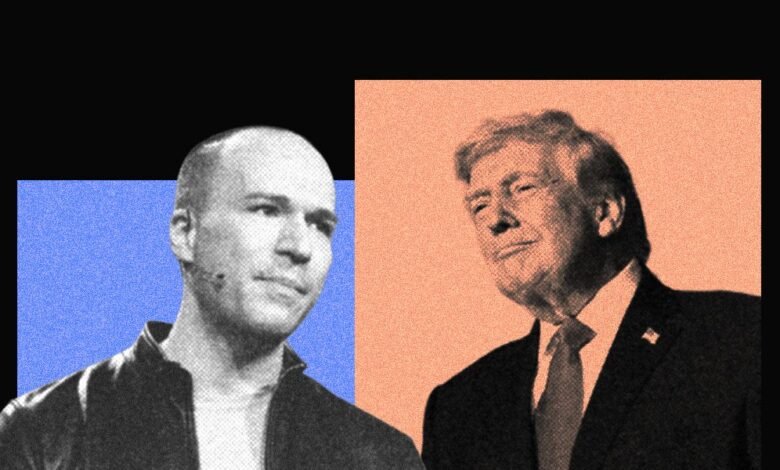
The significant political contributions from OpenAI’s president, Greg Brockman, have ignited a complex debate about influence, corporate mission, and public trust in artificial intelligence. Brockman, alongside his wife Anna, directed a $25 million donation to a super PAC supporting former President Donald Trump in late 2025. In a parallel move, they contributed the same amount to a bipartisan AI-focused super PAC, Leading the Future, which aims to counter politicians seen as threats to American advancement in AI, with an additional $25 million pledged for 2026. For Brockman, these substantial sums are not partisan maneuvers but strategic investments aligned with OpenAI’s foundational goal: to ensure powerful AI benefits all of humanity.
Brockman frames this unprecedented political spending as a necessary response to a shifting landscape. He points to surveys indicating growing public apprehension about AI’s role in society. In his view, this climate makes it essential to back political leaders willing to champion the technology’s potential, even when it’s not a popular stance. “I believe that this technology is something that’s important for global communities,” Brockman stated. He describes his actions as supporting “team humanity,” a priority he places above corporate allegiance or personal political identity.
However, this rationale has not shielded him or OpenAI from intense backlash. A consumer movement called QuitGPT is urging people to cancel their ChatGPT subscriptions in protest of the Trump-linked donation, garnering hundreds of thousands of online supporters. Prominent figures like actor Mark Ruffalo have joined the call, illustrating how the donations have fueled the very public skepticism Brockman hopes to combat. The controversy underscores a growing tension between Silicon Valley’s ambitions for AI and widespread societal concerns about its rapid deployment.
Within OpenAI itself, the donations have caused unease. While employees generally acknowledge the need to engage with policymakers, some question whether Brockman’s personal political ventures exceed what is prudent or necessary for the company’s interests. One researcher anonymously suggested the contributions likely go beyond straightforward business advocacy. In response to internal dissent, Brockman emphasized OpenAI’s “truth-seeking culture,” noting that unanimous agreement has never been the company’s standard, even in its earliest days.
The company’s official position is to distance the organization from Brockman’s personal political activities. A spokesperson stated the donations reflect the Brockmans’ personal focus on AI as a critical issue for the nation and the world, stemming from their unique perspective on the technology. This separation between personal and corporate stance is being tested as the public and OpenAI’s own user base grapple with the implications of such a high-profile financial endorsement in a deeply polarized political environment. The episode highlights the difficult navigation required as tech leaders increasingly step into the political arena to shape the future of the powerful technologies they create.
(Source: Wired)