Waymo’s New Robotaxi Enters Mass Production and Passenger Service

▼ Summary
– Waymo has announced its sixth-generation autonomous driving system is ready for deployment, starting with employee trips in San Francisco and Los Angeles before expanding to the public.
– The new system is designed for high-volume, lower-cost production, using fewer but more powerful sensors like high-resolution cameras, lidar, and radar.
– It is engineered to operate safely in diverse environments, including extreme weather, and uses a multi-sensor suite for redundancy and robust environmental perception.
– Key technical improvements include 17-megapixel cameras, strategically placed short-range lidar for detecting vulnerable road users, and external audio receivers for detecting sirens.
– Waymo aims to scale rapidly, targeting 20 new cities in 2026 and producing tens of thousands of vehicles annually, supported by recent significant funding.
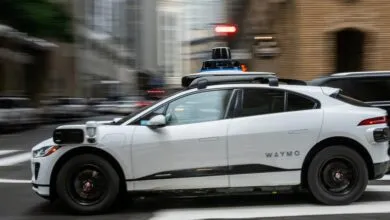
Waymo has officially launched its sixth-generation autonomous driving system, marking a pivotal step toward the mass production and widespread deployment of its robotaxi service. This new technology platform is now entering initial passenger service, starting with employees and their guests in San Francisco and Los Angeles, before opening to the general public. The company emphasizes that this generation represents its smartest and most capable system yet, achieving greater performance with a more streamlined and cost-effective sensor suite. This strategic design is built for high-volume manufacturing, with partners prepared to produce tens of thousands of vehicles annually, supporting an ambitious roadmap to expand into approximately 20 new cities by 2026.
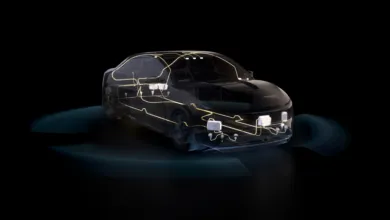
The system’s development is backed by an immense validation effort, encompassing over 200 million miles of real-world testing across more than ten major cities throughout seven years. According to Satish Jeyachandran, Waymo’s Vice President of Engineering, this extensive experience has solidified the company’s approach to safety. He highlighted the critical need for resilient sensory inputs to create demonstrably safe artificial intelligence, a principle embodied in the Waymo Driver’s custom, multi-modal sensor suite. This integrated system combines high-resolution cameras, advanced imaging radar, and lidar to build a robust and redundant understanding of the vehicle’s environment, capable of handling difficult-to-detect objects and challenging edge cases.
A closer look at the hardware reveals significant advancements. The vision system now relies on 17-megapixel cameras, which Waymo calls “imagers,” a substantial increase in resolution compared to many competitors. This enhanced clarity allows the company to reduce the total number of cameras to 16, down from 29 in the prior generation. These cameras are supported by short-range lidar sensors, which have been strategically placed and reengineered to be more affordable while providing precise detection of vulnerable road users like pedestrians and cyclists. Crucially, this lidar is also designed to maintain performance in extreme weather conditions, such as heavy snow, enabling future expansion into colder climates.
The sensor suite is rounded out by more cost-effective radar and a novel external audio detection system. These audio receivers, aptly named EARs, can identify critical sounds like emergency vehicle sirens or approaching trains, adding another layer of situational awareness. The overarching theme of this sixth-generation launch is scalability through dramatically reduced production costs. Achieving a lower cost per vehicle is essential for Waymo’s plans to scale its fleet from thousands to tens of thousands of units, solidifying its market position as it pursues global expansion.
This push for growth comes as the autonomous vehicle sector faces significant financial pressures. While Waymo recently secured a substantial $16 billion funding round to fuel its global ambitions, the financial performance within Alphabet’s “Other Bets” segment, which includes Waymo, shows the challenges of scaling. Revenue slightly declined in the last quarter of 2025, while operating losses widened considerably. Successfully lowering the unit cost of each robotaxi is therefore not just a technical milestone but a fundamental business imperative for achieving long-term, sustainable operations across multiple markets.
(Source: The Verge)