The Brutal Economics of Orbital AI
▼ Summary
– Elon Musk and other companies like Google and Starcloud are actively planning to build solar-powered orbital data centers, with Musk predicting space will be the cheapest location for AI compute within three years.
– A major analysis shows current orbital data centers are far more expensive than terrestrial ones, requiring significant reductions in satellite manufacturing and launch costs to become competitive.
– The development of SpaceX’s Starship rocket is considered critical for achieving the necessary low launch costs, but economic and competitive factors may prevent prices from dropping as quickly as hoped.
– Operating AI hardware in space presents unique engineering challenges, including difficult thermal management, cosmic radiation that degrades chips, and the limited lifespan of cost-effective solar panels.
– Initial orbital data centers are more likely to be used for AI inference tasks rather than training, due to the current limitations of high-speed inter-satellite communication required for coordinated model training.
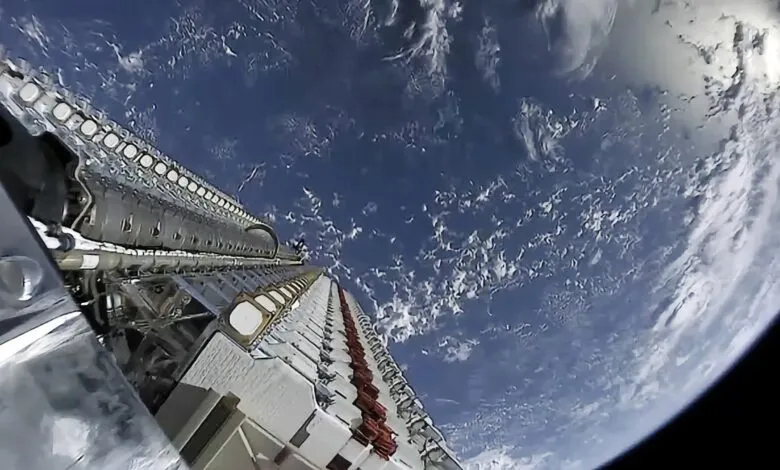
The push to build artificial intelligence data centers in orbit represents a bold technological and economic frontier, driven by visionaries who believe the cheapest place to put AI will be space within the next few years. This concept, moving beyond science fiction, involves deploying vast constellations of solar-powered satellites to host immense computing power. Major players from Elon Musk’s SpaceX to Google and a host of well-funded startups are racing to file plans and develop prototypes, betting that orbital infrastructure will soon become a critical part of the global compute landscape. However, the path from visionary hype to operational reality is paved with staggering technical hurdles and economic calculations that currently favor terrestrial solutions.
Today, building a data center on Earth remains significantly less expensive than constructing one in space. A 1 gigawatt orbital data center might cost an estimated $42.4 billion, nearly triple the price of its ground-based counterpart. This premium stems from the enormous upfront expenses of satellite manufacturing and launch costs. For the economics to become viable, experts agree that several breakthroughs are necessary: dramatic reductions in launch expenses, cheaper space-grade hardware, and a strained terrestrial infrastructure that drives up Earth-bound costs.
The single largest economic hurdle is the price of reaching orbit. While SpaceX’s Falcon 9 has driven costs down to roughly $3,600 per kilogram, analysts project that orbital data centers require a revolutionary drop to around $200 per kilogram to close the business case. The industry’s hope rests almost entirely on the success of SpaceX’s next-generation Starship rocket, which promises such transformative cost savings. However, Starship is not yet operational, and even when it flies, economic principles suggest SpaceX may not immediately offer the lowest possible price if competitors like Blue Origin’s New Glenn remain in the market. As one industry CEO noted, the current cost of delivering payloads to space remains “massive” and simply “not economical” for this application.
Beyond launch, the satellites themselves present a colossal expense. Manufacturing is the largest cost component, with current satellite mass priced around $1,000 per kilogram. Proponents believe that through the sheer scale of producing potentially a million satellites, costs could be halved, making the numbers start to align. These wouldn’t be simple communication satellites; they must be large, complex platforms equipped with powerful GPUs, expansive solar arrays, sophisticated thermal management systems, and high-speed laser communication links. When comparing the fundamental cost of power, space currently loses: the annualized cost of energy from a satellite can exceed $14,700 per kilowatt, compared to just $570–$3,000 for a terrestrial data center.
The space environment itself introduces brutal engineering challenges. The common claim that thermal management is “free” in orbit is misleading. Without an atmosphere, dissipating the intense heat generated by AI chips requires massive, heavy radiators. Cosmic radiation poses another critical threat, gradually degrading components and causing data-corrupting “bit flip” errors. Mitigation strategies like shielding or radiation-hardened parts add weight and expense. Even the solar panels that make the energy arbitrage possible face a trade-off: durable panels made of rare-earth elements are prohibitively expensive, while cheaper silicon panels degrade faster in radiation, potentially limiting satellite lifespans to about five years.
A fundamental question remains: what kind of AI work would these orbital centers actually perform? Training massive AI models requires thousands of GPUs to operate in tight coordination, a feat currently managed within single terrestrial buildings. Achieving similar coherence across a distributed satellite network is a monumental challenge, compounded by the fact that the fastest laser links between satellites are still slower than the connections inside ground-based data centers. This makes inference tasks, the process of using an already-trained AI model, a more likely starting point. These workloads can run on dozens of GPUs, possibly on a single satellite, and are more tolerant of the communication delays and radiation environment of space.
For a company like SpaceX, which recently acquired the AI firm xAI, the strategy may be one of flexibility. By developing capabilities in both terrestrial and orbital data centers, the company can scale computing power wherever it encounters fewer bottlenecks, be they permitting issues, power constraints, or capital expenditure limits on Earth. The core idea is that a computation is a computation, regardless of where it occurs. The race is now on to see which supply chain, Earth or space, can adapt faster to deliver the immense computing power the AI industry demands. The ultimate success of orbital AI hinges on solving a complex equation where physics, engineering, and economics must all align.
(Source: TechCrunch)