Amazon Ring Super Bowl ad backlash over surveillance fears
▼ Summary
– Ring’s Super Bowl ad for its new “Search Party” feature, which uses AI to find lost dogs via its camera network, sparked significant backlash for normalizing neighborhood surveillance.
– Critics, including privacy experts and Senator Ed Markey, argue the technology is a step toward mass surveillance, especially given Ring’s partnerships with law enforcement and surveillance firms like Flock Safety.
– Ring states the feature is only for identifying dogs, not humans, and that its separate facial recognition tool is opt-in and operates at an individual account level.
– The company maintains law enforcement cannot directly access its network, but users can share footage via third-party systems, and local agencies could potentially share data with federal ones.
– The core concern is that surveillance tools often expand beyond their original purpose, raising questions about trust and the potential for future human-tracking capabilities.
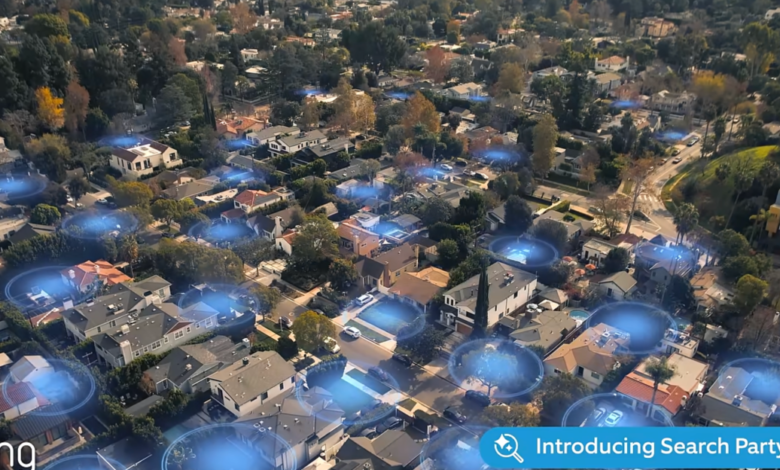
A recent Super Bowl advertisement for Amazon’s Ring security cameras has ignited a significant public debate, shifting focus from the game to growing anxieties about pervasive neighborhood surveillance. The commercial showcased the company’s new “Search Party” feature, using a network of cameras to locate a lost dog. However, in today’s climate, the prime-time celebration of interconnected cameras monitoring communities resonated as a disturbing vision of the future rather than a heartwarming tale.
Critics quickly voiced alarm across social media platforms, arguing that the AI-powered technology designed to identify pets could easily be repurposed to track people. This concern is amplified by Ring’s recent introduction of a facial recognition tool called “Familiar Faces.” The combination creates a perception that a seemingly benign pet-finder is merely a stepping stone to a powerful state surveillance apparatus. Privacy expert Chris Gilliard described the ad as “a clumsy attempt by Ring to put a cuddly face on a rather dystopian reality,” pointing to the company’s established relationships with law enforcement.
Central to these fears is Ring’s partnership with Flock Safety, a surveillance firm that provides automated license plate readers and video systems to police departments. This collaboration links Ring’s vast residential camera network to an organization reportedly used by Immigration and Customs Enforcement (ICE). Senator Ed Markey, a vocal critic, stated plainly on social media, “This definitely isn’t about dogs , it’s about mass surveillance,” and has consistently pushed for more transparency regarding Ring’s police ties.
In response to the backlash, a Ring spokesperson, Emma Daniels, emphasized that Search Party is engineered solely to match images of dogs and “is not capable of processing human biometrics.” She clarified that the facial recognition feature is a separate, opt-in function operating at an individual account level, without the communal sharing aspect of Search Party. Daniels firmly stated, “These are not tools for mass surveillance,” and outlined the built-in guardrails and transparency measures.
However, Search Party is enabled by default for outdoor cameras on a Ring subscription plan. The system uses cloud-based AI to scan footage after a pet owner uploads a picture to the Neighbors app. When asked if the cameras could one day search for people, Daniels replied that the features are not capable of that currently and she has no knowledge of such plans, though she declined to comment on future development roadmaps.
The method for sharing footage with authorities has also evolved. Ring now uses a “Community Requests” system, funneling police requests through third-party evidence management platforms like Axon and, eventually, Flock Safety. The company asserts this provides a more secure chain of custody and that users can decline any request without notification. Ring maintains that neither government nor law enforcement has direct access to its network; footage is only shared by users or in response to a legal order. Daniels reiterated that Ring has no partnerships with ICE or other federal agencies.
Despite these assurances, a fundamental unease persists. The problem is that there’s nothing preventing local agencies from sharing footage with federal ones. While the ad depicted a joyful reunion, the technological leap from tracking pets to monitoring people is minimal. When combined with potential government overreach, a powerful AI-enabled camera network could swiftly transition from finding lost dogs to tracking individuals.
Ring’s leadership has expressed ambitious goals for AI, suggesting such technology could virtually “zero out crime.” Given this objective and AI’s expanding capabilities, skepticism about the company’s long-term plans is natural. While reducing crime is a worthy aim, historical precedent shows that tools built for large-scale surveillance are rarely confined to their original purpose. The core issue becomes one of trust, in the company and its partners, to never overstep. If Ring’s broader surveillance ambitions are being masked by our instinct to protect pets, that essential trust becomes exceedingly difficult to establish.
(Source: The Verge)