Nvidia’s RTX 5080 Super Reportedly Canceled Due to AI Demand
▼ Summary
– Nvidia has reportedly scaled back production of its current 50-series graphics cards and canceled its planned mid-generation refresh, likely due to immense AI industry demand.
– A hardware leaker suggests the next generation of Nvidia GPUs, like the RTX 6090, may not launch until the second half of 2027.
– Nvidia’s focus has shifted toward the enterprise AI market, where it has seen huge growth, making it the world’s most valuable company.
– AMD is similarly not releasing new consumer GPUs, as its datacenter business revenue vastly outpaces its gaming division’s earnings.
– Both companies are instead focusing on software improvements, like AMD’s FSR Redstone and Nvidia’s DLSS 4.5, to enhance existing hardware performance.
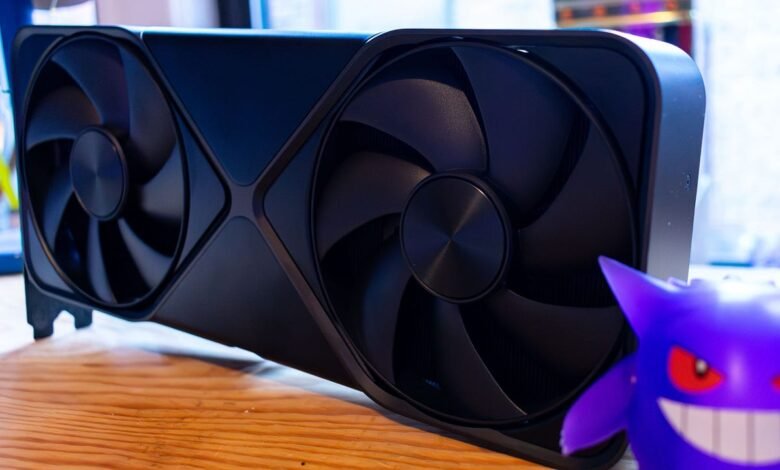
The intense demand for AI hardware is reshaping the graphics card market, with reports indicating Nvidia has canceled its planned RTX 5080 Super refresh. This decision, alongside a potential delay for next-generation gaming GPUs, highlights a strategic pivot by chipmakers toward the lucrative data center sector. Industry sources suggest the company has scaled back production of existing GeForce RTX 50-series cards and shelved the mid-generation Blackwell update entirely.
According to a recent report, this move is a direct consequence of the overwhelming need for computing power from artificial intelligence companies. Nvidia’s own staggering financial growth, which has propelled it to become the world’s most valuable company, underscores where its priorities currently lie. The same market forces are impacting availability across the board, contributing to a widespread memory shortage that is affecting all kinds of gaming hardware.
When asked for comment, Nvidia stated, “Demand for GeForce RTX GPUs is strong, and memory supply is constrained. We continue to ship all GeForce SKUs and are working closely with our suppliers to maximize memory availability.” This response does not directly refute the cancellation rumors, leaving the situation uncertain for the remainder of the year.
Nvidia is not alone in this apparent shift. AMD has also been quiet on new consumer graphics cards, not having released a new model since the Radeon RX 9060 in mid-2025. The driving factor appears identical: the immense profitability of the AI and data center markets. AMD’s recent financial results tell a clear story, with its data center business generating $16.6 billion in revenue last year. In contrast, its gaming division, which includes revenue from custom chips in devices like the Xbox and Steam Machine, brought in $3.9 billion.
With new hardware potentially on hold, both companies are focusing their efforts on software enhancements for existing cards. AMD launched its FSR Redstone technology in late 2025, offering improvements to frame generation and ray tracing. Nvidia countered with DLSS 4.5, which provides a noticeable boost to image quality, albeit with some impact on performance. For gamers awaiting more powerful hardware, these software updates may have to suffice for the foreseeable future.
Industry observers note that the next generation of gaming GPUs, likely led by a card such as the RTX 6090, might not arrive until the second half of 2027. This extended timeline suggests that the AI industry’s demand for computer hardware is creating a significant bottleneck, redirecting manufacturing capacity and engineering resources away from the consumer gaming space. For now, enthusiasts may need to temper expectations for a traditional mid-cycle hardware refresh.
(Source: IGN)


