Woman’s Mind-Reading Bionic Arm Makes Her 20% Robot
▼ Summary
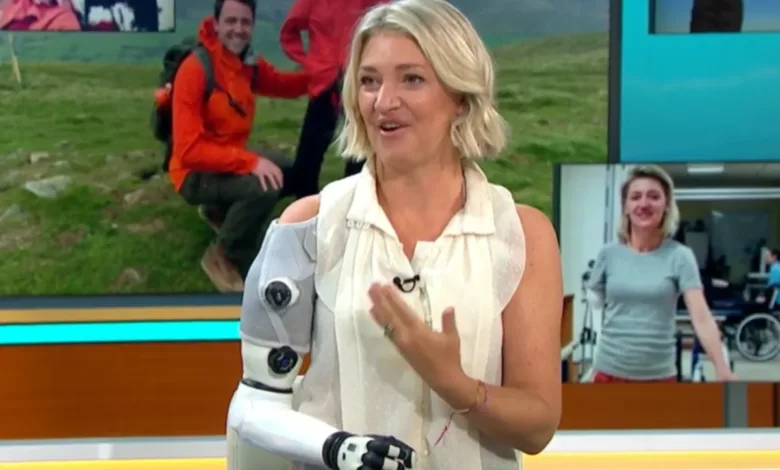
– A woman who lost her right arm and leg uses a bionic arm that she describes as making her 80% human and 20% robot.
– The bionic arm uses AI, sensors, and software to recognize muscle signals and simplify movements, making them feel more human-like.
– It can be charged overnight like a smartphone, a feature the user’s children find amusing.
– The user, Sarah De Lagarde, received the arm after a 2022 accident and says it has given her a new lease on life for activities from hugging to climbing.
– The article presents this AI-integrated bionic limb as a profound leap in technology, particularly within the medical sector.
The integration of advanced technology into medical prosthetics is creating life-changing possibilities, as demonstrated by a remarkable bionic arm that interprets neural signals to restore natural movement. This innovative device represents a significant leap forward in assistive technology, blending artificial intelligence with human biology to empower its user in profound ways.
One individual, Sarah De Lagarde, describes her experience by stating she now feels 80 percent human and 20 percent robot. After a tragic accident in 2022 where she lost her right arm and leg, she was fitted with this sophisticated prosthetic. Unlike traditional models, this arm utilizes myoelectric sensors and AI-driven software to detect and simplify the electrical signals from her remaining muscles. This allows the limb to respond in a way that mimics natural, intuitive motion.
The system’s artificial intelligence software learns and recognizes her most frequent movements, streamlining them for smoother future use. This capability has granted Sarah a renewed sense of independence, enabling her to hug her children and even tackle challenging activities like mountain climbing. The technology’s impact extends beyond mere functionality, offering a deeply personal restoration of everyday life.
A particularly relatable feature for her family is the arm’s practicality. Sarah can remove the limb at night and charge it much like a smartphone, a detail her children find both amusing and fascinating. This everyday convenience underscores how seamlessly advanced bionics can integrate into daily routines.
The development of such mind-reading prosthetics highlights one of the most impactful applications of AI within the medical sector. By translating intention into action, these devices are moving beyond simple replacement to become true extensions of the human body, opening doors to capabilities once thought impossible for amputees. This field continues to evolve, promising even greater autonomy and fluidity of movement for users in the future.
(Source: Supercar Blondie)

