Intempus: Why Robots Need Human-Like Physiology

▼ Summary
– Teddy Warner, 19, founded Intempus to retrofit robots with human-like emotional expressions to improve human-robot interaction and AI training.
– Intempus uses kinetic movements (like arm and torso motions) to convey emotions, inspired by how humans and animals communicate nonverbally.
– Warner developed the idea while at Midjourney, realizing AI models lacked spatial reasoning due to robots missing a “physiological state” (like stress or joy).
– Intempus initially used sweat data from polygraphs to train emotional models and later expanded to metrics like heart rate and body temperature.
– The company, part of the Thiel Fellowship, plans to hire and test its tech with existing robots but may build its own emotionally intelligent robots in the future.
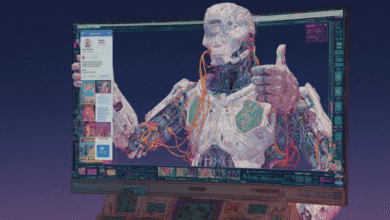
Robots that move and react like humans could transform how we interact with artificial intelligence. Teddy Warner, a 19-year-old entrepreneur with deep roots in robotics, is pioneering this vision through his startup Intempus. The company focuses on retrofitting existing robots with human-like emotional expressions and physiological responses, bridging the gap between cold, mechanical movements and the intuitive ways people communicate.
Warner’s inspiration came while working at Midjourney, an AI research lab. He noticed a critical flaw in how AI models learn spatial reasoning—most training data comes from robots lacking the nuanced physical awareness humans take for granted. “Robots operate from observation to action, skipping the physiological state that defines human decision-making,” he explains. Without stress, joy, or fatigue, machines struggle to interpret real-world dynamics naturally.
To solve this, Intempus integrates biometric data—sweat, heart rate, body temperature—into robotic systems. Early experiments with polygraph technology proved surprisingly effective. “Training models using sweat data alone allowed robots to simulate emotional states,” Warner says. The approach has since expanded to include photoplethysmography, tracking microvascular blood flow for even finer emotional granularity.
Since its September 2024 launch, Intempus has secured seven enterprise partners and joined the Thiel Fellowship, receiving $200,000 to accelerate development. Warner, who’s operated solo so far, now plans to hire a team and begin human trials. While retrofitting remains the immediate focus, he hasn’t ruled out eventually building fully autonomous robots with innate emotional intelligence.
“If a person can instantly recognize a robot’s joy or stress without explanation, we’ve succeeded,” Warner says. Over the next six months, he aims to prove that machines can communicate as intuitively as living beings—a breakthrough that could redefine human-robot collaboration.
(Source: TechCrunch)