OpenAI Launches Codex Desktop App to Rival Claude
▼ Summary
– OpenAI has launched a macOS desktop app for its Codex coding tool, moving beyond its previous web CLI and IDE extension interfaces.
– The new app is designed to better manage multiple, long-running coding agents and parallel tasks, which the company says prior interfaces handled poorly.
– Key features include organizing agents by project, supporting worktrees to avoid conflicts, and allowing Skills (extension-like folders) and scheduled Automations.
– OpenAI is catching up to competitor Anthropic’s Claude Code and is using a strategy of offering higher usage limits at similar costs to bridge the product gap.
– Rate limits for Codex are being doubled on most paid plans, and the tool is being offered temporarily to ChatGPT Free and Go subscribers.
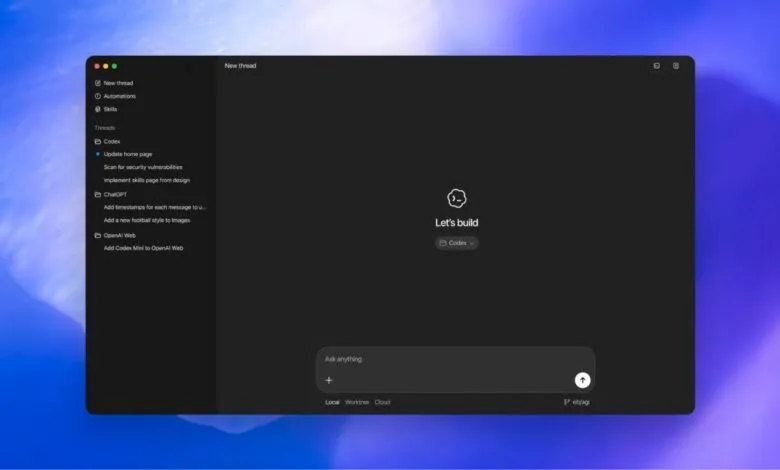
OpenAI has introduced a dedicated macOS desktop application for its Codex programming assistant, marking a significant shift from its previous reliance on web-based command line interfaces or IDE extensions. This strategic move directly positions Codex to compete with established desktop offerings like Anthropic’s Claude Code, aiming to capture developers who prefer a standalone, project-focused workspace. The new application is designed to streamline the management of multiple AI coding agents, particularly for complex, long-running parallel tasks that can span several hours, a workflow the company states is cumbersome in other interfaces.
The core advantage of the desktop app lies in its project-oriented organization. Users can group agents by specific projects, enabling seamless context switching between different coding initiatives. This structure is complemented by support for worktrees, a feature common in advanced development tools that helps prevent version control conflicts. Furthermore, the app introduces a system of “Skills,” which are essentially modular extensions packaged as folders containing specific instructions and resources. These Skills can be integrated into configurable Automations, allowing scheduled, repetitive coding tasks to be executed automatically based on user-defined parameters.
While OpenAI has trailed competitors like Anthropic in delivering a native desktop experience, it is attempting to close the feature gap with a familiar tactic: offering more generous usage limits for a comparable price. The company announced an immediate doubling of rate limits for Codex across its Plus, Pro, Business, Enterprise, and Edu subscription tiers. In a bid to attract new users, OpenAI is also providing temporary access to Codex for its ChatGPT Free and Go subscribers, though the specific rate limits for these tiers were not detailed in the announcement.
The utility of transitioning to a desktop application ultimately depends on a developer’s specific habits and requirements. For those deeply integrated into their IDE of choice, the existing extensions may remain sufficient. However, for professionals and teams juggling multiple, complex projects that benefit from centralized agent management and automated workflows, the new Codex desktop app presents a compelling and more powerful alternative.
(Source: Ars Technica)