Inside Iran’s Longest Internet Blackout
▼ Summary
– The Iranian regime initiated its longest-ever internet shutdown in early January to suppress protests, but the blackout also severely hampered the flow of information both within and outside the country.
– An expert explains the government fears internet access because it enables citizens to document state violence and mobilize, threatening the regime’s ability to control narratives and deny the scale of its crimes.
– Iranians are tech-savvy and have historically adapted to censorship by using various VPNs and shifting between platforms like Telegram, Instagram, and WhatsApp, which the regime subsequently blocks during periods of unrest.
– The regime uses technology for repression through internet shutdowns, spreading misinformation, manipulating online discourse, and exploiting tools like AI to cast doubt on authentic documentation of protests and violence.
– Satellite internet, particularly Starlink, provided a critical, though limited and privileged, window for communication and evidence-gathering during the complete shutdown, highlighting the need for more scalable alternative connectivity solutions.
Understanding the current state of internet access in Iran requires looking beyond sporadic connectivity reports. While some network data showed a partial resumption in late January, reaching perhaps 30 to 40 percent on certain platforms, this glimpse is misleading. The connectivity remains highly inconsistent and unreliable, a fragile facade over what has been the longest nationwide internet blackout in the country’s history. This digital siege, initiated as protests surged in early January, represents a deliberate strategy to control information and obscure state violence. Behind these blocked signals, an unprecedented crackdown has resulted in a devastating death toll, with estimates ranging from several thousand to tens of thousands, marking one of the bloodiest episodes in recent Iranian history.
To grasp the technological and political dynamics at play, insights from digital rights researcher Mahsa Alimardani are essential. She notes that moments of partial access can create a false sense of normalcy. Circumvention tools like VPNs work intermittently; one individual managed a brief FaceTime call without a VPN, but such instances are fleeting glitches rather than signs of genuine openness. The fundamental reality is that the regime enforces shutdowns precisely when it intends to act with impunity. The pattern is clear: a severed internet connection is a prelude to violence, as seen in 2019 when a week-long blackout concealed the massacre of approximately 1,500 people.
The regime’s profound fear of an open internet stems from its power to document and mobilize. Historical atrocities, like the 1988 mass execution of political prisoners, remained shrouded for decades due to controlled media. Today, the ability for citizens to record and share evidence in real-time poses an existential threat to the state’s ability to deny and distort its actions. This is why the government invests heavily in disabling VPNs and why popular platforms like Telegram, Instagram, and WhatsApp have been sequentially blocked following their use in protest organization. Iranians, consequently, have become adept at navigating this cat-and-mouse game, often maintaining multiple VPNs to bypass restrictions.
Technology, however, is a double-edged sword, also enabling repression through sophisticated information control. The state employs a multi-layered approach: outright censorship through shutdowns, physical coercion against victims’ families, and flooding the digital space with misinformation. The regime skillfully manipulates complex geopolitical and religious narratives. For instance, it frames attacks on mosques, which often double as bases for paramilitary forces, as evidence of protester “Islamophobia,” exploiting legitimate concerns about prejudice in the West to discredit a domestic liberation movement.
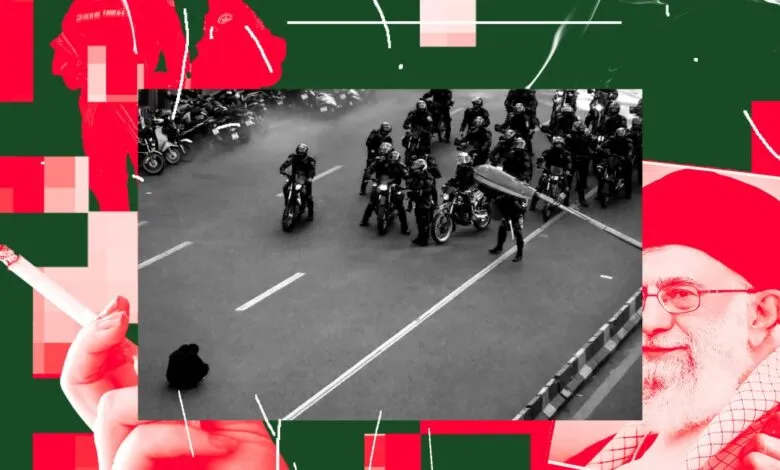
The advent of advanced artificial intelligence has introduced a powerful new tool for obfuscation, accelerating the “Liar’s Dividend” where any authentic evidence can be dismissed as fake. A poignant example is a verified image of a lone protester facing security forces, which was enhanced using AI software. Regime accounts seized on minor AI artifacts to label the entire scene as fabricated “AI slop” propagated by Israel, a narrative amplified when Israel’s Farsi-language state account shared the image. This creates a paralyzing fog of doubt around even genuine documentation.
Similarly, foreign actors complicate the information landscape. During the 2025 Iran-Israel war, a convincingly deepfaked video allegedly showing Israel bombing Evin Prison to free dissidents went viral, later attributed to Israeli state efforts. While such operations muddy the waters, Alimardani stresses that the primary perpetrator of violence and information control remains the Iranian regime itself.
In this context, satellite internet technology like Starlink has emerged as a critical, if limited, lifeline. During total blackouts, it provided the only window into the country, allowing documentation groups to receive and verify evidence. Demand is high, with terminals smuggled in at costs reaching $2,000, making them accessible only to the relatively privileged. This exacerbates a digital divide, leaving marginalized protest hotspots like Kurdistan and Sistan and Baluchestan, regions often subjected to the fiercest repression, with less ability to document their plight. Satellite internet represents a fundamental reimagining of connectivity, challenging the concept of internet sovereignty confined by national borders and offering a potential blueprint for circumventing state-controlled infrastructure in crisis zones.
The human cost of this struggle is immense. Personal accounts from within Iran describe surreal and traumatic scenes: fleeing protests before military tanks open fire, enduring tear gas, and later seeing blood washed from the streets. For those in the diaspora, processing these events involves grappling with privilege, distance, and the chilling sound of a loved one’s voice forever changed by darkness. The internet blackout is not merely a technical disruption; it is a weapon wielded to isolate, silence, and conceal, making the fight for connectivity inseparable from the fight for accountability and human rights.
(Source: The Verge)