Microsoft CEO: Copilot AI Usage Is Soaring
▼ Summary
– Microsoft reported strong quarterly earnings with $81.3 billion in revenue and record cloud revenue over $50 billion, yet its stock fell due to investor concerns over high spending.
– The company has spent $72.4 billion on capital expenditures this fiscal year, nearing last year’s total of $88.2 billion, largely to support AI services for enterprises and labs like OpenAI.
– Investors are worried because growth in key products like Azure and Microsoft 365 fell short of expectations, despite leadership’s confidence in future returns.
– CEO Satya Nadella emphasized AI adoption, citing growth in Copilot users and 4.7 million paid GitHub Copilot subscribers, but provided limited specific user numbers for some products.
– Nadella and the CFO argue the massive data center investments are justified, stating demand for AI services exceeds current supply and new capacity is fully booked.
Microsoft’s latest financial results showcase a company in the midst of a significant transformation, driven by substantial investments in artificial intelligence. The tech giant reported a strong quarter with revenue reaching $81.3 billion, a 17% increase, and net income climbing 21% to $38.3 billion. A standout figure was Microsoft Cloud revenue surpassing $50 billion, setting a new record. Despite these impressive numbers, investor sentiment turned cautious, leading to a decline in the company’s stock price. The primary concern centers on the massive capital expenditures Microsoft is undertaking to build out its cloud infrastructure, specifically to support AI services.
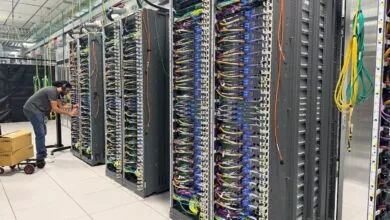
The scale of this investment is staggering. In the first half of its current fiscal year alone, the company has spent $72.4 billion on capital expenditures. To put that in perspective, the total for the entire previous year was $88.2 billion. A significant portion of this spending is directed toward data centers and computing power needed to serve AI models to enterprise clients and major AI labs like OpenAI and Anthropic. The central question from Wall Street is whether this enormous outlay will translate into increased usage and, ultimately, sustainable profits.
Some analysts noted that growth in core segments like Azure cloud services and Microsoft 365 applications slightly missed expectations, contributing to the market’s unease. However, CEO Satya Nadella used the earnings call to vigorously defend the company’s strategy, emphasizing soaring adoption of its AI products. He presented a series of metrics aimed at demonstrating that customer engagement is validating the investment thesis.
Nadella highlighted that daily usage of its consumer-facing Copilot AI products has grown nearly threefold compared to the previous year. This growth encompasses AI chats, search, browsing, and integrations into the Windows operating system. While he did not provide a specific current user count, the company had previously reported surpassing 100 million monthly active Copilot users across both commercial and consumer segments in its last annual report.
More concrete figures were shared for specific paid services. GitHub Copilot, the AI coding assistant, now boasts 4.7 million paid subscribers, representing a 75% year-over-year increase. This indicates a rapidly expanding and likely profitable business line. Furthermore, Microsoft 365 Copilot has been adopted by companies for 15 million paid seats. Given that the total paid seat base for Microsoft 365 is 450 million, this suggests there is considerable room for further growth within the existing customer ecosystem.
Nadella also pointed to the rapid expansion of specialized AI tools. He noted that Dragon Copilot, an AI agent designed for healthcare professionals, is now available to 100,000 medical providers. The tool was used to document 21 million patient encounters in the quarter, a threefold increase from the prior year. This demonstrates the practical application and scaling of AI in critical industry verticals.
Addressing the core concern about capital expenditure, both Nadella and CFO Amy Hood argued that the spending is not speculative. They stated that demand for AI services currently exceeds the available data center supply. This means the new infrastructure being built is essentially fully booked for its operational lifespan, implying that these investments are directly tied to confirmed customer demand rather than future speculation. The company’s leadership is betting that this foundational build-out will secure its competitive position and drive long-term profitability as AI becomes further embedded across its product suite.
(Source: TechCrunch)