Meet the Soft, Safe Humanoid Designed for Social Interaction

▼ Summary
– Fauna Robotics has developed a 3.5-foot-tall humanoid robot named Sprout, designed with a soft, friendly exterior inspired by science fiction characters.
– Unlike robots built for specific tasks, Sprout is initially being sold to developers, researchers, and universities as a ready-to-use platform for application development.
– The robot is designed to be approachable and safe for human interaction, being lightweight, quiet, and built without sharp edges or pinch points.
– Sprout is priced at $50,000, making it inaccessible to most consumers but available to companies like Disney and Boston Dynamics as an early customer.
– Its pre-built capabilities in movement and perception allow buyers to focus on creating unique applications rather than teaching it basic functions.
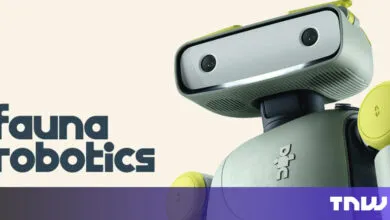
A new humanoid robot named Sprout, designed with a soft and approachable appearance, has been unveiled by the startup Fauna Robotics. This platform, standing just over three and a half feet tall, is not intended for consumer homes but rather as a tool for developers and researchers. Its creation draws inspiration from friendly fictional robots, prioritizing safety and social interaction through a padded exterior and expressive mechanical features. The goal is to provide a fully functional base model so that innovators can immediately focus on programming specialized applications, rather than solving fundamental challenges like mobility or navigation.
The company’s co-founder, Rob Cochran, explained that Sprout’s design, with its wide head and articulated limbs, was influenced by characters like Baymax from Big Hero 6. While it possesses grippers capable of handling objects, its primary mission isn’t household chores or factory work, at least not initially. Instead, Fauna Robotics is marketing Sprout to universities, corporate research labs, and independent developers who lack the immense resources to build a sophisticated humanoid platform from the ground up.
A key selling point is that Sprout arrives ready to operate. The robot’s core systems for movement, environmental perception, and basic expression are pre-integrated and functional “out of the box.” This allows purchasers to bypass years of foundational engineering and concentrate on creating unique software for potential uses in healthcare, education, or customer service. The emphasis on being “approachable” is reflected in its physical design: it is lightweight, operates quietly, and has been engineered with no sharp edges or pinch points to ensure safe operation around people.
With a price tag of $50,000, Sprout is positioned as a cost-effective alternative to in-house development, though it remains a significant investment. Early adopters reportedly include major names like Disney and Boston Dynamics. For a company like Boston Dynamics, which develops the highly advanced and undoubtedly expensive Atlas robot, a platform like Sprout offers a practical and durable testbed. It is far more economical for a Sprout unit to withstand a fall or a collision during experimentation than it would be for a cutting-edge prototype like Atlas.
While it may not be folding laundry today, the platform is built with the potential for such tasks. Its articulated arms and grippers provide the physical capability, waiting for software developers to unlock its full range of possibilities. For now, Sprout represents an accessible step forward in humanoid robotics, placing a sophisticated yet safe and socially intelligent machine into the hands of those who will define its future applications.
(Source: The Verge)